


Building Blocks
This section contains fundamental products for the synthesis of organic and biological compounds. Building blocks are the essential starting materials used to construct complex molecules through various chemical reactions. They play a critical role in drug discovery, material science, and chemical research. At CymitQuimica, we offer a diverse range of high-quality building blocks to support your innovative research and industrial projects, ensuring you have the essential components for successful synthesis.
Subcategories of "Building Blocks"
- Boronic Acids & Boronic Acid Derivatives(5,778 products)
- Chiral Building Blocks(1,242 products)
- Hydrocarbon Building Blocks(6,098 products)
- Organic Building Blocks(61,034 products)
Found 199601 products of "Building Blocks"
Sort by
Purity (%)
0
100
|
0
|
50
|
90
|
95
|
100
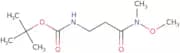
tert-Butyl (3-(methoxy(methyl)amino)-3-oxopropyl)carbamate
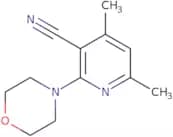
CAS:<p>Versatile small molecule scaffold</p>Formula:C10H20N2O4Purity:Min. 95%Molecular weight:232.28 g/mol4,6-Dimethyl-2-(morpholin-4-yl)pyridine-3-carbonitrile
CAS:<p>Versatile small molecule scaffold</p>Formula:C12H15N3OPurity:Min. 95%Molecular weight:217.27 g/mol{[4-(Carboxymethyl)phenyl]methyl}triphenylphosphanium bromide
CAS:<p>Versatile small molecule scaffold</p>Formula:C27H24BrO2PPurity:Min. 95%Molecular weight:491.4 g/mol5-{1-[(tert-Butoxy)carbonyl]piperidin-4-yl}pentanoic acid
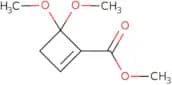
CAS:Versatile small molecule scaffoldFormula:C15H27NO4Purity:Min. 95%Molecular weight:285.38 g/molMethyl 4,4-dimethoxycyclobut-1-ene-1-carboxylate
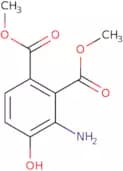
CAS:<p>Versatile small molecule scaffold</p>Formula:C8H12O4Purity:Min. 95%Molecular weight:172.2 g/mol1,2-Dimethyl 3-amino-4-hydroxybenzene-1,2-dicarboxylate
CAS:<p>Versatile small molecule scaffold</p>Formula:C10H11NO5Purity:Min. 95%Molecular weight:225.2 g/mol[2-(Dimethylamino)ethyl]urea hydrochloride
CAS:<p>Versatile small molecule scaffold</p>Formula:C5H14ClN3OPurity:Min. 95%Molecular weight:167.64 g/molMethyl 4-cyanopicolinate
CAS:<p>Versatile small molecule scaffold</p>Formula:C8H6N2O2Purity:Min. 95%Molecular weight:162.15 g/mol3-[(Benzenesulfonyl)methyl]benzoic acid
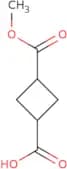
CAS:<p>Versatile small molecule scaffold</p>Formula:C14H12O4SPurity:Min. 95%Molecular weight:276.31 g/molrac-(1s,3s)-3-(methoxycarbonyl)cyclobutane-1-carboxylic acid, cis
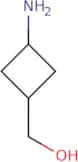
CAS:<p>Versatile small molecule scaffold</p>Formula:C7H10O4Purity:Min. 95%Molecular weight:158.2 g/molcis-3-Aminocyclobutanemethan-1-ol HCl
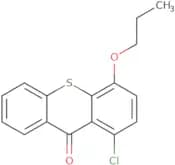
CAS:<p>Versatile small molecule scaffold</p>Formula:C5H12ClNOPurity:Min. 95%Molecular weight:137.15 g/mol1-Chloro-4-propoxy-9H-thioxanthen-9-one
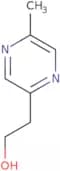
CAS:<p>1-Chloro-4-propoxy-9H-thioxanthen-9-one is a photoinitiator that is used in the polymerization of cationic monomers. Propylene glycol (PG) and acetonitrile are solvents for this compound, which can be synthesized from propylene oxide and thioxanthone. This initiator is also used in the synthesis of steroid hormones. Irradiation with UV light causes the production of reactive oxygen species that can crosslink the polymer chains. The matrix effect occurs when the initiator concentration is high, leading to increased polymerization rates. The gel permeation chromatography technique can be used to measure the molecular weight of polymers produced by this initiator.</p>Formula:C16H13ClO2SPurity:Min. 95%Color and Shape:PowderMolecular weight:304.79 g/mol2-(5-Methylpyrazin-2-yl)ethan-1-ol
CAS:<p>Versatile small molecule scaffold</p>Formula:C7H10N2OPurity:Min. 95%Molecular weight:138.17 g/molrac-[(1R,2S)-2-[(tert-Butyldimethylsilyl)oxy]cyclohexyl]methanol
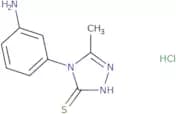
CAS:<p>Versatile small molecule scaffold</p>Formula:C13H28O2SiPurity:Min. 95%Molecular weight:244.4 g/mol4-(3-Aminophenyl)-5-methyl-4H-1,2,4-triazole-3-thiol hydrochloride
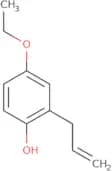
CAS:Versatile small molecule scaffoldFormula:C9H11ClN4SPurity:Min. 95%Molecular weight:242.73 g/mol2-Allyl-4-ethoxyphenol
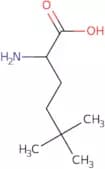
CAS:<p>2-Allyl-4-ethoxyphenol is a synthetic monomer that belongs to the family of alkoxy polymers. This polymer has been shown to have a high degree of reactivity and creates copolymers with styrene, carbon atoms, and other substituents. The allyl group in 2-allyl-4-ethoxyphenol has been shown to react with isobutene and butadiene in order to form polyisobutenes. These polyisobutenes are used as a raw material for the production of acrylonitrile and phenols. 2-Allyl-4-ethoxyphenol also reacts with phenols to form substituted phenols, which are used for the production of dyes, pharmaceuticals, and other chemicals.</p>Formula:C11H14O2Purity:Min. 95%Molecular weight:178.23 g/mol2-Amino-5,5-dimethylhexanoic acid
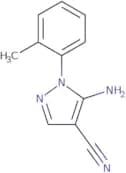
CAS:<p>Versatile small molecule scaffold</p>Formula:C8H17NO2Purity:Min. 95%Molecular weight:159.23 g/mol5-Amino-1-(2-methylphenyl)-1H-pyrazole-4-carbonitrile
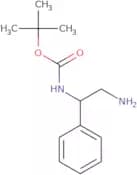
CAS:<p>Versatile small molecule scaffold</p>Formula:C11H10N4Purity:Min. 95%Molecular weight:198.22 g/mol±-(Boc-amino)phenethylamine
CAS:<p>Versatile small molecule scaffold</p>Formula:C13H20N2O2Purity:Min. 95%Molecular weight:236.31 g/mol[(1H-Indazol-3-yl)methyl]dimethylamine
CAS:<p>Versatile small molecule scaffold</p>Formula:C10H13N3Purity:Min. 95%Molecular weight:175.23 g/mol

![{[4-(Carboxymethyl)phenyl]methyl}triphenylphosphanium bromide](/_next/image/?url=https%3A%2Fstatic.cymitquimica.com%2Fproducts%2F3D%2Fthumb-webp%2FSFA62097.webp&w=3840&q=75)
![5-{1-[(tert-Butoxy)carbonyl]piperidin-4-yl}pentanoic acid](/_next/image/?url=https%3A%2Fstatic.cymitquimica.com%2Fproducts%2F3D%2Fthumb-webp%2FSFA63891.webp&w=3840&q=75)
![[2-(Dimethylamino)ethyl]urea hydrochloride](/_next/image/?url=https%3A%2Fstatic.cymitquimica.com%2Fproducts%2F3D%2Fthumb-webp%2FSFA71375.webp&w=3840&q=75)

![3-[(Benzenesulfonyl)methyl]benzoic acid](/_next/image/?url=https%3A%2Fstatic.cymitquimica.com%2Fproducts%2F3D%2Fthumb-webp%2FSFA73034.webp&w=3840&q=75)
![rac-[(1R,2S)-2-[(tert-Butyldimethylsilyl)oxy]cyclohexyl]methanol](/_next/image/?url=https%3A%2Fstatic.cymitquimica.com%2Fproducts%2F3D%2Fthumb-webp%2FSFA79854.webp&w=3840&q=75)
![[(1H-Indazol-3-yl)methyl]dimethylamine](/_next/image/?url=https%3A%2Fstatic.cymitquimica.com%2Fproducts%2F3D%2Fthumb-webp%2FSFA91086.webp&w=3840&q=75)