Building Blocks
This section contains fundamental products for the synthesis of organic and biological compounds. Building blocks are the essential starting materials used to construct complex molecules through various chemical reactions. They play a critical role in drug discovery, material science, and chemical research. At CymitQuimica, we offer a diverse range of high-quality building blocks to support your innovative research and industrial projects, ensuring you have the essential components for successful synthesis.
Subcategories of "Building Blocks"
- Boronic Acids & Boronic Acid Derivatives(5,778 products)
- Chiral Building Blocks(1,242 products)
- Hydrocarbon Building Blocks(6,098 products)
- Organic Building Blocks(61,084 products)
Found 198714 products of "Building Blocks"
Sort by
Purity (%)
0
100
|
0
|
50
|
90
|
95
|
100
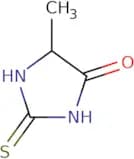
5-Methyl-2-thioxoimidazolidin-4-one
CAS:<p>5-Methyl-2-thioxoimidazolidin-4-one (MTI) is an antibacterial agent that has been shown to have a strong inhibitory effect against Staphylococcus epidermidis. MTI has been shown to be an effective antidiabetic, pesticide, and antibacterial agent. It also has a tautomeric form that reversibly binds to the active site of bacterial DNA topoisomerase II, which prevents the rewinding of DNA and inhibits transcription. MTI is used in the treatment of mammalian cells for cancer treatment. In addition, it can alkylate DNA bases and disrupts the DNA replication process.</p>Formula:C4H6N2OSPurity:Min. 95%Molecular weight:130.17 g/mol5-Methyl-[1,2,4]triazolo[1,5-a]pyrimidin-7-amine
CAS:<p>Versatile small molecule scaffold</p>Formula:C6H7N5Purity:Min. 95%Molecular weight:149.15 g/mol[2-(Methylsulfanyl)phenyl]methanol
CAS:<p>2-(Methylsulfanyl)phenyl]methanol is an analogue of the ligand 2-methylsulfanylphenol. It reacts with carbenes, aldehydes, and alcohols to form oxalates. This compound can also be used as a transfer agent for alcohols and conium. The structural analysis of this compound has shown that it is a thioether with sulphone substituents.<br>2-(Methylsulfanyl)phenyl]methanol yields the same products as 2-methylsulfanylphenol by reacting with thiols, sulfides, and sulfoxides in the presence of base.</p>Formula:C8H10OSPurity:Min. 95%Molecular weight:154.23 g/mol2-[4-(Pyrimidin-2-yl)piperazin-1-yl]acetonitrile
CAS:<p>Versatile small molecule scaffold</p>Formula:C10H13N5Purity:Min. 95%Molecular weight:203.24 g/mol4-[4-(Pyrimidin-2-yl)piperazin-1-yl]butan-1-amine
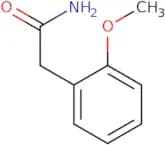
CAS:<p>Versatile small molecule scaffold</p>Formula:C12H21N5Purity:Min. 95%Molecular weight:235.33 g/mol2-(2-Methoxyphenyl)acetamide
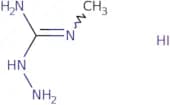
CAS:<p>2-(2-Methoxyphenyl)acetamide is a chemical compound that is used in the industrial production of acrylonitrile. It is also used to study the biochemical and microbiological properties of escherichia coli, as well as the biotechnology and biochemistry of recombinant protein expression. 2-(2-Methoxyphenyl)acetamide has been shown to be an excellent affinity ligand for ionic liquid chromatography (ILC). This chemical can be used to identify wild-type proteins in a sample.</p>Formula:C9H11NO2Purity:Min. 95%Molecular weight:165.19 g/mol1-Amino-3-methylguanidine hydroiodide
CAS:<p>Versatile small molecule scaffold</p>Formula:C2H8N4·HIPurity:Min. 95%Molecular weight:216.02 g/moltert-Butyl 3-oxopentanoate
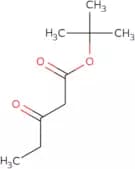
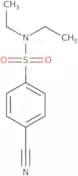
CAS:<p>Tert-Butyl 3-oxopentanoate is a chemical compound that has insulin-like growth factor (IGF) activity. This compound is synthesized from the reduction of tert-butyl 3-oxopinanedioate and reacts with a factor receptor. Tert-Butyl 3-oxopentanoate has been shown to inhibit the cancer cell proliferation by reducing the radiation induced DNA damage. The crystal structure of this compound has been determined using X-ray diffraction and molecular dynamics simulations, which have revealed that it is an inactive form of IGF.</p>Formula:C9H16O3Purity:Min. 95%Molecular weight:172.22 g/mol4-Cyano-N,N-diethylbenzene-1-sulfonamide
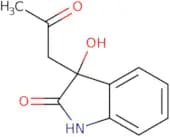
CAS:Versatile small molecule scaffoldFormula:C11H14N2O2SPurity:Min. 95%Molecular weight:238.31 g/mol3-Hydroxy-3-(2-oxopropyl)-1,3-dihydro-2H-indol-2-one
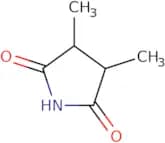
CAS:<p>Versatile small molecule scaffold</p>Formula:C11H11NO3Purity:Min. 95%Molecular weight:205.21 g/mol3,4-Dimethylpyrrolidine-2,5-dione
CAS:<p>3,4-Dimethylpyrrolidine-2,5-dione is a synthetic compound that has been found in the environment as a result of pollution. It is an average particle size with a molecular weight of 184.1 g/mol and chemical formula CHNO. 3,4-Dimethylpyrrolidine-2,5-dione is soluble in water and alcohols. It has been shown to have an imidazoline group and lactam ring that can easily be hydrolyzed by acid. 3,4-Dimethylpyrrolidine-2,5-dione can be used for the synthesis of monomers which are polymerized into polymers such as nitrocellulose or cellulose acetate butyrate using acidic or basic groups.</p>Formula:C6H9NO2Purity:Min. 95%Molecular weight:127.14 g/mol1-Oxaspiro[4.4]nonan-2-one
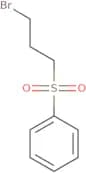
CAS:<p>Versatile small molecule scaffold</p>Formula:C8H12O2Purity:Min. 95%Molecular weight:140.2 g/mol(3-Bromopropanesulfonyl)benzene
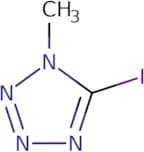
CAS:<p>Versatile small molecule scaffold</p>Formula:C9H11BrO2SPurity:Min. 95%Molecular weight:263.15 g/mol5-Iodo-1-methyl-1H-tetrazole
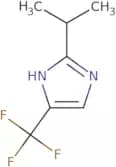
CAS:<p>Versatile small molecule scaffold</p>Formula:C2H3IN4Purity:Min. 95%Molecular weight:209.98 g/mol2-(Propan-2-yl)-5-(trifluoromethyl)-1H-imidazole
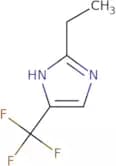
CAS:<p>Versatile small molecule scaffold</p>Formula:C7H9F3N2Purity:Min. 95%Molecular weight:178.15 g/mol2-Ethyl-5-(trifluoromethyl)-1H-imidazole
CAS:<p>Versatile small molecule scaffold</p>Formula:C6H7F3N2Purity:Min. 95%Molecular weight:164.13 g/mol3-[Ethyl(hydroxy)phosphoryl]but-2-enoic acid
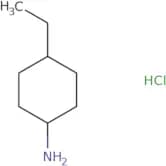
CAS:<p>Versatile small molecule scaffold</p>Formula:C6H11O4PPurity:Min. 95%Molecular weight:178.12 g/molrac-(1S,4R)-4-Ethylcyclohexan-1-amine hydrochloride
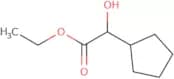
CAS:Versatile small molecule scaffoldFormula:C8H18ClNPurity:Min. 95%Molecular weight:163.69 g/molEthyl 2-cyclopentyl-2-hydroxyacetate
CAS:<p>Versatile small molecule scaffold</p>Formula:C9H16O3Purity:Min. 95%Molecular weight:172.22 g/mol3,4,5-Trimethyl-2(5H)-furanone
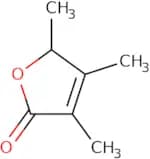
CAS:<p>3,4,5-Trimethyl-2(5H)-furanone (3,4,5-TMF) is a compound that has been identified as a germination inhibitor. 3,4,5-TMF inhibits the germination of lettuce seeds and wheat seeds. It is speculated that this inhibition may be due to the ability of 3,4,5-TMF to inhibit regulatory enzymes in the germination process. This compound also has neuroprotective properties and may be used for the treatment of neurodegenerative diseases. 3,4,5-TMF belongs to a group of compounds called furanones which are found in plants such as Triticum aestivum and Arabidopsis thaliana. Furanones are related to other phytochemicals such as flavonoids and phenolic acids.</p>Formula:C7H10O2Purity:Min. 95%Molecular weight:126.15 g/mol

![5-Methyl-[1,2,4]triazolo[1,5-a]pyrimidin-7-amine](/_next/image/?url=https%3A%2Fstatic.cymitquimica.com%2Fproducts%2F3D%2Fthumb-webp%2FIBA37696.webp&w=3840&q=75)
![[2-(Methylsulfanyl)phenyl]methanol](/_next/image/?url=https%3A%2Fstatic.cymitquimica.com%2Fproducts%2F3D%2Fthumb-webp%2FIBA38477.webp&w=3840&q=75)
![2-[4-(Pyrimidin-2-yl)piperazin-1-yl]acetonitrile](/_next/image/?url=https%3A%2Fstatic.cymitquimica.com%2Fproducts%2F3D%2Fthumb-webp%2FIBA38613.webp&w=3840&q=75)
![4-[4-(Pyrimidin-2-yl)piperazin-1-yl]butan-1-amine](/_next/image/?url=https%3A%2Fstatic.cymitquimica.com%2Fproducts%2F3D%2Fthumb-webp%2FIBA38620.webp&w=3840&q=75)
![1-Oxaspiro[4.4]nonan-2-one](/_next/image/?url=https%3A%2Fstatic.cymitquimica.com%2Fproducts%2F3D%2Fthumb-webp%2FIBA44880.webp&w=3840&q=75)
![3-[Ethyl(hydroxy)phosphoryl]but-2-enoic acid](/_next/image/?url=https%3A%2Fstatic.cymitquimica.com%2Fproducts%2F3D%2Fthumb-webp%2FIBA47267.webp&w=3840&q=75)