Building Blocks
This section contains fundamental products for the synthesis of organic and biological compounds. Building blocks are the essential starting materials used to construct complex molecules through various chemical reactions. They play a critical role in drug discovery, material science, and chemical research. At CymitQuimica, we offer a diverse range of high-quality building blocks to support your innovative research and industrial projects, ensuring you have the essential components for successful synthesis.
Subcategories of "Building Blocks"
- Boronic Acids & Boronic Acid Derivatives(5,756 products)
- Chiral Building Blocks(1,242 products)
- Hydrocarbon Building Blocks(6,095 products)
- Organic Building Blocks(61,055 products)
Found 199650 products of "Building Blocks"
Sort by
Purity (%)
0
100
|
0
|
50
|
90
|
95
|
100
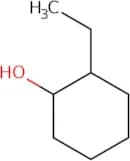
2-Ethylcyclohexanol (cis- and trans- mixture)
CAS:<p>2-Ethylcyclohexanol is a hydrogen peroxide catalyst that has been implemented in nanocomposites for use as electrodes. This multifunctional material is a transition metal oxide with properties of being acidic and able to catalyze the oxidation of organic pollutants. 2-Ethylcyclohexanol has also been shown to be efficient in mineralizing (oxidizing) transition metals such as Fe(II) or Cr(III). This chemical can be used to remove toxic heavy metals from water, and it can be analyzed using techniques such as voltammetry, cyclic voltammetry, and electrochemical impedance spectroscopy. 2-Ethylcyclohexanol can be used as an inexpensive hydroxyl radical generator. It is commercially available in the cis- and trans- mixture.</p>Formula:C8H16OPurity:Min. 95%Molecular weight:128.22 g/mol4-(Dimethylamino)-1-phenylbutan-1-one
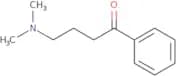
CAS:<p>Versatile small molecule scaffold</p>Formula:C12H17NOPurity:Min. 95%Molecular weight:191.27 g/mol4-Amino-N-[2-(diethylamino)ethyl]-2-methoxybenzamide
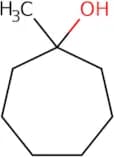
CAS:<p>Versatile small molecule scaffold</p>Formula:C14H23N3O2Purity:Min. 95%Molecular weight:265.35 g/mol1-Methylcycloheptanol
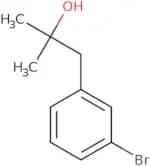
CAS:<p>1-Methylcycloheptanol (1MCH) is a polydimethylsiloxane with a molecular weight of about 370. The catalytic activity of 1MCH is due to the presence of two double bonds in the molecule. The 1-methylcycloheptanol can be used for the synthesis of iodides and for the degradation of headspace volatile compounds, such as dichlorocarbene and dihalocarbenes. It has been shown to have affinity towards certain unsaturated ketones, such as oxoalkyl and unsaturated ketones. 1-Methylcycloheptanol has also been found to be able to extract cirsium setidens from soil samples using microextraction methods.</p>Formula:C8H16OPurity:Min. 95%Molecular weight:128.21 g/mol1-(3-Bromophenyl)-2-methylpropan-2-ol
CAS:<p>Versatile small molecule scaffold</p>Formula:C10H13BrOPurity:Min. 95%Molecular weight:229.11 g/mol1,2,5-Thiadiazole-3,4-dicarboxylic acid
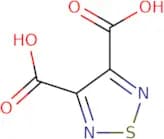
CAS:<p>1,2,5-Thiadiazole-3,4-dicarboxylic acid is a dicarboxylic acid that is structurally related to the thiadiazole ring. It has been shown to interact with amines and hydrate in humid conditions. The crystal structure of 1,2,5-thiadiazole-3,4-dicarboxylic acid has been determined by x-ray diffraction. The molecule forms a mononuclear complex with chloride ions in the crystal system called the cycloaliphatic motif. 1,2,5-Thiadiazole-3,4-dicarboxylic acid has also been found to form hydrogen bonds with temperatures in the range of −10°C and 30°C.</p>Formula:C4H2N2O4SPurity:Min. 95%Molecular weight:174.14 g/mol1-(Propan-2-yl)-1H,4H,5H-pyrazolo[3,4-d]pyrimidin-4-one
CAS:Versatile small molecule scaffoldFormula:C8H10N4OPurity:Min. 95%Molecular weight:178.19 g/mol4-Allyl-3-thiosemicarbazide
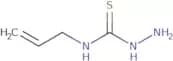
CAS:<p>4-Allyl-3-thiosemicarbazide is a copper complex that inhibits the growth of cancer cells. Copper chloride is an important catalyst for this reaction. The coordination geometry of the copper ion and the structure of the product are key factors in determining its cytotoxicity. This compound has been shown to have significant cytotoxicity against a variety of cancer cell lines, including leukemia, lymphoma, breast, prostate, lung, pancreatic and colon cancer cells. 4-Allyl-3-thiosemicarbazide is also able to inhibit kinesin by binding to its ATPase site and preventing it from transporting cargo along microtubules.</p>Formula:C4H9N3SPurity:Min. 95%Molecular weight:131.2 g/mol3-Methylpiperidin-2-one
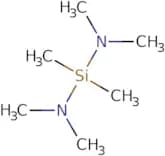
CAS:<p>3-Methylpiperidin-2-one is a hydroxylated piperidine derivative that can be synthesized by the reaction of xylene with triphosgene in the presence of an acid hydrazide. This compound has been shown to have antibacterial activity against Streptococcus faecalis and other bacteria, but it is carcinogenic in rats. 3-Methylpiperidin-2-one has been used as a ligand for metal ions such as copper and nickel. It can be synthesized using methods like alkylation or chiral synthesis with five membered rings.</p>Formula:C6H11NOPurity:Min. 95%Molecular weight:113.16 g/molBis(dimethylamino)dimethylsilane
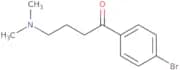
CAS:<p>Bis(dimethylamino)dimethylsilane (Bis-DMAS) is a silylating agent that reacts with the hydroxy groups of siloxanes to form a cross-link. It can be used as a functional group for the synthesis of polymers, coatings, and adhesives. Bis-DMAS has also been used to improve the reactivity of other functional groups, such as carbonyls, amines, nitriles, and epoxides. It is reactive in air and moisture and should be stored in an inert atmosphere. Bis-DMAS reacts with metal surfaces to form a coating by reacting with both the metal surface and hydrogen atoms on the surface. The reaction temperature is dependent on the substrate: higher temperatures are needed for copper than aluminum due to copper's higher reactivity. The activation energies are different for each reaction type: thermal reactions have an activation energy of 40 kJ/mol while electrochemical reactions have an activation energy of</p>Formula:C6H18N2SiPurity:Min. 95%Molecular weight:146.31 g/mol1-(4-Bromophenyl)-4-(dimethylamino)butan-1-one
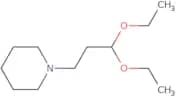
CAS:<p>Versatile small molecule scaffold</p>Formula:C12H16BrNOPurity:Min. 95%Molecular weight:270.17 g/mol1-(3,3-Diethoxypropyl)piperidine
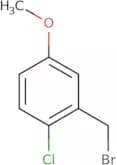
CAS:<p>Versatile small molecule scaffold</p>Formula:C12H25NO2Purity:Min. 95%Molecular weight:215.33 g/mol2-Chloro-5-methoxybenzyl bromide
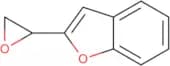
CAS:<p>2-Chloro-5-methoxybenzyl bromide is a cyclization agent that is used in the synthesis of tetracyclines, polyphosphoric acid, and tetralones. It is typically used as a catalyst for cyclization reactions involving aromatic rings. This agent reacts with phosphorus oxychloride to produce polyphosphoric acid. Polyphosphoric acid can be used to synthesize tetracyclines and tetralones. 2-Chloro-5-methoxybenzyl bromide also acts as an oxidizing agent that converts primary alcohols into carboxylic acids and secondary alcohols into ketones or aldehydes.</p>Formula:C8H8BrClOPurity:Min. 95%Molecular weight:235.51 g/mol2-(Oxiran-2-yl)-1-benzofuran
CAS:<p>Versatile small molecule scaffold</p>Formula:C10H8O2Purity:Min. 95%Molecular weight:160.17 g/mol4-Chloro-1H,5H,6H,7H-pyrido[2,3-d]pyrimidine
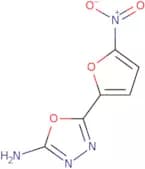
CAS:Versatile small molecule scaffoldFormula:C7H8ClN3Purity:Min. 95%Molecular weight:169.61 g/mol5-(5-Nitrofuran-2-yl)-1,3,4-oxadiazol-2-amine
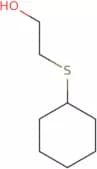
CAS:<p>Versatile small molecule scaffold</p>Formula:C6H4N4O4Purity:Min. 95%Molecular weight:196.12 g/mol2-(Cyclohexylsulfanyl)ethan-1-ol
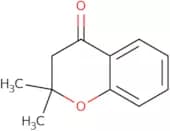
CAS:<p>Versatile small molecule scaffold</p>Formula:C8H16OSPurity:Min. 95%Molecular weight:160.28 g/mol2,2-Dimethyl-chroman-4-one
CAS:<p>2,2-Dimethyl-chroman-4-one is a synthetic compound that has been shown to be an antibacterial agent. It is active against many Gram-positive bacteria, including Staphylococcus aureus and Enterococcus faecalis. 2,2-Dimethyl-chroman-4-one also inhibits the activation of the MAP kinase pathway and the synthesis of protein kinase C. The irradiation of 2,2-dimethylchroman-4-one produces a compound which has been shown to have antiinflammatory effects on mesenchymal stromal cells.</p>Formula:C11H12O2Purity:Min. 95%Molecular weight:176.22 g/molEthyl 4-hydroxy-3-methyl-1-benzofuran-2-carboxylate
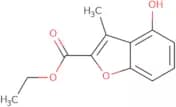
CAS:<p>Ethyl 4-hydroxy-3-methyl-1-benzofuran-2-carboxylate (EHMC) is an oxadiazole compound that has been shown to be toxic to the central nervous system. It is a tetraacetate ester of the compound and it has been shown to induce death in mice. EHMC has also been observed to produce thionyl chloride, aldehydes and dehydrogenation products in tissue samples. Elution profiles of EHMC from liquid chromatography have shown that this chemical can be quickly metabolized by methylation and subsequent degradation into benzofuran derivatives. The heterozygote for this compound is known for its ability to metabolize carbohydrates more efficiently than normal individuals.</p>Formula:C12H12O4Purity:Min. 95%Molecular weight:220.22 g/mol4-Hydroxy-3-methyl-1-benzofuran-2-carboxylic acid
CAS:<p>4-Hydroxy-3-methyl-1-benzofuran-2-carboxylic acid (4HMBF) is an antifungal agent that belongs to the group of phenylacetic acid derivatives. It has been shown to have antifungal activity against Candida albicans and other fungal species. 4HMBF incorporates into the fungal cell wall by reacting with the chain, which may inhibit protein synthesis. The biological properties of 4HMBF are not yet fully understood. It has been found to be a lead compound for future drug design.</p>Formula:C10H8O4Purity:Min. 95%Molecular weight:192.17 g/mol

![4-Amino-N-[2-(diethylamino)ethyl]-2-methoxybenzamide](/_next/image/?url=https%3A%2Fstatic.cymitquimica.com%2Fproducts%2F3D%2Fthumb-webp%2FDAA76148.webp&w=3840&q=75)
![1-(Propan-2-yl)-1H,4H,5H-pyrazolo[3,4-d]pyrimidin-4-one](/_next/image/?url=https%3A%2Fstatic.cymitquimica.com%2Fproducts%2F3D%2Fthumb-webp%2FDAA76325.webp&w=3840&q=75)
![4-Chloro-1H,5H,6H,7H-pyrido[2,3-d]pyrimidine](/_next/image/?url=https%3A%2Fstatic.cymitquimica.com%2Fproducts%2F3D%2Fthumb-webp%2FDAA77195.webp&w=3840&q=75)