Building Blocks
This section contains fundamental products for the synthesis of organic and biological compounds. Building blocks are the essential starting materials used to construct complex molecules through various chemical reactions. They play a critical role in drug discovery, material science, and chemical research. At CymitQuimica, we offer a diverse range of high-quality building blocks to support your innovative research and industrial projects, ensuring you have the essential components for successful synthesis.
Subcategories of "Building Blocks"
- Boronic Acids & Boronic Acid Derivatives(5,756 products)
- Chiral Building Blocks(1,242 products)
- Hydrocarbon Building Blocks(6,095 products)
- Organic Building Blocks(61,037 products)
Found 196139 products of "Building Blocks"
Sort by
Purity (%)
0
100
|
0
|
50
|
90
|
95
|
100
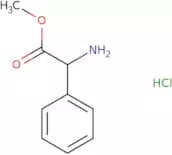
Phenylglycine Methyl Ester Hydrochloride
CAS:<p>Phenylglycine methyl ester hydrochloride is an amide that is synthesized by the reaction of an ester with an amino acid. It has been shown to inhibit the activity of copper enzymes in a chronic kidney disease model. This compound has been shown to bind to the active site of enzymes, such as aminopeptidase and dipeptidyl peptidase, which are involved in the metabolism of proteins. Phenylglycine methyl ester hydrochloride inhibits the activity of these enzymes, thereby affecting the production of inflammatory and autoimmune diseases. This product has also been shown to be effective against infectious diseases caused by bacteria, such as Mycobacterium tuberculosis and Pseudomonas aeruginosa. The structure of phenylglycine methyl ester hydrochloride consists of a heterocycle with two aromatic rings and one aliphatic ring.</p>Formula:C9H12ClNO2Purity:Min. 95%Molecular weight:201.65 g/molDL-phenylalanine methyl ester
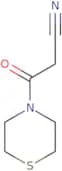
CAS:<p>DL-Phenylalanine methyl ester is a pharmaceutical drug that is used in the treatment of bladder cancer. It is an ester of DL-phenylalanine, which is an amino acid. The drug binds to the active site of protease enzymes and inhibits their activity. This inhibition prevents the breakdown of proteins in cells, which may lead to cell death. DL-Phenylalanine methyl ester also has antihypertensive properties, which may be due to its ability to inhibit angiotensin II production or block sodium channels on vascular smooth muscle cells.</p>Formula:C10H13NO2Purity:Min. 95%Molecular weight:179.22 g/mol3-Oxo-3-(thiomorpholin-4-yl)propanenitrile
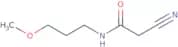
CAS:<p>Versatile small molecule scaffold</p>Formula:C7H10N2OSPurity:Min. 95%Molecular weight:170.23 g/mol2-Cyano-N-(3-methoxypropyl)acetamide
CAS:<p>Versatile small molecule scaffold</p>Formula:C7H12N2O2Purity:Min. 95%Molecular weight:156.18 g/mol2-Cyano-N-[2-(dimethylamino)ethyl]acetamide
CAS:<p>Versatile small molecule scaffold</p>Formula:C7H13N3OPurity:Min. 95%Molecular weight:155.2 g/mol2-Methyl-4-phenylpyridine
CAS:<p>2-Methyl-4-phenylpyridine is a cationic surfactant that has been shown to be effective in treating Parkinson's disease. 2-Methyl-4-phenylpyridine was found to have light emission properties, which may be related to the protein kinase C (PKC) signaling pathway. PKC phosphorylates a number of proteins, including dopamine D1 receptor and voltage gated potassium channels, leading to changes in cellular physiology. The uptake of 2-methyl-4-phenylpyridine into cells is mediated by the sodium/potassium ATPase pump. This drug has also been shown to inhibit active oxygen species production and decrease the levels of striatal dopamine in experimental models of Parkinson's disease. Clinical studies have shown that this drug can improve motor symptoms in patients with Parkinson's disease.</p>Formula:C12H11NPurity:Min. 95%Molecular weight:169.22 g/molTrimethylpyrazin-2-amine
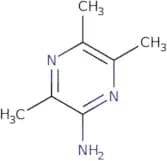
CAS:<p>Versatile small molecule scaffold</p>Formula:C7H11N3Purity:Min. 95%Molecular weight:137.18 g/molN-(1H-Indol-4-yl)acetamide
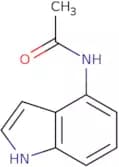
CAS:<p>Versatile small molecule scaffold</p>Formula:C10H10N2OPurity:Min. 95%Molecular weight:174.2 g/molMethyl 2-oxo-1,3-oxazolidine-5-carboxylate
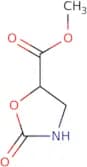
CAS:<p>Versatile small molecule scaffold</p>Formula:C5H7NO4Purity:Min. 95%Molecular weight:145.11 g/mol6-Ethyl-1,2,3,4-tetrahydropyrimidine-2,4-dione
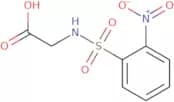
CAS:Controlled Product<p>Versatile small molecule scaffold</p>Formula:C6H8N2O2Purity:Min. 95%Molecular weight:140.14 g/mol2-(2-Nitrobenzenesulfonamido)acetic acid
CAS:<p>2-(2-Nitrobenzenesulfonamido)acetic acid is a ligand that binds to metal ions. The interaction of 2-(2-Nitrobenzenesulfonamido)acetic acid with metal ions is influenced by the conformational and crystallographic properties of the ligand. The carboxylate group interacts with the protonated form of the metal ion through hydrogen bonding. 2-(2-Nitrobenzenesulfonamido)acetic acid can be used as a starting material in combinatorial chemistry, as well as in ternary interactions with glycine and an alkene. It has also been shown to have acidic properties and can be deprotonated by an acidic ph.</p>Formula:C8H8N2O6SPurity:Min. 95%Molecular weight:260.23 g/molMethyl 4,5-dihydro-1,2-oxazole-5-carboxylate
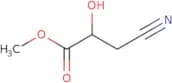
CAS:<p>Versatile small molecule scaffold</p>Formula:C5H7NO3Purity:Min. 95%Molecular weight:129.11 g/molMethyl 3-cyano-2-hydroxypropanoate
CAS:<p>Versatile small molecule scaffold</p>Formula:C5H7NO3Purity:Min. 95%Molecular weight:129.11 g/molEthyl 2-[benzyl(2-oxopropyl)amino]acetate
CAS:<p>Versatile small molecule scaffold</p>Formula:C14H19NO3Purity:Min. 95%Molecular weight:249.3 g/mol2,4-Dimethylfuran-3-carboxylic acid
CAS:<p>2,4-Dimethylfuran-3-carboxylic acid is a dianion that is used as a fungicide. It has been shown to be effective against many plant diseases, including powdery mildews, rusts, and sooty molds. The methyl ester of 2,4-dimethylfuran-3-carboxylic acid can be synthesized in the laboratory from cyclohexanone and methylamine. The reactive methyl group of the dianion catalyzes the reaction with hydroxyl groups on other molecules, forming an amide or alkylating agent. This reaction occurs stereoselectively when one of the hydrogens on the carbon adjacent to the carboxylate group is also replaced by a methyl group.</p>Formula:C7H8O3Purity:Min. 95%Molecular weight:140.14 g/mol4-Bromo-2-isopropyl-5-methylphenol
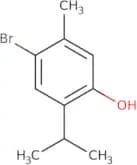
CAS:<p>4-Bromo-2-isopropyl-5-methylphenol is a quaternary ammonium salt that is used as an antimicrobial agent in water vapor and biological studies. It has been shown to be effective against bromothymol, which is a colorless crystalline compound that has antiseptic and fungicidal properties. 4-Bromo-2-isopropyl-5-methylphenol can be used to control the growth of bacteria by inhibiting the oxidation of ferrous ions to ferric ions, thereby reducing the amount of hydrogen peroxide that is produced. This chemical also has electrochemical impedance spectroscopy properties, which allow it to be extensively used for wastewater treatment.</p>Formula:C10H13BrOPurity:Min. 95%Molecular weight:229.11 g/molN-(2-Aminoethyl)-2-phenylacetamide
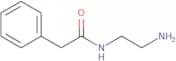
CAS:<p>Versatile small molecule scaffold</p>Formula:C10H14N2OPurity:Min. 95%Molecular weight:178.23 g/mol3-Benzyl-4-hydroxy-2H-chromen-2-one
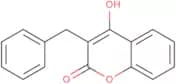
CAS:<p>3-Benzyl-4-hydroxy-2H-chromen-2-one is an enantioselective, experimental compound that is synthesized from chromic acid and hydroboration. It reacts with 3-phenylcoumarin to form homoisoflavanone in a preparative liquid chromatography reaction. The parameters of this reaction are experimentally optimized to yield the pure product.</p>Formula:C16H12O3Purity:Min. 95%Molecular weight:252.26 g/mol2,2-Difluoro-3-hydroxy-3-methylbutanoic acid
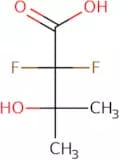
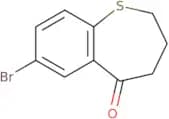
CAS:<p>Versatile small molecule scaffold</p>Formula:C5H8F2O3Purity:Min. 95%Molecular weight:154.11 g/mol7-Bromo-2,3,4,5-tetrahydro-1-benzothiepin-5-one
CAS:<p>Versatile small molecule scaffold</p>Formula:C10H9BrOSPurity:Min. 95%Molecular weight:257.15 g/mol


![2-Cyano-N-[2-(dimethylamino)ethyl]acetamide](/_next/image/?url=https%3A%2Fstatic.cymitquimica.com%2Fproducts%2F3D%2Fthumb-webp%2FQAA02955.webp&w=3840&q=75)


![Ethyl 2-[benzyl(2-oxopropyl)amino]acetate](/_next/image/?url=https%3A%2Fstatic.cymitquimica.com%2Fproducts%2F3D%2Fthumb-webp%2FQAA05740.webp&w=3840&q=75)