


Building Blocks
This section contains fundamental products for the synthesis of organic and biological compounds. Building blocks are the essential starting materials used to construct complex molecules through various chemical reactions. They play a critical role in drug discovery, material science, and chemical research. At CymitQuimica, we offer a diverse range of high-quality building blocks to support your innovative research and industrial projects, ensuring you have the essential components for successful synthesis.
Subcategories of "Building Blocks"
- Boronic Acids & Boronic Acid Derivatives(5,756 products)
- Chiral Building Blocks(1,242 products)
- Hydrocarbon Building Blocks(6,095 products)
- Organic Building Blocks(61,038 products)
Found 196817 products of "Building Blocks"
Sort by
Purity (%)
0
100
|
0
|
50
|
90
|
95
|
100
rac-tert-Butyl (3aR,6aS)-3a,6a-dimethyl-octahydropyrrolo[3,4-c]pyrrole-2-carboxylate
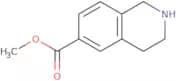
CAS:<p>Versatile small molecule scaffold</p>Formula:C13H24N2O2Purity:Min. 95%Molecular weight:240.34 g/molMethyl 1,2,3,4-Tetrahydroquinoline-6-carboxylate
CAS:<p>Versatile small molecule scaffold</p>Formula:C11H13NO2Purity:Min. 95%Molecular weight:191.23 g/molBenzyl 3-{[(tert-butoxy)carbonyl]amino}pyrrolidine-1-carboxylate
CAS:<p>Versatile small molecule scaffold</p>Formula:C17H24N2O4Purity:Min. 95%Molecular weight:320.4 g/mol3-[4-(Trifluoromethyl)phenyl]piperazin-2-one
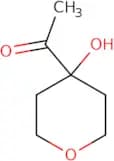
CAS:<p>Versatile small molecule scaffold</p>Formula:C11H11F3N2OPurity:Min. 95%Molecular weight:244.21 g/mol1-(4-Hydroxyoxan-4-yl)ethan-1-one
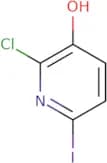
CAS:<p>Versatile small molecule scaffold</p>Formula:C7H12O3Purity:Min. 95%Molecular weight:144.17 g/mol2-Chloro-3-hydroxy-6-iodopyridine
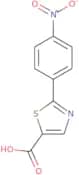
CAS:<p>2-Chloro-3-hydroxy-6-iodopyridine is an electrophile that reacts with magnesium to form a reactive intermediate. This intermediate can react with halides to form diaryl compounds and reactive intermediates, which can be used as reagents for organic synthesis. 2-Chloro-3-hydroxy-6-iodopyridine is also a low temperature reactive intermediate and it has been shown to react with sulfonates to form cycloadducts. This compound can be eliminated by reductive amination or hydrolysis, leading to yields of the desired product.</p>Formula:C5H3ClINOPurity:Min. 95%Molecular weight:255.44 g/mol2-(4-Nitrophenyl)-1,3-thiazole-5-carboxylic acid
CAS:<p>Versatile small molecule scaffold</p>Formula:C10H6N2O4SPurity:Min. 95%Molecular weight:250.23 g/mol2-[(2R)-Pyrrolidin-2-yl]-2,3-dihydro-1H-inden-2-ol
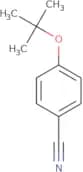
CAS:<p>Versatile small molecule scaffold</p>Formula:C13H17NOPurity:Min. 95%Molecular weight:203.3 g/mol4-tert-Butoxybenzonitrile
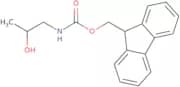
CAS:<p>4-tert-Butoxybenzonitrile is an organocatalyst that can catalyze the transformation of aryl iodides to aryl radicals, which can then react with organic substrates. It is most often used as a catalyst for the synthesis of α-amino nitriles. 4-tert-Butoxybenzonitrile can be used in the presence of copper salts and N-methylmorpholine to catalyze the reaction of aryl iodides with alcohols. Mechanistic experiments have shown that 4-tert-butoxybenzonitrile operates by radical coupling, generating an alkyl radical intermediate that reacts with the substrate.</p>Formula:C11H13NOPurity:Min. 95%Molecular weight:175.23 g/mol9H-Fluoren-9-ylmethyl N-(2-hydroxypropyl)carbamate
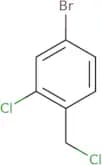
CAS:<p>Versatile small molecule scaffold</p>Formula:C18H19NO3Purity:Min. 95%Molecular weight:297.3 g/mol4-Bromo-2-chloro-1-(chloromethyl)benzene
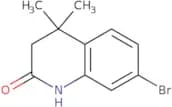
CAS:<p>Versatile small molecule scaffold</p>Formula:C7H5BrCl2Purity:Min. 95%Molecular weight:239.92 g/mol7-Bromo-4,4-dimethyl-3,4-dihydroquinolin-2(1H)-one
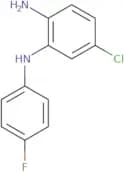
CAS:<p>Versatile small molecule scaffold</p>Formula:C11H12BrNOPurity:Min. 95%Molecular weight:254.13 g/mol5-Chloro-1-N-(4-fluorophenyl)benzene-1,2-diamine
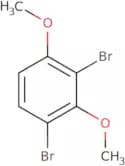
CAS:<p>Versatile small molecule scaffold</p>Formula:C12H10ClFN2Purity:Min. 95%Molecular weight:236.67 g/mol1,3-Dibromo-2,4-dimethoxybenzene
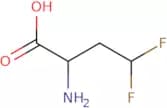
CAS:<p>Versatile small molecule scaffold</p>Formula:C8H8Br2O2Purity:Min. 95%Molecular weight:295.96 g/mol(2R)-2-Amino-4,4-difluorobutanoic acid
CAS:<p>Versatile small molecule scaffold</p>Formula:C4H7F2NO2Purity:Min. 95%Molecular weight:139.1 g/mol6,6-Dimethyl-4H,6H,7H-pyrano[4,3-d][1,3]thiazol-2-amine
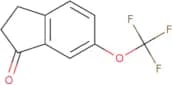
CAS:<p>Versatile small molecule scaffold</p>Formula:C8H12N2OSPurity:Min. 95%Molecular weight:184.26 g/mol2,3-Dihydro-6-(trifluoroMethoxy)-1H-inden-1-one
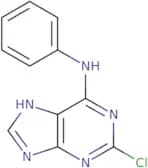
CAS:<p>Versatile small molecule scaffold</p>Formula:C10H7F3O2Purity:Min. 95%Molecular weight:216.16 g/mol2-Chloro-N-phenyl-7H-purin-6-amine
CAS:<p>2-Chloro-N-phenyl-7H-purin-6-amine is a substituted purine that has been shown to have growth promoting properties in cultured callus and excised plants. It also shows cytokinin activity and betacyanin production in wheat leaves, tobacco leaves, and petunia flowers. This compound binds to the betalactamase enzyme, which degrades the antibiotic cephalosporins, causing resistance to this class of antibiotics. The biological activity of 2-Chloro-N-phenyl-7H-purin-6-amine was observed through its ability to activate nitric oxide synthase (iNOS) and inhibit protein synthesis in purified bacterial extracts.</p>Formula:C11H8ClN5Purity:Min. 95%Molecular weight:245.67 g/mol7-Amino-5-azaspiro[2.4]heptan-4-one
CAS:<p>Versatile small molecule scaffold</p>Formula:C6H10N2OPurity:Min. 95%Molecular weight:126.16 g/molrac-N-[(1R,2S)-2-Hydroxy-2,3-dihydro-1H-inden-1-yl]acetamide
CAS:<p>Versatile small molecule scaffold</p>Formula:C11H13NO2Purity:Min. 95%Molecular weight:191.23 g/mol
![rac-tert-Butyl (3aR,6aS)-3a,6a-dimethyl-octahydropyrrolo[3,4-c]pyrrole-2-carboxylate](/_next/image/?url=https%3A%2Fstatic.cymitquimica.com%2Fproducts%2F3D%2Fthumb-webp%2FKGD07226.webp&w=3840&q=75)

![Benzyl 3-{[(tert-butoxy)carbonyl]amino}pyrrolidine-1-carboxylate](/_next/image/?url=https%3A%2Fstatic.cymitquimica.com%2Fproducts%2F3D%2Fthumb-webp%2FKHA05749.webp&w=3840&q=75)
![3-[4-(Trifluoromethyl)phenyl]piperazin-2-one](/_next/image/?url=https%3A%2Fstatic.cymitquimica.com%2Fproducts%2F3D%2Fthumb-webp%2FKHA11029.webp&w=3840&q=75)
![2-[(2R)-Pyrrolidin-2-yl]-2,3-dihydro-1H-inden-2-ol](/_next/image/?url=https%3A%2Fstatic.cymitquimica.com%2Fproducts%2F3D%2Fthumb-webp%2FKHA24676.webp&w=3840&q=75)
![6,6-Dimethyl-4H,6H,7H-pyrano[4,3-d][1,3]thiazol-2-amine](/_next/image/?url=https%3A%2Fstatic.cymitquimica.com%2Fproducts%2F3D%2Fthumb-webp%2FKHA38129.webp&w=3840&q=75)
![7-Amino-5-azaspiro[2.4]heptan-4-one](/_next/image/?url=https%3A%2Fstatic.cymitquimica.com%2Fproducts%2F3D%2Fthumb-webp%2FKHA42197.webp&w=3840&q=75)
![rac-N-[(1R,2S)-2-Hydroxy-2,3-dihydro-1H-inden-1-yl]acetamide](/_next/image/?url=https%3A%2Fstatic.cymitquimica.com%2Fproducts%2F3D%2Fthumb-webp%2FKHA43624.webp&w=3840&q=75)