Building Blocks
This section contains fundamental products for the synthesis of organic and biological compounds. Building blocks are the essential starting materials used to construct complex molecules through various chemical reactions. They play a critical role in drug discovery, material science, and chemical research. At CymitQuimica, we offer a diverse range of high-quality building blocks to support your innovative research and industrial projects, ensuring you have the essential components for successful synthesis.
Subcategories of "Building Blocks"
- Boronic Acids & Boronic Acid Derivatives(5,778 products)
- Chiral Building Blocks(1,242 products)
- Hydrocarbon Building Blocks(6,098 products)
- Organic Building Blocks(61,059 products)
Found 199580 products of "Building Blocks"
Sort by
Purity (%)
0
100
|
0
|
50
|
90
|
95
|
100
Ethyl 3-(2-methylcyclopropyl)-3-oxopropanoates
CAS:<p>Versatile small molecule scaffold</p>Formula:C9H14O3Purity:Min. 95%Molecular weight:170.2 g/mol4-Cyano-1H-imidazole-5-carboxylic acid
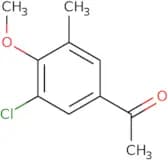
CAS:<p>Versatile small molecule scaffold</p>Formula:C5H3N3O2Purity:Min. 95%Molecular weight:137.1 g/mol1-(3-Chloro-4-methoxy-5-methylphenyl)ethan-1-one
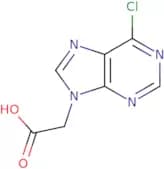
CAS:<p>Versatile small molecule scaffold</p>Formula:C10H11ClO2Purity:Min. 95%Molecular weight:198.64 g/mol2-(6-Chloro-9H-purin-9-yl)acetic acid
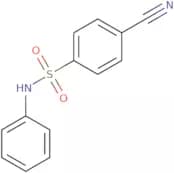
CAS:<p>Versatile small molecule scaffold</p>Formula:C7H5ClN4O2Purity:Min. 95%Molecular weight:212.59 g/mol4-Cyano-N-phenylbenzene-1-sulfonamide
CAS:4-Cyano-N-phenylbenzene-1-sulfonamide is a salt that belongs to the group of aromatic sulfonamides. It is a white, crystalline solid with a melting point of 197 °C. 4-Cyano-N-phenylbenzene-1-sulfonamide has been found to be a polymorphic substance, which means that it can exist in more than one form. The systematic name for this compound is 1-(4'-cyano-3'-nitrophenyl)-4-(4'-cyano-3'-nitrophenyl)benzenesulfonamide monohydrochloride (2:1), and it has two polymorphs: the tetragonal crystal system and the orthorhombic crystal system. 4-Cyano-N-phenylbenzene-1 -sulfonamide also has hydrogen bonding interactions between its molecules and diffraction patternsFormula:C13H10N2O2SPurity:Min. 95%Molecular weight:258.3 g/mol(S)-1-(4-Chlorophenyl)ethanamine hydrochloride
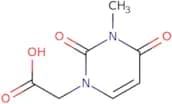
CAS:<p>Versatile small molecule scaffold</p>Formula:C8H11Cl2NPurity:Min. 95%Molecular weight:192.09 g/mol2-(3-Methyl-2,4-dioxo-1,2,3,4-tetrahydropyrimidin-1-yl)acetic acid
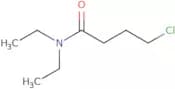
CAS:Versatile small molecule scaffoldFormula:C7H8N2O4Purity:Min. 95%Molecular weight:184.15 g/mol4-Chloro-N,N-diethyl-butyramide
CAS:Versatile small molecule scaffoldFormula:C8H16ClNOPurity:Min. 95%Molecular weight:177.67 g/mol2-[(2-Cyanoethyl)sulfanyl]acetic acid
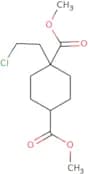
CAS:<p>Versatile small molecule scaffold</p>Formula:C5H7NO2SPurity:Min. 95%Molecular weight:145.2 g/molDimethyl 1-(2-chloroethyl)cyclohexane-1,4-dicarboxylate
CAS:<p>Versatile small molecule scaffold</p>Formula:C12H19ClO4Purity:Min. 95%Molecular weight:262.73 g/molDimethyl bicyclo[3.2.1]octane-1,5-dicarboxylate
CAS:<p>Versatile small molecule scaffold</p>Formula:C12H18O4Purity:Min. 95%Molecular weight:226.27 g/mol2-[2-(Ethylamino)ethoxy]ethan-1-ol
CAS:<p>Versatile small molecule scaffold</p>Formula:C6H15NO2Purity:Min. 95%Molecular weight:133.19 g/molImidazo[1,2-a]pyrimidine-3-carbaldehyde
CAS:<p>Imidazo[1,2-a]pyrimidine-3-carbaldehyde is a pyridine that has been shown to have antibacterial activity. The imidazopyridines are a class of compounds with a 1,2-imidazole ring fused to a pyridine ring. Imidazo[1,2-a]pyrimidine-3-carbaldehyde is an example of such a compound. Imidazopyridines may be used as scaffolds for the development of new antibiotics. The chemical structure and activity of this compound may be related to its ability to bind to the 50S ribosomal subunit in bacteria and inhibit protein synthesis. This inhibition leads to cell death by inhibiting the production of proteins vital for cell division.</p>Formula:C7H5N3OPurity:Min. 95%Molecular weight:147.13 g/molImidazo[1,2-a]pyrazine-3-carbaldehyde
CAS:<p>Versatile small molecule scaffold</p>Formula:C7H5N3OPurity:Min. 95%Molecular weight:147.13 g/molN-[2-(Diethylamino)ethyl]-4-hydroxybenzamide
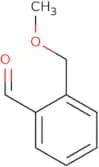
CAS:Versatile small molecule scaffoldFormula:C13H20N2O2Purity:Min. 95%Molecular weight:236.31 g/mol2-(Methoxymethyl)benzaldehyde
CAS:<p>2-(Methoxymethyl)benzaldehyde is a naturally occurring compound that can be found in the environment and in food. It has been shown to have antioxidant properties, which is due to its ability to inhibit reductase enzymes. This process is important for maintaining a healthy balance of cholesterol levels in the body. The high level of 2-(Methoxymethyl)benzaldehyde in some plants may be due to the conversion from 3-hydroxy-3-methylglutaryl coenzyme A (HMG CoA), which is an intermediate in the synthesis of cholesterol.<br>2-(Methoxymethyl)benzaldehyde has been shown to have potential as a supplement for weight loss and diabetes treatment.</p>Formula:C9H10O2Purity:Min. 95%Molecular weight:150.17 g/mol(2-Methoxyethyl)[(5-methylfuran-2-yl)methyl]amine
CAS:<p>Versatile small molecule scaffold</p>Formula:C9H15NO2Purity:Min. 95%Molecular weight:169.22 g/mol[2-(4-Chlorophenoxy)ethyl]amine hydrochloride
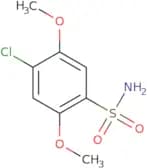
CAS:<p>Versatile small molecule scaffold</p>Formula:C8H11Cl2NOPurity:Min. 95%Molecular weight:208.08 g/mol4-Chloro-2,5-dimethoxybenzene-1-sulfonamide
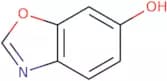
CAS:Versatile small molecule scaffoldFormula:C8H10ClNO4SPurity:Min. 95%Molecular weight:251.69 g/mol1,3-benzoxazol-6-ol
CAS:<p>1,3-Benzoxazol-6-ol is a polymer that is synthesized by the reaction of piperonyl butoxide and polyphosphoric acid with a high molecular weight. The polymer solution has been shown to be stable at room temperature for up to six weeks. The polymer can be used as an additive in polyphosphoric acid solutions to prevent the formation of precipitates. It also has applications in the synthesis of other polymers with different molecular weights.</p>Formula:C7H5NO2Purity:Min. 95%Molecular weight:135.12 g/mol



![2-[(2-Cyanoethyl)sulfanyl]acetic acid](/_next/image/?url=https%3A%2Fstatic.cymitquimica.com%2Fproducts%2F3D%2Fthumb-webp%2FGCA79610.webp&w=3840&q=75)
![Dimethyl bicyclo[3.2.1]octane-1,5-dicarboxylate](/_next/image/?url=https%3A%2Fstatic.cymitquimica.com%2Fproducts%2F3D%2Fthumb-webp%2FGEA00411.webp&w=3840&q=75)
![2-[2-(Ethylamino)ethoxy]ethan-1-ol](/_next/image/?url=https%3A%2Fstatic.cymitquimica.com%2Fproducts%2F3D%2Fthumb-webp%2FGEA00799.webp&w=3840&q=75)
![Imidazo[1,2-a]pyrimidine-3-carbaldehyde](/_next/image/?url=https%3A%2Fstatic.cymitquimica.com%2Fproducts%2F3D%2Fthumb-webp%2FGEA01256.webp&w=3840&q=75)
![Imidazo[1,2-a]pyrazine-3-carbaldehyde](/_next/image/?url=https%3A%2Fstatic.cymitquimica.com%2Fproducts%2F3D%2Fthumb-webp%2FGEA01258.webp&w=3840&q=75)
![N-[2-(Diethylamino)ethyl]-4-hydroxybenzamide](/_next/image/?url=https%3A%2Fstatic.cymitquimica.com%2Fproducts%2F3D%2Fthumb-webp%2FGEA01837.webp&w=3840&q=75)
![(2-Methoxyethyl)[(5-methylfuran-2-yl)methyl]amine](/_next/image/?url=https%3A%2Fstatic.cymitquimica.com%2Fproducts%2F3D%2Fthumb-webp%2FGEA02747.webp&w=3840&q=75)
![[2-(4-Chlorophenoxy)ethyl]amine hydrochloride](/_next/image/?url=https%3A%2Fstatic.cymitquimica.com%2Fproducts%2F3D%2Fthumb-webp%2FGEA03800.webp&w=3840&q=75)