


Building Blocks
This section contains fundamental products for the synthesis of organic and biological compounds. Building blocks are the essential starting materials used to construct complex molecules through various chemical reactions. They play a critical role in drug discovery, material science, and chemical research. At CymitQuimica, we offer a diverse range of high-quality building blocks to support your innovative research and industrial projects, ensuring you have the essential components for successful synthesis.
Subcategories of "Building Blocks"
- Boronic Acids & Boronic Acid Derivatives(5,778 products)
- Chiral Building Blocks(1,243 products)
- Hydrocarbon Building Blocks(6,097 products)
- Organic Building Blocks(61,052 products)
Found 201390 products of "Building Blocks"
Sort by
Purity (%)
0
100
|
0
|
50
|
90
|
95
|
100
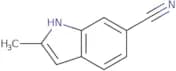
2-Methylindole-6-carbonitrile
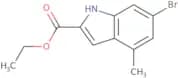
CAS:Versatile small molecule scaffoldFormula:C10H8N2Purity:Min. 95%Molecular weight:156.18 g/molEthyl 6-bromo-4-methyl-1H-indole-2-carboxylate
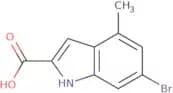
CAS:Versatile small molecule scaffoldFormula:C12H12BrNO2Purity:Min. 95%Molecular weight:282.13 g/mol6-Bromo-4-methyl-1H-indole-2-carboxylic acid
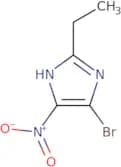
CAS:<p>Versatile small molecule scaffold</p>Formula:C10H8BrNO2Purity:Min. 95%Molecular weight:254.08 g/mol4-Bromo-2-ethyl-5-nitro-1H-imidazole
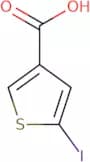
CAS:<p>Versatile small molecule scaffold</p>Formula:C5H6BrN3O2Purity:Min. 95%Molecular weight:220.02 g/mol5-Iodothiophene-3-carboxylic acid
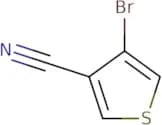
CAS:<p>Versatile small molecule scaffold</p>Formula:C5H3IO2SPurity:Min. 95%Molecular weight:254.05 g/mol4-Bromothiophene-3-carbonitrile
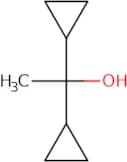
CAS:<p>4-Bromothiophene-3-carbonitrile is a reactive, heterocyclic compound that can be prepared by reacting ethyl bromide with 3-carbonitrile in the presence of triethyl orthoformate. This compound can be used as an acceptor for electron and has an optical spectrum that contains a strong absorption at 295 nm, which corresponds to its electron affinity. The compound is also resistant to halogenation and has three functional groups. 4-Bromothiophene-3-carbonitrile can react with various types of halides or other organic compounds to form addition products.</p>Formula:C5H2BrNSPurity:Min. 95%Molecular weight:188.05 g/mol1,1-Dicyclopropylethan-1-ol
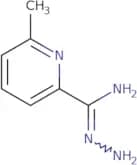
CAS:<p>Versatile small molecule scaffold</p>Formula:C8H14OPurity:Min. 95%Molecular weight:126.2 g/molN-Amino-6-methylpyridine-2-carboximidamide
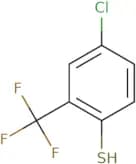
CAS:<p>Versatile small molecule scaffold</p>Formula:C7H10N4Purity:Min. 95%Molecular weight:150.18 g/mol4-Chloro-2-trifluoromethylbenzenethiol
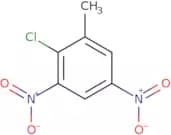
CAS:<p>Versatile small molecule scaffold</p>Formula:C7H4ClF3SPurity:Min. 95%Molecular weight:212.62 g/mol2-Chloro-1-methyl-3,5-dinitrobenzene
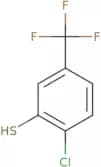
CAS:Versatile small molecule scaffoldFormula:C7H5ClN2O4Purity:Min. 95%Molecular weight:216.58 g/mol2-Chloro-5-trifluoromethylbenzenethiol
CAS:Versatile small molecule scaffoldFormula:C7H4ClF3SPurity:Min. 95%Molecular weight:212.62 g/mol1-(2-Methylpyrrolidin-1-yl)ethan-1-one
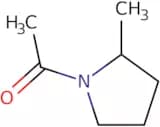
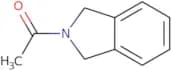
CAS:1-(2-Methylpyrrolidin-1-yl)ethan-1-one is a chiral hydrolytic enzyme that catalyzes the hydrolysis of ester bonds. It is stereoselective, with an absolute stereochemistry of S.Formula:C7H13NOPurity:Min. 95%Molecular weight:127.18 g/mol1-(2,3-Dihydro-1H-isoindol-2-yl)ethan-1-one
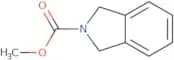
CAS:<p>Versatile small molecule scaffold</p>Formula:C10H11NOPurity:Min. 95%Molecular weight:161.2 g/molMethyl 2,3-dihydro-1H-isoindole-2-carboxylate
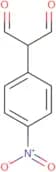
CAS:Versatile small molecule scaffoldFormula:C10H11NO2Purity:Min. 95%Molecular weight:177.2 g/mol2-(4-Nitrophenyl)malondialdehyde
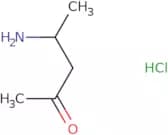
CAS:<p>2-(4-Nitrophenyl)malondialdehyde (2-NPMA) is a neutral, water soluble dye that has an affinity for malondialdehyde. It is a cyanine dye with a basic structure and it can be used as an effective method to detect malondialdehyde in aqueous solutions. Merocyanine dyes are symmetric and unsymmetric cyanine dyes with different spectral properties. A merocyanine dye can be either basic or acidic depending on the pH of the solution. At low pH values, it will have a positive charge and at high pH values, it will have a negative charge. The merocyanine dye 2-NPMA is effective in detecting malondialdehyde because of its affinity for this chemical.</p>Formula:C9H7NO4Purity:Min. 95%Molecular weight:193.16 g/mol4-Aminopentan-2-one hydrochloride
CAS:<p>Versatile small molecule scaffold</p>Formula:C5H12ClNOPurity:Min. 95%Molecular weight:137.61 g/mol6-Iod-1-hexen
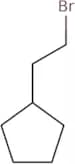
CAS:6-Iod-1-hexen is an organic compound that belongs to the class of unsymmetrical compounds. It can be prepared by a cross-coupling reaction between hexene and iodine, which involves alkyl radicals and results in a six-membered ring. This process can be catalyzed by copper or nickel. The 6-iodohexenyl radical is generated by irradiation with light, which leads to the formation of an ethylene intermediate (a five-membered ring). The ethylene intermediate undergoes a carbonylative cyclization to form the desired product. 6-Iod-1-hexen is used for the preparation of other organic compounds such as 3,4,5,6,7,8,9-octahydroanthracene.Formula:C6H11IPurity:Min. 95%Molecular weight:210.06 g/mol(2-bromoethyl)cyclopentane
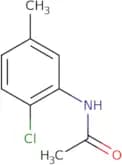
CAS:<p>Versatile small molecule scaffold</p>Formula:C7H13BrPurity:Min. 95%Molecular weight:177.09 g/molN-(2-Chloro-5-methylphenyl)acetamide
CAS:<p>Versatile small molecule scaffold</p>Formula:C9H10ClNOPurity:Min. 95%Molecular weight:183.63 g/mol[(4-Ethyl-3,4-dihydro-2H-1,4-benzoxazin-2-yl)methyl](methyl)amine
CAS:<p>Versatile small molecule scaffold</p>Formula:C12H18N2OPurity:Min. 95%Molecular weight:206.28 g/mol


amine](/_next/image/?url=https%3A%2Fstatic.cymitquimica.com%2Fproducts%2F3D%2Fthumb-webp%2FTDA13865.webp&w=3840&q=75)