Building Blocks
This section contains fundamental products for the synthesis of organic and biological compounds. Building blocks are the essential starting materials used to construct complex molecules through various chemical reactions. They play a critical role in drug discovery, material science, and chemical research. At CymitQuimica, we offer a diverse range of high-quality building blocks to support your innovative research and industrial projects, ensuring you have the essential components for successful synthesis.
Subcategories of "Building Blocks"
- Boronic Acids & Boronic Acid Derivatives(5,778 products)
- Chiral Building Blocks(1,243 products)
- Hydrocarbon Building Blocks(6,097 products)
- Organic Building Blocks(61,052 products)
Found 201390 products of "Building Blocks"
Sort by
Purity (%)
0
100
|
0
|
50
|
90
|
95
|
100
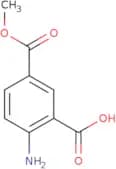
2-Amino-5-methoxycarbonylbenzoic acid
CAS:<p>Versatile small molecule scaffold</p>Formula:C9H9NO4Purity:Min. 95%Molecular weight:195.17 g/mol2-(2-Phenylethyl)cyclopentan-1-amine
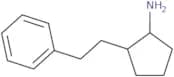
CAS:Versatile small molecule scaffoldFormula:C13H19NPurity:Min. 95%Molecular weight:189.3 g/mol6-chloro-5-methoxy-1H-indole
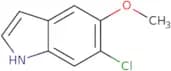
CAS:<p>6-chloro-5-methoxy-1H-indole is an aromatic compound that can be synthesized by the amination of acetyl chloride. This reaction is followed by a borohydride reduction of the imine, and then an acetylation of the resulting alcohol. The synthesis method involves two steps: first, a borohydride reduction of the imine using sodium borohydride; and second, an acetylation with chloral. The final product is purified by distillation and elemental analysis to determine yields.</p>Formula:C9H8NOClPurity:Min. 95%Molecular weight:181.61 g/mol2-Fluoro-5-methyl-4-nitrophenol
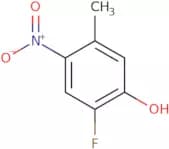
CAS:<p>Versatile small molecule scaffold</p>Formula:C7H6FNO3Purity:Min. 95%Molecular weight:171.13 g/mol1-Fluoro-2-methoxy-4-methyl-5-nitrobenzene
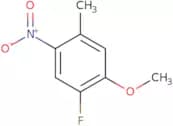
CAS:<p>Versatile small molecule scaffold</p>Formula:C8H8FNO3Purity:Min. 95%Molecular weight:185.15 g/mol2-(bromomethyl)-6-chloropyridine
CAS:<p>2-(bromomethyl)-6-chloropyridine is a ligand that binds to metal atoms. It forms a complex with the metal atom by coordinating with two or more bromine atoms and one or two hydrogens. 2-(Bromomethyl)-6-chloropyridine has been shown to interact with pyridine, x-ray diffraction studies, crystal x-ray diffraction, and ligands in crystal x-ray diffraction studies. The conformation of this compound can be deformed by substituting the methyl group on the chloro group for other moieties. These interactions have been shown using X-Ray diffraction studies and crystal x-ray diffraction studies.</p>Formula:C6H5BrClNPurity:Min. 95%Molecular weight:206.47 g/mol[(6-Chloropyridin-2-yl)methyl]dimethylamine
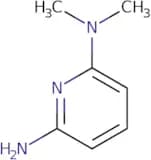
CAS:Versatile small molecule scaffoldFormula:C8H11ClN2Purity:Min. 95%Molecular weight:170.64 g/molN2,N2-Dimethylpyridine-2,6-diamine
CAS:<p>Versatile small molecule scaffold</p>Formula:C7H11N3Purity:Min. 95%Molecular weight:137.18 g/mol1-Oxa-7-azaspiro[4.5]decane
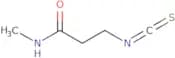
CAS:Oxa-7-azaspiro[4.5]decane is a compound that is structurally related to the neurotransmitter substance P and has been shown to be a potent, selective antagonist of neurokinin (NK) receptors. Oxa-7-azaspiro[4.5]decane inhibits the release of dopamine from rat brain synaptosomes and depresses synapses in the rat hippocampus, an effect that can be reversed by administration of an NK receptor antagonist. This drug also has anti-cancer activity against chemotherapy-induced depression in rats and has been shown to inhibit proliferation in rat hepatocytes. The oxygen atom on the molecule is responsible for its oxidative properties, which are due to its ability to form reactive oxygen species such as superoxide and hydroxyl radicals when it reacts with water or hydrogen peroxide. These reactive oxygen species are able to damage DNA, RNA, enzymes, or other molecules by oxidation.Formula:C8H15NOPurity:Min. 95%Molecular weight:141.21 g/mol3-Isothiocyanato-N-methylpropanamide
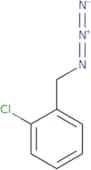
CAS:Versatile small molecule scaffoldFormula:C5H8N2OSPurity:Min. 95%Molecular weight:144.2 g/mol1-(Azidomethyl)-2-chlorobenzene
CAS:<p>Versatile small molecule scaffold</p>Formula:C7H6ClN3Purity:Min. 95%Molecular weight:167.59 g/mol[2-Bromo-1-(propan-2-yloxy)ethyl]benzene
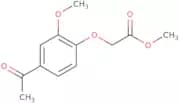
CAS:<p>Versatile small molecule scaffold</p>Formula:C11H15BrOPurity:Min. 95%Molecular weight:243.14 g/molMethyl 2-(4-acetyl-2-methoxyphenoxy)acetate
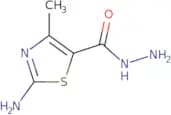
CAS:Versatile small molecule scaffoldFormula:C12H14O5Purity:Min. 95%Molecular weight:238.24 g/mol2-Imino-4-methyl-2,3-dihydro-1,3-thiazole-5-carbohydrazide
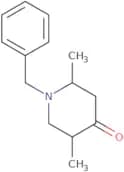
CAS:Versatile small molecule scaffoldFormula:C5H8N4OSPurity:Min. 95%Molecular weight:172.21 g/mol1-Benzyl-2,5-dimethylpiperidin-4-one
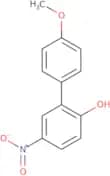
CAS:Versatile small molecule scaffoldFormula:C14H19NOPurity:Min. 95%Molecular weight:217.31 g/mol2-(4-Methoxyphenyl)-4-nitrophenol
CAS:<p>Versatile small molecule scaffold</p>Formula:C13H11NO4Purity:Min. 95%Molecular weight:245.23 g/mol2-(7,7-Dimethylbicyclo[2.2.1]heptan-1-yl)acetic acid
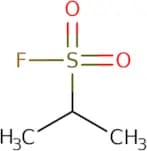
CAS:Versatile small molecule scaffoldFormula:C11H18O2Purity:Min. 95%Molecular weight:182.26 g/molPropane-2-sulfonyl fluoride
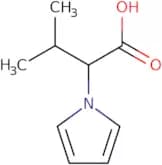
CAS:Propane-2-sulfonyl fluoride is a fluorinating agent that has been used to study the structure of nucleic acids. It is also used in the preparation of sulfones and sulfuryls. In Alzheimer's disease, Propane-2-sulfonyl fluoride has been shown to crosslink the amyloid beta peptide and inhibit the formation of fibrils. The effective dose is determined by its therapeutic value as a treatment for Alzheimer's disease.Formula:C3H7FO2SPurity:Min. 95%Molecular weight:126.15 g/mol(2S)-3-Methyl-2-(1H-pyrrol-1-yl)butanoic acid
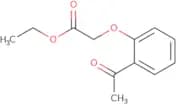
CAS:<p>Versatile small molecule scaffold</p>Formula:C9H13NO2Purity:Min. 95%Molecular weight:167.2 g/molEthyl 2-(2-acetylphenoxy)acetate
CAS:<p>Versatile small molecule scaffold</p>Formula:C12H14O4Purity:Min. 95%Molecular weight:222.24 g/mol

![[(6-Chloropyridin-2-yl)methyl]dimethylamine](/_next/image/?url=https%3A%2Fstatic.cymitquimica.com%2Fproducts%2F3D%2Fthumb-webp%2FNCA76380.webp&w=3840&q=75)
![1-Oxa-7-azaspiro[4.5]decane](/_next/image/?url=https%3A%2Fstatic.cymitquimica.com%2Fproducts%2F3D%2Fthumb-webp%2FNCA76656.webp&w=3840&q=75)
![[2-Bromo-1-(propan-2-yloxy)ethyl]benzene](/_next/image/?url=https%3A%2Fstatic.cymitquimica.com%2Fproducts%2F3D%2Fthumb-webp%2FNCA78556.webp&w=3840&q=75)
![2-(7,7-Dimethylbicyclo[2.2.1]heptan-1-yl)acetic acid](/_next/image/?url=https%3A%2Fstatic.cymitquimica.com%2Fproducts%2F3D%2Fthumb-webp%2FNCA80563.webp&w=3840&q=75)