Building Blocks
This section contains fundamental products for the synthesis of organic and biological compounds. Building blocks are the essential starting materials used to construct complex molecules through various chemical reactions. They play a critical role in drug discovery, material science, and chemical research. At CymitQuimica, we offer a diverse range of high-quality building blocks to support your innovative research and industrial projects, ensuring you have the essential components for successful synthesis.
Subcategories of "Building Blocks"
- Boronic Acids & Boronic Acid Derivatives(5,780 products)
- Chiral Building Blocks(1,241 products)
- Hydrocarbon Building Blocks(6,100 products)
- Organic Building Blocks(61,029 products)
Found 205306 products of "Building Blocks"
Sort by
Purity (%)
0
100
|
0
|
50
|
90
|
95
|
100
tert-Butyl N-[(1-hydroxy-2-methylpropan-2-yl)oxy]carbamate
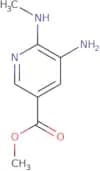
CAS:Versatile small molecule scaffoldFormula:C9H19NO4Purity:Min. 95%Molecular weight:205.25 g/molMethyl 5-amino-6-(methylamino)pyridine-3-carboxylate
CAS:Versatile small molecule scaffold
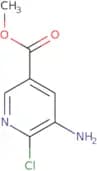
Formula:C8H11N3O2Purity:Min. 95%Molecular weight:181.19 g/molMethyl 5-amino-6-chloropyridine-3-carboxylate
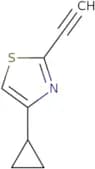
CAS:Versatile small molecule scaffoldFormula:C7H7ClN2O2Purity:Min. 95%Molecular weight:186.6 g/mol4-Cyclopropyl-2-ethynyl-1,3-thiazole
CAS:Versatile small molecule scaffoldFormula:C8H7NSPurity:Min. 95%Molecular weight:149.21 g/mol2-Ethynyl-4-methylthiazole
CAS:2-Ethynyl-4-methylthiazole is a cell-based kinase inhibitor that binds to the ATP binding site on the enzyme and inhibits phosphorylation. It was shown to inhibit cell growth in vitro by interfering with the production of TGF-β, activin, and other growth factors. The inhibitory activity of 2-Ethynyl-4-methylthiazole is selective for receptor kinases and is not effective against alk5 kinase. This drug has been shown to be an inhibitor of cellular growth in vitro and may be useful for the treatment of cancer.
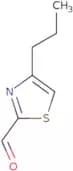
Formula:C6H5NSPurity:Min. 95%Molecular weight:123.17 g/mol4-Propyl-1,3-thiazole-2-carbaldehyde
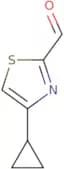
CAS:Versatile small molecule scaffoldFormula:C7H9NOSPurity:Min. 95%Molecular weight:155.22 g/mol2-Thiazolecarboxaldehyde, 4-cyclopropyl-
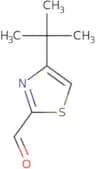
CAS:Versatile small molecule scaffoldFormula:C7H7NOSPurity:Min. 95%Molecular weight:153.2 g/mol4-tert-Butyl-1,3-thiazole-2-carbaldehyde
CAS:Versatile small molecule scaffoldFormula:C8H11NOSPurity:Min. 95%Molecular weight:169.25 g/mol(3-Chlorophenyl)(cyclohexyl)methanone
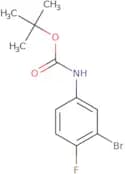
CAS:Versatile small molecule scaffoldFormula:C13H15ClOPurity:Min. 95%Molecular weight:222.71 g/molN-Boc-3-bromo-4-fluoroaniline
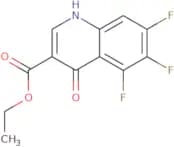
CAS:N-Boc-3-bromo-4-fluoroaniline is an electrophilic compound that has a postulated use in the synthesis of medicinally active compounds. The yield of this product can be increased by removing the boc group with methanol and then deprotecting with chloride. This compound is structurally similar to other electrophiles, such as 3-bromo-4-chloroaniline, which has been used as an inhibitor. N-Boc-3-bromo-4-fluoroaniline’s postulated use is similar to that of 3,5,6,-trimethylaniline, which has been used as a substrate for synthetic reactions.Formula:C11H13BrFNO2Purity:Min. 95%Molecular weight:290.13 g/molEthyl 5,6,7-trifluoro-4-oxo-1,4-dihydroquinoline-3-carboxylate
CAS:Versatile small molecule scaffold
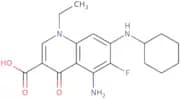
Formula:C12H8F3NO3Purity:Min. 95%Molecular weight:271.19 g/molAS1842856
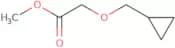
CAS:AS1842856 is a cell factor that belongs to the group of transcriptional regulators and is found in human serum. AS1842856 regulates the expression of FOXO1, which is involved in autophagy, metabolism and cell cycle regulation. AS1842856 has been shown to induce autophagy by activating the expression of ATG5 and ATG7. The chemical inhibitors of this drug have been shown to inhibit mitochondrial membrane potential and reduce ATP levels in human hepatocyte-like cells. These findings are consistent with its ability to induce autophagy through the induction of FOXO1.Formula:C18H22FN3O3Purity:Min. 95%Molecular weight:347.38 g/molMethyl 2-(cyclopropylmethoxy)acetate
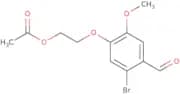
CAS:Versatile small molecule scaffoldFormula:C7H12O3Purity:Min. 95%Molecular weight:144.17 g/mol2-(5-Bromo-4-formyl-2-methoxyphenoxy)ethyl acetate
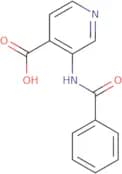
CAS:Versatile small molecule scaffoldFormula:C12H13BrO5Purity:Min. 95%Molecular weight:317.13 g/mol3-Benzamidopyridine-4-carboxylic acid
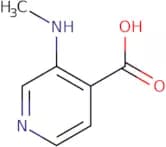
CAS:Versatile small molecule scaffoldFormula:C13H10N2O3Purity:Min. 95%Molecular weight:242.23 g/mol3-(Methylamino)isonicotinic acid
CAS:Versatile small molecule scaffoldFormula:C7H8N2O2Purity:Min. 95%Molecular weight:152.15 g/mol3-{[(Furan-2-yl)methyl]amino}pyridine-4-carboxylic acid
CAS:Versatile small molecule scaffoldFormula:C11H10N2O3Purity:Min. 95%Molecular weight:218.21 g/mol6-Amino-N-[(3-bromophenyl)methyl]pyridine-3-sulfonamide
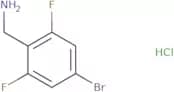
CAS:Versatile small molecule scaffoldFormula:C12H12BrN3O2SPurity:Min. 95%Molecular weight:342.21 g/mol(4-bromo-2,6-difluorophenyl)methanamine hydrochloride
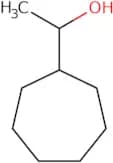
CAS:Versatile small molecule scaffoldFormula:C7H7BrClF2NPurity:Min. 95%Molecular weight:258.5 g/mol(1S)-1-Cycloheptylethan-1-ol
CAS:Versatile small molecule scaffold
Formula:C9H18OPurity:Min. 95%Molecular weight:142.24 g/mol
![tert-Butyl N-[(1-hydroxy-2-methylpropan-2-yl)oxy]carbamate](/_next/image/?url=https%3A%2Fstatic.cymitquimica.com%2Fproducts%2F3D%2Fthumb-webp%2FLIA81204.webp&w=3840&q=75)



![3-{[(Furan-2-yl)methyl]amino}pyridine-4-carboxylic acid](/_next/image/?url=https%3A%2Fstatic.cymitquimica.com%2Fproducts%2F3D%2Fthumb-webp%2FLIC60286.webp&w=3840&q=75)
![6-Amino-N-[(3-bromophenyl)methyl]pyridine-3-sulfonamide](/_next/image/?url=https%3A%2Fstatic.cymitquimica.com%2Fproducts%2F3D%2Fthumb-webp%2FLIC60445.webp&w=3840&q=75)