Building Blocks
This section contains fundamental products for the synthesis of organic and biological compounds. Building blocks are the essential starting materials used to construct complex molecules through various chemical reactions. They play a critical role in drug discovery, material science, and chemical research. At CymitQuimica, we offer a diverse range of high-quality building blocks to support your innovative research and industrial projects, ensuring you have the essential components for successful synthesis.
Subcategories of "Building Blocks"
- Boronic Acids & Boronic Acid Derivatives(5,756 products)
- Chiral Building Blocks(1,242 products)
- Hydrocarbon Building Blocks(6,095 products)
- Organic Building Blocks(61,055 products)
Found 199650 products of "Building Blocks"
Sort by
Purity (%)
0
100
|
0
|
50
|
90
|
95
|
100
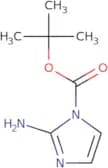
2-Amino-1-Boc-imidazole
CAS:<p>Versatile small molecule scaffold</p>Formula:C8H13N3O2Purity:Min. 95%Molecular weight:183.21 g/mol2-(Diethylamino)ethyl Bromide Hydrobromide
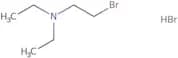
CAS:<p>Bromodiethylamine is a bromination product that is used in the synthesis of 2-(diethylamino)ethyl bromide hydrobromide. This compound is used in clinical diagnostics to detect the presence of tuberculosis by reacting with primary amino groups and ethyl bromoacetate functional groups. Bromodiethylamine also reacts with hydroxyl groups, reactive alkynyl groups, and conjugates to form ion-exchange resins for immobilized use.</p>Formula:C6H14BrN·HBrPurity:Min. 95%Molecular weight:261 g/molIsobutyl 2-cyanoacrylate
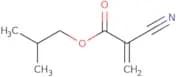
CAS:<p>Isobutyl 2-cyanoacrylate is a monomer that has been used in the clinical setting for the repair of tissue defects. It is an alkyl ester of acrylic acid, which reacts with water to form an acrylate polymer. Isobutyl 2-cyanoacrylate can also be used as a tissue growth factor because it stimulates the growth and proliferation of cells. Isobutyl 2-cyanoacrylate has antimicrobial activity against Gram-positive bacteria and fungi. It has also shown anti-inflammatory properties and may be useful for embolization or angiography procedures.</p>Formula:C8H11NO2Purity:Min. 95%Color and Shape:Clear LiquidMolecular weight:153.18 g/molDiethyl (prop-1-yn-1-yl)phosphonate
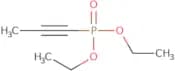
CAS:<p>Diethyl (prop-1-yn-1-yl)phosphonate is an organic compound that belongs to the class of propargylic compounds. It is a colorless liquid with a boiling point of 56°C. Diethyl (prop-1-yn-1-yl)phosphonate can be used as a reagent for hydrozirconation and as an adduct in organic chemistry. This compound can be hydrolyzed to form diethyl phosphite, which has been shown to react with alcohols, amines, and thiols.</p>Formula:C7H13O3PPurity:Min. 95%Molecular weight:176.15 g/mol1-N-Ethyl-3-fluorobenzene-1,2-diamine
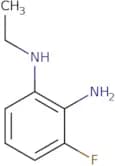
CAS:<p>Versatile small molecule scaffold</p>Formula:C8H11FN2Purity:Min. 95%Molecular weight:154.18 g/molDiethyl Allylphosphonate
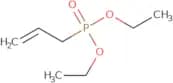
CAS:<p>Diethyl allylphosphonate is a cross-linking agent that has been shown to inhibit HIV infection. It is a macrocyclic inhibitor that binds to the active site of the protease enzyme, preventing it from cleaving the viral polyprotein into its constituent proteins. The chemical stability of diethyl allylphosphonate and its biological properties make it an efficient method for inhibiting HIV.</p>Formula:C7H15O3PPurity:Min. 95%Molecular weight:178.17 g/mol(4-Fluoro-3-methylphenyl)thiourea
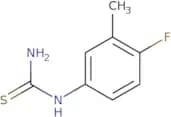
CAS:<p>Versatile small molecule scaffold</p>Formula:C8H9FN2SPurity:Min. 95%Molecular weight:184.24 g/mol(2R)-1-(Methylamino)propan-2-ol hydrochloride
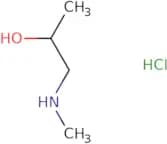
CAS:<p>Versatile small molecule scaffold</p>Formula:C4H12ClNOPurity:Min. 95%Molecular weight:125.6 g/mol5-Fluoro-2,3-dihydro-1H-inden-2-ol
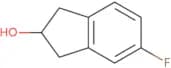
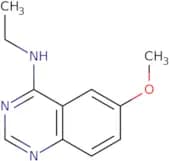
CAS:<p>Versatile small molecule scaffold</p>Formula:C9H9FOPurity:Min. 95%Molecular weight:152.16 g/molN-Ethyl-6-methoxyquinazolin-4-amine
CAS:<p>Versatile small molecule scaffold</p>Formula:C11H13N3OPurity:Min. 95%Molecular weight:203.24 g/molMordant Blue 13
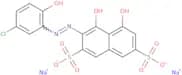
CAS:<p>Mordant Blue 13 is a mordant dye that is used in the textile industry for the dying of wool. It has been shown to have physiological activities such as adhesion prevention and anti-viral properties. Mordant Blue 13 is also used as a diagnostic agent to detect damaged tissue and measure the degree of damage. Langmuir adsorption isotherms have shown that Mordant Blue 13 has an affinity for virus particles, which can be used to control viral infections. Metallochromic dyes are blue or violet dyes that change color depending on pH, which can be used to measure enzymatic reactions. Mordant Blue 13 also has optical properties such as colorants and fluorescence emission.</p>Formula:C16H9ClN2O9S2·2NaPurity:Min. 95%Molecular weight:518.82 g/mol2-[(Benzylcarbamoyl)amino]-2-methylpropanoic acid
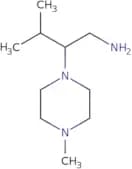
CAS:<p>Versatile small molecule scaffold</p>Formula:C12H16N2O3Purity:Min. 95%Molecular weight:236.3 g/mol3-Methyl-2-(4-methylpiperazin-1-yl)butan-1-amine
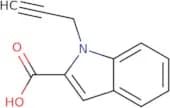
CAS:<p>Versatile small molecule scaffold</p>Formula:C10H23N3Purity:Min. 95%Molecular weight:185.31 g/mol1-(Prop-2-yn-1-yl)-1H-indole-2-carboxylic acid
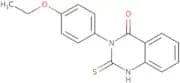
CAS:<p>Versatile small molecule scaffold</p>Formula:C12H9NO2Purity:Min. 95%Molecular weight:199.2 g/mol3-(4-Ethoxyphenyl)-2-thioxo-2,3-dihydroquinazolin-4(1H)-one
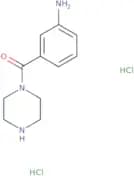
CAS:<p>Versatile small molecule scaffold</p>Formula:C16H14N2O2SPurity:Min. 95%Molecular weight:298.36 g/mol3-(Piperazine-1-carbonyl)aniline
CAS:<p>Versatile small molecule scaffold</p>Formula:C11H17Cl2N3OPurity:Min. 95%Molecular weight:278.18 g/mol(1S,4R)-methyl 4-aminocyclopent-2-enecarboxylate HCl
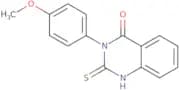
CAS:<p>Versatile small molecule scaffold</p>Formula:C7H12ClNO2Purity:Min. 95%Molecular weight:177.63 g/mol3-(4-methoxyphenyl)-2-thioxo-1,3-dihydroquinazolin-4-one
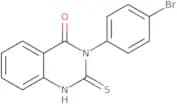
CAS:<p>Versatile small molecule scaffold</p>Formula:C15H12N2O2SPurity:Min. 95%Molecular weight:284.3 g/mol3-(4-Bromophenyl)-2-thioxo-2,3-dihydroquinazolin-4(1H)-one
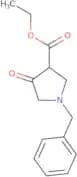
CAS:<p>3-(4-Bromophenyl)-2-thioxo-2,3-dihydroquinazolin-4(1H)-one is a compound with disorder. It crystallizes in the monoclinic space group P21/c and has a pairwise stabilized crystal structure. 3-(4-Bromophenyl)-2-thioxo-2,3-dihydroquinazolin-4(1H)-one is stable as dimers and amides, which are linked by hydrogen bonds. The amide bond distance is 1.47 Å. The dihedral angle between substituents is 99° and it has an HOMO energy level of -5.94 eV, making it a hole acceptor. 3-(4-Bromophenyl)-2-thioxo-2,3-dihydroquinazolin-4(1H)-one has the following crystal structures:</p>Formula:C14H9BrN2OSPurity:Min. 95%Molecular weight:333.2 g/molethyl 1-benzyl-4-oxo-pyrrolidine-3-carboxylate
CAS:<p>Versatile small molecule scaffold</p>Formula:C14H17NO3Purity:Min. 95%Molecular weight:247.29 g/mol

![2-[(Benzylcarbamoyl)amino]-2-methylpropanoic acid](/_next/image/?url=https%3A%2Fstatic.cymitquimica.com%2Fproducts%2F3D%2Fthumb-webp%2FEMB47353.webp&w=3840&q=75)