Building Blocks
This section contains fundamental products for the synthesis of organic and biological compounds. Building blocks are the essential starting materials used to construct complex molecules through various chemical reactions. They play a critical role in drug discovery, material science, and chemical research. At CymitQuimica, we offer a diverse range of high-quality building blocks to support your innovative research and industrial projects, ensuring you have the essential components for successful synthesis.
Subcategories of "Building Blocks"
- Boronic Acids & Boronic Acid Derivatives(5,756 products)
- Chiral Building Blocks(1,242 products)
- Hydrocarbon Building Blocks(6,095 products)
- Organic Building Blocks(61,038 products)
Found 196817 products of "Building Blocks"
Sort by
Purity (%)
0
100
|
0
|
50
|
90
|
95
|
100
[1-(2-Nitrobenzoyl)pyrrolidin-2-yl]methanol
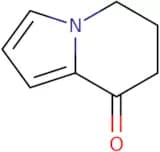
CAS:<p>Versatile small molecule scaffold</p>Formula:C12H14N2O4Purity:Min. 95%Molecular weight:250.25 g/mol5,6,7,8-Tetrahydroindolizin-8-one
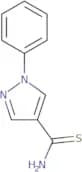
CAS:<p>Versatile small molecule scaffold</p>Formula:C8H9NOPurity:Min. 95%Molecular weight:135.16 g/mol1-Phenyl-1H-pyrazole-4-carbothioamide
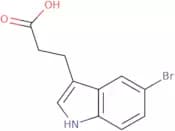
CAS:<p>Versatile small molecule scaffold</p>Formula:C10H9N3SPurity:Min. 95%Molecular weight:203.27 g/mol5-Bromo-indol-3-propionic acid
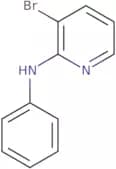
CAS:<p>Versatile small molecule scaffold</p>Formula:C11H10BrNO2Purity:Min. 95%Molecular weight:268.11 g/mol3-Bromo-N-phenylpyridin-2-amine
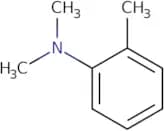
CAS:<p>3-Bromo-N-phenylpyridin-2-amine is an arylation reagent that is used in the synthesis of carbolines. It reacts with anilines to produce aryl amides, which are important intermediates for organic synthesis. 3-Bromo-N-phenylpyridin-2-amine catalyzes the reaction between aldehydes and nitroalkanes to form nitroarenes. This intramolecular reaction can be done in good yields and is not affected by steric hindrance. The photostimulated version of this reaction has been shown to be useful for synthesizing carbolines from aromatic compounds.</p>Formula:C11H9BrN2Purity:Min. 95%Molecular weight:249.11 g/molN,N-Dimethyl-o-toluidine
CAS:<p>Dimethyl-o-toluidine is an aryl amine that can be used as an antimicrobial agent. It has been shown to have the highest redox potential of all the aryl amines and has been found to be effective against bacteria and fungi. Dimethyl-o-toluidine can also be used as a therapeutic drug in the treatment of insulin resistance, which may be due to its ability to inhibit the activity of enzymes that catalyze the formation of reactive oxygen species (ROS) and nitric oxide (NO). This drug binds to amines, cationic polymerization, and physiological effects. Dimethyl-o-toluidine is rapidly metabolized by esterases in the blood and liver, meaning it does not accumulate in these organs. It is excreted from the body through urine or bile within 24 hours after administration.</p>Formula:C9H13NPurity:Min. 95%Molecular weight:135.21 g/mol(5,6,7,8-Tetrahydronaphthalen-1-yl)hydrazine hydrochloride
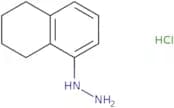
CAS:<p>Versatile small molecule scaffold</p>Formula:C10H15ClN2Purity:Min. 95%Molecular weight:198.69 g/mol3-Methyl-2-oxo-2,3-dihydro-1,3-benzoxazole-6-carbaldehyde
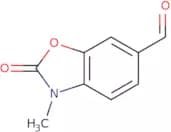
CAS:<p>Versatile small molecule scaffold</p>Formula:C9H7NO3Purity:Min. 95%Molecular weight:177.16 g/mol2,4-Dibromo-6-methylphenol
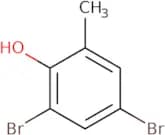
CAS:<p>2,4-Dibromo-6-methylphenol is a halophenol that can be found in human urine. It is used as a diagnostic agent for the identification of propionate. 2,4-Dibromo-6-methylphenol was detected by mass spectrometric analysis and structural studies. The optimum concentration for this compound is 0.5 ppm in hydrochloric acid.</p>Formula:C7H6Br2OPurity:Min. 95%Color and Shape:PowderMolecular weight:265.93 g/mol6-(2-Chloroacetyl)-3-methyl-2,3-dihydro-1,3-benzoxazol-2-one
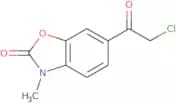
CAS:<p>6-(2-Chloroacetyl)-3-methyl-2,3-dihydro-1,3-benzoxazol-2-one is a molecule that has the formula C8H6ClNO. It is an ambident alkylation reagent and can be used to form chloroalkylations with various nucleophiles, such as triethylamine, potassium carbonate and carbonyl compounds. The compound is a benzoxazolinone derivative that can be nitrated. 6-(2-Chloroacetyl)-3-methyl-2,3-dihydro-1,3-benzoxazol-2-one has been used to synthesize a variety of heterocycles.</p>Formula:C10H8ClNO3Purity:Min. 95%Molecular weight:225.63 g/mol2-Oxo-2,3-dihydro-1,3-benzoxazole-6-carboxylic acid
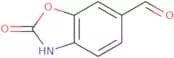
CAS:<p>Versatile small molecule scaffold</p>Formula:C8H5NO4Purity:Min. 95%Molecular weight:179.13 g/mol2-Oxo-2,3-dihydro-1,3-benzoxazole-6-carbaldehyde
CAS:<p>Versatile small molecule scaffold</p>Formula:C8H5NO3Purity:Min. 95%Molecular weight:163.13 g/mol4-(2-Phenylethoxy)phenol
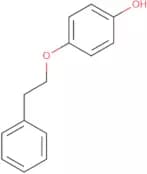
CAS:<p>4-(2-Phenylethoxy)phenol is a semiquinone that has been shown to react with styrene by reoxidizing the latter to styrene oxide and phenol. The kinetics of this reaction have been investigated using kinetic studies. 4-(2-Phenylethoxy)phenol reacts with ethers to form hydroquinones, which are also semiquinones. The stability constants for these reactions have been determined. 4-(2-Phenylethoxy)phenol has also been shown to be an intramolecular radical, which can react with hydroquinones to form quinones. These reactions are all reversible, and the kinetic parameters for these reactions have been determined.</p>Formula:C14H14O2Purity:Min. 95%Molecular weight:214.26 g/mol4-Bromo-5,6,7,8-tetrahydronaphthalen-1-ol
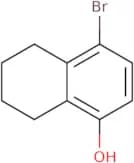
CAS:<p>Versatile small molecule scaffold</p>Formula:C10H11BrOPurity:Min. 95%Molecular weight:227.1 g/mol4-[Ethyl(nitroso)amino]butanoic acid
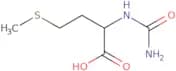
CAS:<p>Versatile small molecule scaffold</p>Formula:C6H12N2O3Purity:Min. 95%Molecular weight:160.17 g/mol(2S)-2-(Carbamoylamino)-4-(methylsulfanyl)butanoic acid
CAS:<p>(2S)-2-(Carbamoylamino)-4-(methylsulfanyl)butanoic acid is a white powder that is soluble in water and organic solvents. It has a viscosity of approximately 1000 cP at 20°C. The pH of the solution is 7-8, with an alkaline character. This compound can be used as an additive to increase the viscosity of water-based liquids, such as soap, shampoo, or bath oil. It also serves as a binding agent for metal ions and organic molecules. (2S)-2-(Carbamoylamino)-4-(methylsulfanyl)butanoic acid can be used in titration calorimetry experiments to determine the amount of heat released during a reaction. This compound binds to proteins and helps catalyze reactions by serving as a racemase substrate binding site on the enzyme surface.</p>Formula:C6H12N2O3SPurity:Min. 95%Molecular weight:192.24 g/mol2-{[(tert-Butoxy)carbonyl]amino}-2-(3-nitrophenyl)acetic acid
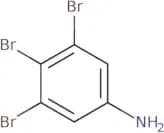
CAS:<p>Versatile small molecule scaffold</p>Formula:C13H16N2O6Purity:Min. 95%Molecular weight:296.3 g/mol3,4,5-Tribromoaniline
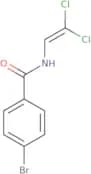
CAS:<p>Versatile small molecule scaffold</p>Formula:C6H4Br3NPurity:Min. 95%Molecular weight:329.81 g/mol4-Bromo-N-(2,2-dichloroethenyl)benzamide
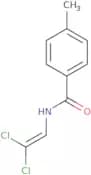
CAS:<p>Versatile small molecule scaffold</p>Formula:C9H6BrCl2NOPurity:Min. 95%Molecular weight:294.96 g/molN-(2,2-Dichloroethenyl)-4-methylbenzamide
CAS:<p>Versatile small molecule scaffold</p>Formula:C10H9Cl2NOPurity:Min. 95%Molecular weight:230.09 g/mol
![[1-(2-Nitrobenzoyl)pyrrolidin-2-yl]methanol](/_next/image/?url=https%3A%2Fstatic.cymitquimica.com%2Fproducts%2F3D%2Fthumb-webp%2FECA90811.webp&w=3840&q=75)

![4-[Ethyl(nitroso)amino]butanoic acid](/_next/image/?url=https%3A%2Fstatic.cymitquimica.com%2Fproducts%2F3D%2Fthumb-webp%2FECA89763.webp&w=3840&q=75)
![2-{[(tert-Butoxy)carbonyl]amino}-2-(3-nitrophenyl)acetic acid](/_next/image/?url=https%3A%2Fstatic.cymitquimica.com%2Fproducts%2F3D%2Fthumb-webp%2FECA89527.webp&w=3840&q=75)