Building Blocks
This section contains fundamental products for the synthesis of organic and biological compounds. Building blocks are the essential starting materials used to construct complex molecules through various chemical reactions. They play a critical role in drug discovery, material science, and chemical research. At CymitQuimica, we offer a diverse range of high-quality building blocks to support your innovative research and industrial projects, ensuring you have the essential components for successful synthesis.
Subcategories of "Building Blocks"
- Boronic Acids & Boronic Acid Derivatives(5,778 products)
- Chiral Building Blocks(1,242 products)
- Hydrocarbon Building Blocks(6,098 products)
- Organic Building Blocks(61,098 products)
Found 199594 products of "Building Blocks"
Sort by
Purity (%)
0
100
|
0
|
50
|
90
|
95
|
100
Ethyl 4-hydroxypyrazolo[1,5-a]pyridine-3-carboxylate
CAS:<p>Versatile small molecule scaffold</p>Formula:C10H10N2O3Purity:Min. 95%Molecular weight:206.2 g/mol1-N-Propylbenzene-1,2-diamine
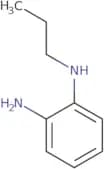
CAS:<p>Versatile small molecule scaffold</p>Formula:C9H14N2Purity:Min. 95%Molecular weight:150.22 g/molMethyl 2-chloro-3-methylpentanoate
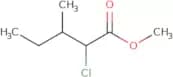
CAS:Versatile small molecule scaffoldFormula:C7H13ClO2Purity:Min. 95%Molecular weight:164.63 g/mol2,4-Dinitrophenylhydrazine Hydrochloride
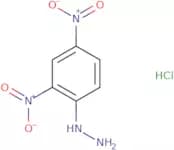
CAS:2,4-Dinitrophenylhydrazine Hydrochloride is a reagent used for labeling biomolecules in HPLC. The reaction time is dependent on the specific molecule and the concentration of reactants. 2,4-Dinitrophenylhydrazine Hydrochloride reacts with carbohydrates and other large molecules to form a hydrazone link. This link can be cleaved by heat or acid to release the labeled molecule. It is also used for labeling oligonucleotides, amino acids, and other small molecules that are not amenable for enzymatic reactions. This reagent has been shown to be useful in determining the molecular weights of anions such as chloride or crystallography. The red shift observed during this reaction is due to the interaction energies between water molecules and chloride ions or dimethylformamide molecules.Formula:C6H6N4O4·HClPurity:Min. 95%Molecular weight:234.6 g/mol2-(Quinolin-4-yl)ethan-1-ol
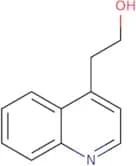
CAS:<p>Versatile small molecule scaffold</p>Formula:C11H11NOPurity:Min. 95%Molecular weight:173.21 g/mol2-[Hydroxy(methyl)phosphoryl]benzoic acid
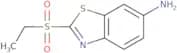
CAS:<p>Versatile small molecule scaffold</p>Formula:C8H9O4PPurity:Min. 95%Molecular weight:200.13 g/mol2-(Ethanesulfonyl)-1,3-benzothiazol-6-amine
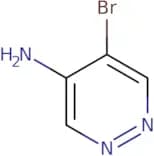
CAS:<p>Versatile small molecule scaffold</p>Formula:C9H10N2O2S2Purity:Min. 95%Molecular weight:242.3 g/mol5-Bromopyridazin-4-amine
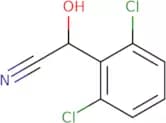
CAS:<p>Versatile small molecule scaffold</p>Formula:C4H4BrN3Purity:Min. 95%Molecular weight:174 g/mol2-(2,6-Dichlorophenyl)-2-hydroxyacetonitrile
CAS:<p>Versatile small molecule scaffold</p>Formula:C8H5Cl2NOPurity:Min. 95%Molecular weight:202.03 g/mol3-[4-(2-Chlorophenyl)piperazin-1-yl]propan-1-amine
CAS:<p>Versatile small molecule scaffold</p>Formula:C13H20ClN3Purity:Min. 95%Molecular weight:253.77 g/mol2-(Bromomethyl)bicyclo[2.2.1]heptane
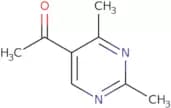
CAS:<p>Versatile small molecule scaffold</p>Formula:C8H13BrPurity:Min. 95%Molecular weight:189.09 g/mol1-(2,4-Dimethylpyrimidin-5-yl)ethan-1-one
CAS:<p>Versatile small molecule scaffold</p>Formula:C8H10N2OPurity:Min. 95%Molecular weight:150.18 g/mol2,3,5-Trichloro-6-hydrazinylpyridine
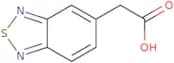
CAS:Versatile small molecule scaffoldFormula:C5H4Cl3N3Purity:Min. 95%Molecular weight:212.46 g/mol2-(2,1,3-Benzothiadiazol-5-yl)acetic acid
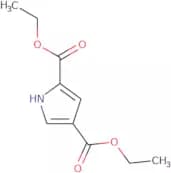
CAS:<p>Versatile small molecule scaffold</p>Formula:C8H6N2O2SPurity:Min. 95%Molecular weight:194.21 g/moldiethyl 1h-pyrrole-2,4-dicarboxylate
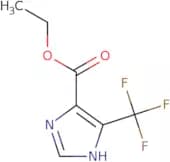
CAS:Diethyl 1H-pyrrole-2,4-dicarboxylate is a reactive and nucleophilic substituent that is used in organic synthesis. It has been shown to undergo substitution reactions with various functional groups, such as alcohols and amines. This compound can also be conjugated with other molecules, such as amino acids. Diethyl 1H-pyrrole-2,4-dicarboxylate is synthesized from pyrrole and diethyl malonate. It has been shown to have optimal activity against caco-2 cells when substituted for the 2,4-dimethoxybenzaldehyde component of the substrate.Formula:C10H13NO4Purity:Min. 95%Molecular weight:211.22 g/molEthyl 4-(trifluoromethyl)-1H-imidazole-5-carboxylate
CAS:<p>Versatile small molecule scaffold</p>Formula:C7H7F3N2O2Purity:Min. 95%Molecular weight:208.14 g/mol1-(2-Bromoethyl)pyrrolidine-2,5-dione
CAS:<p>Versatile small molecule scaffold</p>Formula:C6H8BrNO2Purity:Min. 95%Molecular weight:206.04 g/mol(2S)-2-(Naphthalene-2-sulfonamido)-3-phenylpropanoic acid
CAS:<p>Versatile small molecule scaffold</p>Formula:C19H17NO4SPurity:Min. 95%Molecular weight:355.4 g/mol3-(1,3-Thiazol-2-ylamino)propanoic acid
CAS:<p>Versatile small molecule scaffold</p>Formula:C6H8N2O2SPurity:Min. 95%Molecular weight:172.21 g/molMethyl 3,5-dichlorobenzeneacetate
CAS:<p>Methyl 3,5-dichlorobenzeneacetate is a chemical compound that is used as a reagent for organic synthesis. It is also known as 1,3-dichloro-5-methylbenzeneacetic acid methyl ester and has the chemical formula CHClO. Methyl 3,5-dichlorobenzeneacetate can be prepared by reacting copper with nitrobenzene in the presence of an esterifying agent such as pyridine or acetic anhydride. This chemical has been shown to be useful as a catalyst for biomolecular reactions involving nitrogen sources. Methyl 3,5-dichlorobenzeneacetate can also be used as a nitrogen source in imidazolinones.</p>Formula:C9H8Cl2O2Purity:Min. 95%Molecular weight:219.06 g/mol
![Ethyl 4-hydroxypyrazolo[1,5-a]pyridine-3-carboxylate](/_next/image/?url=https%3A%2Fstatic.cymitquimica.com%2Fproducts%2F3D%2Fthumb-webp%2FFCA89922.webp&w=3840&q=75)

![2-[Hydroxy(methyl)phosphoryl]benzoic acid](/_next/image/?url=https%3A%2Fstatic.cymitquimica.com%2Fproducts%2F3D%2Fthumb-webp%2FFCA91857.webp&w=3840&q=75)
![3-[4-(2-Chlorophenyl)piperazin-1-yl]propan-1-amine](/_next/image/?url=https%3A%2Fstatic.cymitquimica.com%2Fproducts%2F3D%2Fthumb-webp%2FFCA93164.webp&w=3840&q=75)
![2-(Bromomethyl)bicyclo[2.2.1]heptane](/_next/image/?url=https%3A%2Fstatic.cymitquimica.com%2Fproducts%2F3D%2Fthumb-webp%2FFCA93258.webp&w=3840&q=75)