Building Blocks
This section contains fundamental products for the synthesis of organic and biological compounds. Building blocks are the essential starting materials used to construct complex molecules through various chemical reactions. They play a critical role in drug discovery, material science, and chemical research. At CymitQuimica, we offer a diverse range of high-quality building blocks to support your innovative research and industrial projects, ensuring you have the essential components for successful synthesis.
Subcategories of "Building Blocks"
- Boronic Acids & Boronic Acid Derivatives(5,756 products)
- Chiral Building Blocks(1,242 products)
- Hydrocarbon Building Blocks(6,095 products)
- Organic Building Blocks(61,038 products)
Found 196817 products of "Building Blocks"
Sort by
Purity (%)
0
100
|
0
|
50
|
90
|
95
|
100
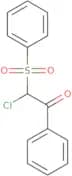
2-(Benzenesulfonyl)-2-chloro-1-phenylethan-1-one
CAS:<p>Versatile small molecule scaffold</p>Formula:C14H11ClO3SPurity:Min. 95%Molecular weight:294.8 g/mol2-[Benzyl(methyl)amino]ethane-1-thiol
CAS:<p>Versatile small molecule scaffold</p>Formula:C10H15NSPurity:Min. 95%Molecular weight:181.3 g/mol2-Chloro-pyridine-3-sulfonic acid amide
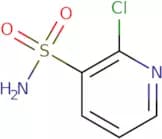
CAS:<p>2-Chloro-pyridine-3-sulfonic acid amide is an intermediate in the synthesis of a variety of biologically potent compounds. It is a noncatalytic amidine that can be prepared by the reaction of 2-chloropyridine with sulfur dioxide and ammonia. 2-Chloro-pyridine-3-sulfonic acid amide has been used as a nucleophile to form chlorides, amidines, and other functionalized chlorides. It is also used in the preparation of chlorinated ethers.</p>Formula:C5H5CIN2O2SPurity:Min. 95%Molecular weight:192.62 g/mol2-Chloro-N-methylpyridine-3-sulfonamide
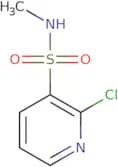
CAS:<p>Versatile small molecule scaffold</p>Formula:C6H7ClN2O2SPurity:Min. 95%Molecular weight:206.65 g/molPyridine, 3-(1,1-dimethylethyl)-
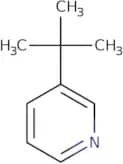
CAS:<p>Pyridine, 3-(1,1-dimethylethyl)- is a ligand that binds to anions. It has been used as a catalyst for the synthesis of vinyl ethers and lactams. Pyridine, 3-(1,1-dimethylethyl)- can be formed from 1-pyridinium ion (from the oxidation of pyridine) and 2-propenal. This reaction is catalyzed by silver ions in the presence of light or heat. Pyridine, 3-(1,1-dimethylethyl)- is also a component of polymer matrices for solar cells.</p>Formula:C9H13NPurity:Min. 95%Molecular weight:135.21 g/molN,3,4-Trimethylaniline
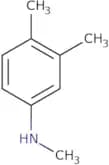
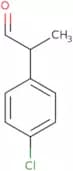
CAS:<p>Versatile small molecule scaffold</p>Formula:C9H13NPurity:Min. 95%Molecular weight:135.21 g/mol2-(4-Chlorophenyl)propanal
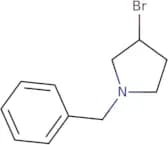
CAS:<p>Versatile small molecule scaffold</p>Formula:C9H9ClOPurity:Min. 95%Molecular weight:168.62 g/mol1-Benzyl-3-bromopyrrolidine
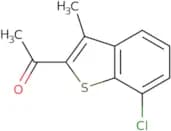
CAS:<p>Versatile small molecule scaffold</p>Formula:C11H14BrNPurity:Min. 95%Molecular weight:240.14 g/mol1-(7-Chloro-3-methyl-1-benzothiophen-2-yl)ethan-1-one
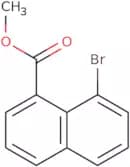
CAS:<p>Versatile small molecule scaffold</p>Formula:C11H9ClOSPurity:Min. 95%Molecular weight:224.71 g/molMethyl 8-bromonaphthalene-1-carboxylate
CAS:<p>Methyl 8-bromonaphthalene-1-carboxylate is a yellow, thermosetting, tinctorial, and pigmented intermediate that is used in the synthesis of anthraquinone dyes. It can be synthesized by reacting aniline with formaldehyde and bromine. Methyl 8-bromonaphthalene-1-carboxylate has a lightfastness rating of good to very good and has been shown to be resistant to high energy radiation. This compound is used in the production of automotive coatings and as a dye intermediate for lightfast colors. Methyl 8-bromonaphthalene-1-carboxylate is also used as an intermediate for the synthesis of isoindolinone dyes.</p>Formula:C12H9BrO2Purity:Min. 95%Molecular weight:265.1 g/molBenzyl piperidine-2-carboxylate hydrochloride
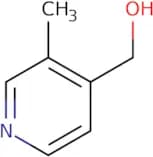
CAS:<p>Versatile small molecule scaffold</p>Formula:C13H18ClNO2Purity:Min. 95%Molecular weight:255.74 g/mol(3-Methylpyridin-4-yl)methanol
CAS:<p>Versatile small molecule scaffold</p>Formula:C7H9NOPurity:Min. 95%Molecular weight:123.15 g/mol4,5-Dibromothiophene-2-carbaldehyde
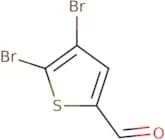
CAS:<p>4,5-Dibromothiophene-2-carbaldehyde is a dehalogenation agent that can be used to convert bromides to thiols. It is a versatile reagent that can be used in Suzuki and coupling reactions with minimal effort. The regioselective use of this reagent has been shown using the coupling of 2,6-dibromo-4-methylthiophene and benzaldehyde.</p>Formula:C5H2Br2OSPurity:Min. 95%Molecular weight:269.94 g/molMethyl 5-(propan-2-yl)furan-2-carboxylate
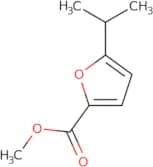
CAS:<p>Versatile small molecule scaffold</p>Formula:C9H12O3Purity:Min. 95%Molecular weight:168.19 g/mol2-Amino-5-methyl-nicotinonitrile
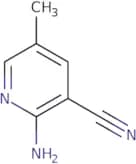
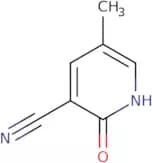
CAS:<p>Versatile small molecule scaffold</p>Formula:C7H7N3Purity:Min. 95%Molecular weight:133.15 g/mol5-Methyl-2-oxo-1,2-dihydropyridine-3-carbonitrile
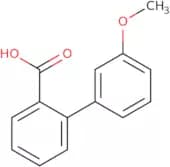
CAS:<p>Versatile small molecule scaffold</p>Formula:C7H6N2OPurity:Min. 95%Molecular weight:134.14 g/mol3'-Methoxybiphenyl-2-carboxylic acid
CAS:Versatile small molecule scaffoldFormula:C14H12O3Purity:Min. 95%Molecular weight:228.25 g/molN-Desmethyl azatadine
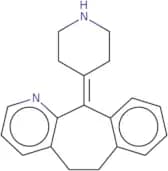
CAS:<p>N-Desmethyl azatadine is a piperidinecarboxylic acid, which is an active metabolite of the antihistamine loratadine and the decongestant azatadine. It is used in the treatment of chronic cough associated with reflux. N-Desmethyl azatadine has been shown to be effective in reducing symptoms of chronic cough in patients with gastroesophageal reflux disease (GERD) or symptomatic GERD. This drug binds to histamine H1 receptors, inhibiting histamine binding and blocking its effects on the body. N-Desmethyl azatadine also inhibits the production of acid by bacteria in the stomach, decreasing acidity and improving symptoms of GERD.</p>Formula:C19H20N2Purity:90% MinMolecular weight:276.38 g/mol2-Methyl-4-phenyl-1,3-thiazol-5-amine
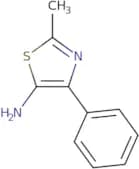
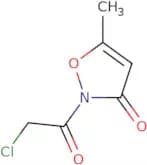
CAS:<p>Versatile small molecule scaffold</p>Formula:C10H10N2SPurity:Min. 95%Molecular weight:190.27 g/mol2-(2-Chloroacetyl)-5-methyl-2,3-dihydro-1,2-oxazol-3-one
CAS:<p>Versatile small molecule scaffold</p>Formula:C6H6ClNO3Purity:Min. 95%Molecular weight:175.57 g/mol

![2-[Benzyl(methyl)amino]ethane-1-thiol](/_next/image/?url=https%3A%2Fstatic.cymitquimica.com%2Fproducts%2F3D%2Fthumb-webp%2FNBA02552.webp&w=3840&q=75)