Building Blocks
This section contains fundamental products for the synthesis of organic and biological compounds. Building blocks are the essential starting materials used to construct complex molecules through various chemical reactions. They play a critical role in drug discovery, material science, and chemical research. At CymitQuimica, we offer a diverse range of high-quality building blocks to support your innovative research and industrial projects, ensuring you have the essential components for successful synthesis.
Subcategories of "Building Blocks"
- Boronic Acids & Boronic Acid Derivatives(5,756 products)
- Chiral Building Blocks(1,242 products)
- Hydrocarbon Building Blocks(6,095 products)
- Organic Building Blocks(61,051 products)
Found 199813 products of "Building Blocks"
Sort by
Purity (%)
0
100
|
0
|
50
|
90
|
95
|
100
2H-1,2,4-Benzothiadiazine-1,1-dione
CAS:<p>2H-1,2,4-Benzothiadiazine-1,1-dione is a pharmaceutical agent that belongs to the group of benzothiadiazine compounds. It is used as an intermediate in the synthesis of other drugs and has antihypertensive activity. 2H-1,2,4-Benzothiadiazine-1,1-dione inhibits blood pressure by acting on alpha receptors in vascular smooth muscle cells to inhibit the release of nitric oxide. This drug also blocks the binding of angiotensin II to its receptors and thus reduces the production of aldosterone and other hormones that promote sodium retention. Benzothiadiazine compounds are also known for their ability to form tautomers and isomers with each other. One such example is 2H-1,2,4-benzothiadiazine-1,1-dione (TBDT).</p>Formula:C7H6N2O2SPurity:Min. 95%Molecular weight:182.2 g/mol3,4-Dihydro-2H-benzo[E][1,2,4]thiadiazine 1,1-dioxide
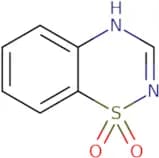
CAS:<p>Phenoxybenzamine is a phenoxy compound with a benzoylamino group. It inhibits the activity of monoamine oxidase, which is an enzyme that catalyzes the oxidation of monoamines and the degradation of catecholamines. Phenoxybenzamine has been shown to be effective in vitro against nerve cells. This drug has also been shown to be effective in vivo by reducing diabetic neuropathy and sciatic nerve injury in rats. Phenoxybenzamine inhibits the activity of alkoxycarbonyl groups, which are found in polyfluoroalkyl substances such as perfluorooctanoic acid (PFOA) or perfluorooctane sulfonate (PFOS).</p>Formula:C7H8N2O2SPurity:Min. 95%Molecular weight:184.22 g/mol1,1,1-Trifluoro-3,3-dimethylbutan-2-ol
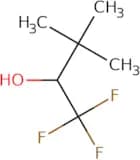
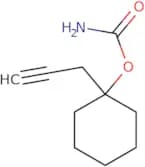
CAS:<p>Versatile small molecule scaffold</p>Formula:C6H11F3OPurity:Min. 95%Molecular weight:156.15 g/mol1-(Prop-2-yn-1-yl)cyclohexyl carbamate
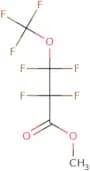
CAS:Controlled Product<p>Prop-2-yn-1-ylcyclohexyl carbamate is an analog of phenol, which has been used to synthesize drugs for the treatment of inflammatory bowel disease. It is an inhibitor of the enzyme phospholipase A2, which is responsible for the production of arachidonic acid from membrane phospholipids. Prop-2-yn-1-ylcyclohexyl carbamate binds to the hydroxyl group on phospholipids, inhibiting the release of arachidonic acid and preventing its conversion into inflammatory mediators. This drug can also be used as a fluorescent probe in fluorescence analysis.</p>Formula:C10H15NO2Purity:Min. 95%Molecular weight:181.23 g/molMethyl 2,2,3,3-tetrafluoro-3-(trifluoromethoxy)propanoate
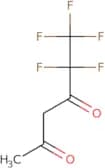
CAS:<p>Versatile small molecule scaffold</p>Formula:C5H3F7O3Purity:Min. 95%Molecular weight:244.06 g/mol5,5,6,6,6-Pentafluorohexane-2,4-dione
CAS:<p>Versatile small molecule scaffold</p>Formula:C6H5F5O2Purity:Min. 95%Molecular weight:204.1 g/mol5,5,5-Trifluoro-1-pentanol
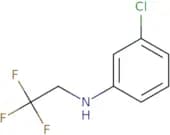
CAS:<p>Versatile small molecule scaffold</p>Formula:C5H9F3OPurity:Min. 95%Molecular weight:142.12 g/mol3-Chloro-N-(2,2,2-trifluoroethyl)aniline
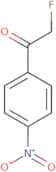
CAS:<p>Versatile small molecule scaffold</p>Formula:C8H7ClF3NPurity:Min. 95%Molecular weight:209.59 g/mol2-Fluoro-1-(4-nitrophenyl)ethan-1-one
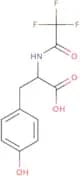
CAS:<p>Versatile small molecule scaffold</p>Formula:C8H6FNO3Purity:Min. 95%Molecular weight:183.14 g/mol(2S)-3-(4-Hydroxyphenyl)-2-(trifluoroacetamido)propanoic acid
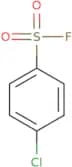
CAS:<p>Versatile small molecule scaffold</p>Formula:C11H10F3NO4Purity:Min. 95%Molecular weight:277.2 g/mol4-Chlorobenzenesulfonyl fluoride
CAS:<p>Versatile small molecule scaffold</p>Formula:C6H4ClFO2SPurity:Min. 95%Molecular weight:194.61 g/mol2-{[3-(Trifluoromethyl)phenyl]amino}acetic acid
CAS:<p>Versatile small molecule scaffold</p>Formula:C9H8F3NO2Purity:Min. 95%Molecular weight:219.16 g/mol4-Acetamido-3-fluorobenzene-1-sulfonyl chloride
CAS:<p>Versatile small molecule scaffold</p>Formula:C8H7ClFNO3SPurity:Min. 95%Molecular weight:251.66 g/mol2-Hydroxy-2-[3-(trifluoromethyl)phenyl]acetic acid
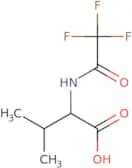
CAS:<p>2-Hydroxy-2-[3-(trifluoromethyl)phenyl]acetic acid (HPA) is a carboxylic acid that belongs to the family of monosubstituted carboxylic acids. It was synthesised in 1960 by reacting 3-(trifluoromethyl)benzoyl chloride with 2-hydroxyethanoic acid. HPA is a racemic mixture, which is why it has two enantiomers. These two enantiomers have different structures and highlights, but they share the same chemical formula. The mandelic acid is one of the dimers that can be formed from HPA, which occurs when an HPA molecule reacts with another HPA molecule. Mandelic acid also has hydroxyl groups and dimers that form as a result of its synthesis process.</p>Formula:C9H7F3O3Purity:Min. 95%Molecular weight:220.14 g/mol(2S)-3-Methyl-2-(trifluoroacetamido)butanoic acid
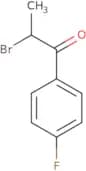
CAS:<p>(2S)-3-Methyl-2-(trifluoroacetamido)butanoic acid is an acid that is used as a precursor to other organic compounds. It is also known as trifluoroacetic acid, which has an acidic side chain. (2S)-3-Methyl-2-(trifluoroacetamido)butanoic acid can be synthesized by the condensation of indole-3-pyruvic acid and amines. This chemical compound also has chromatographic properties, hydroxyl group, tetrahydropyran, dehydration, nucleophilic, imine, anilines and oxazolones. (2S)-3-Methyl-2-(trifluoroacetamido)butanoic acid contains an amino function and aldehyde groups.</p>Formula:C7H10F3NO3Purity:Min. 95%Molecular weight:213.15 g/mol2-Bromo-1-(4-fluorophenyl)propan-1-one
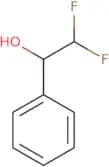
CAS:<p>2-Bromo-1-(4-fluorophenyl)propan-1-one is an innovative, trifluoromethylthiolation reagent that has been synthesised for use in formate dehydrogenase and tosylates. 2-Bromo-1-(4-fluorophenyl)propan-1-one has a nucleophilic, bromine atom with a molybdenum active site. The functional groups on the molecule are ethers and thiols. The synthesis of this molecule is by electrolysis. This molecule was synthesised using inorganic methods.</p>Formula:C9H8BrFOPurity:Min. 95%Molecular weight:231.06 g/mol2,2-Difluoro-1-phenylethan-1-ol
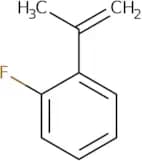
CAS:<p>Versatile small molecule scaffold</p>Formula:C8H8F2OPurity:Min. 95%Molecular weight:158.14 g/mol1-Fluoro-2-(prop-1-en-2-yl)benzene
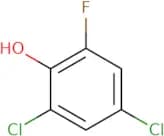
CAS:<p>Versatile small molecule scaffold</p>Formula:C9H9FPurity:Min. 95%Molecular weight:136.17 g/mol2,4-Dichloro-6-fluorophenol
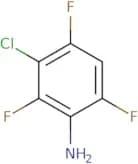
CAS:<p>Versatile small molecule scaffold</p>Formula:C6H3Cl2FOPurity:Min. 95%Molecular weight:180.99 g/mol3-Chloro-2,4,6-trifluoroaniline
CAS:<p>Versatile small molecule scaffold</p>Formula:C6H3ClF3NPurity:Min. 95%Molecular weight:181.54 g/mol

![3,4-Dihydro-2H-benzo[E][1,2,4]thiadiazine 1,1-dioxide](/_next/image/?url=https%3A%2Fstatic.cymitquimica.com%2Fproducts%2F3D%2Fthumb-webp%2FAAA35984.webp&w=3840&q=75)

![2-{[3-(Trifluoromethyl)phenyl]amino}acetic acid](/_next/image/?url=https%3A%2Fstatic.cymitquimica.com%2Fproducts%2F3D%2Fthumb-webp%2FAAA34981.webp&w=3840&q=75)

![2-Hydroxy-2-[3-(trifluoromethyl)phenyl]acetic acid](/_next/image/?url=https%3A%2Fstatic.cymitquimica.com%2Fproducts%2F3D%2Fthumb-webp%2FAAA34910.webp&w=3840&q=75)