Building Blocks
This section contains fundamental products for the synthesis of organic and biological compounds. Building blocks are the essential starting materials used to construct complex molecules through various chemical reactions. They play a critical role in drug discovery, material science, and chemical research. At CymitQuimica, we offer a diverse range of high-quality building blocks to support your innovative research and industrial projects, ensuring you have the essential components for successful synthesis.
Subcategories of "Building Blocks"
- Boronic Acids & Boronic Acid Derivatives(5,756 products)
- Chiral Building Blocks(1,242 products)
- Hydrocarbon Building Blocks(6,095 products)
- Organic Building Blocks(61,055 products)
Found 199650 products of "Building Blocks"
Sort by
Purity (%)
0
100
|
0
|
50
|
90
|
95
|
100
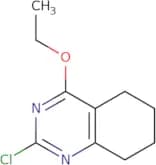
2-Chloro-4-ethoxy-5,6,7,8-tetrahydroquinazoline
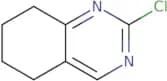
CAS:<p>Versatile small molecule scaffold</p>Formula:C10H13ClN2OPurity:Min. 95%Molecular weight:212.67 g/mol2-chloro-5,6,7,8-tetrahydroquinazoline
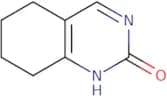
CAS:<p>Versatile small molecule scaffold</p>Formula:C8H9ClN2Purity:Min. 95%Molecular weight:168.62 g/mol1,2,5,6,7,8-Hexahydroquinazolin-2-one
CAS:<p>Quinazolone is an organic compound that can be classified as a hydrocarbon, aliphatic hydrocarbon, or a radical. It has been used in the production of benzyl, growth regulators and biocides. Quinazolone is also used for plant growth and is effective against some fungi such as Penicillium notatum.</p>Formula:C8H10N2OPurity:Min. 95%Molecular weight:150.18 g/mol2-Chloro-1-(4-hexylphenyl)ethan-1-one
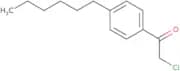
CAS:<p>Versatile small molecule scaffold</p>Formula:C14H19ClOPurity:Min. 95%Molecular weight:238.75 g/molCycloheptyl isothiocyanate
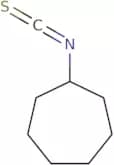
CAS:<p>Cycloheptyl isothiocyanate is a 1-4c alkyl, azaheterocycle, isothiocyanate that has been shown to be stereoselective. It binds to the sulfur atom of thiols and sulfonylureas, preventing the formation of the reactive intermediate that leads to their hydrolysis. This property can be used for the synthesis of ensembles and aralkyls. Cycloheptyl isothiocyanate also binds to alkenyl groups, which may be useful in synthesizing cycloalkyls or haloalkyls.</p>Formula:C8H13NSPurity:Min. 95%Molecular weight:155.26 g/mol3-Amino-4-iodo-1H-pyrazole
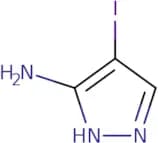
CAS:<p>3-Amino-4-iodo-1H-pyrazole is a heterocyclic organic compound consisting of an imidazole ring with a pyrazole ring fused at the 2 and 5 positions. It is an analog of pyridazine. The crystal structure of 3-amino-4-iodo-1H-pyrazole has been determined to be orthorhombic, with space group Pnam2. The compound has a number of reactions, including nucleophilic addition, hydroxylation, and nitration. This heterocyclic compound is reactive and can serve as a monofunctional reagent in multiple reactions. 3-Amino-4-iodo-1H-pyrazole is used in the synthesis of other related compounds like 6-(3′,5′ -diamino)imidazo[2,1]benzothiazoles.</p>Formula:C3H4IN3Purity:Min. 95%Molecular weight:208.99 g/mol5-Bromo-2-methylsulfanylpyrimidin-4-ol
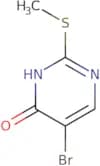
CAS:<p>Versatile small molecule scaffold</p>Formula:C5H5BrN2OSPurity:Min. 95%Molecular weight:221.07 g/mol2-Methyl-4-(4-methylphenyl)butan-2-amine
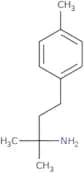
CAS:<p>Versatile small molecule scaffold</p>Formula:C12H19NPurity:Min. 95%Molecular weight:177.29 g/mol2-Amino-6-bromo-4H-chromen-4-one
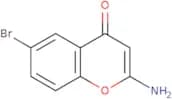
CAS:<p>Versatile small molecule scaffold</p>Formula:C9H6BrNO2Purity:Min. 95%Molecular weight:240.05 g/mol2-[(2-Bromophenyl)formamido]acetic acid
CAS:<p>2-[(2-Bromophenyl)formamido]acetic acid is a bile salt that is used to treat liver disease. It is a prodrug of taurocholic acid, which is a naturally occurring bile salt that is essential for the digestion of dietary fats. 2-[(2-Bromophenyl)formamido]acetic acid has been shown to have a constant rate of hydrolysis and can be used as an alternative to taurocholic acid in cases where the latter cannot be metabolized due to genetic defects or enzyme deficiencies. This drug also has the ability to neutralize staphylococcus by converting it into hippuric acid, which can then be excreted from the body via urine. 2-[(2-Bromophenyl)formamido]acetic acid does not undergo any reactions with other drugs, making it ideal for patients who are taking other medications for unrelated conditions.</p>Formula:C9H8BrNO3Purity:Min. 95%Molecular weight:258.07 g/molTricyclo[7.1.1.0,2,7]undeca-2,4,6-trien-8-ol
CAS:<p>Versatile small molecule scaffold</p>Formula:C11H12OPurity:Min. 95%Molecular weight:160.2 g/molTricyclo[7.1.1.0,2,7]undeca-2,4,6-triene-8-carboxylic acid
CAS:<p>Versatile small molecule scaffold</p>Formula:C12H12O2Purity:Min. 95%Molecular weight:188.2 g/molTricyclo[7.1.1.0,2,7]undeca-2,4,6-trien-8-amine
CAS:<p>Versatile small molecule scaffold</p>Formula:C11H13NPurity:Min. 95%Molecular weight:159.23 g/mol4-tert-Butyl-1,3-thiazole-5-carboxylic acid
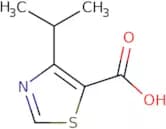
CAS:<p>Versatile small molecule scaffold</p>Formula:C8H11NO2SPurity:Min. 95%Molecular weight:185.25 g/mol4-(Propan-2-yl)-1,3-thiazole-5-carboxylic acid
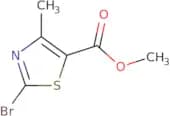
CAS:<p>Versatile small molecule scaffold</p>Formula:C7H9NO2SPurity:Min. 95%Molecular weight:171.22 g/molmethyl 2-bromo-4-methylthiazole-5-carboxylate
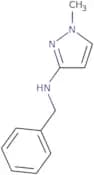
CAS:<p>Versatile small molecule scaffold</p>Formula:C6H6BrNO2SPurity:Min. 95%Molecular weight:236.08 g/molN-Benzyl-1-methyl-1H-pyrazol-3-amine
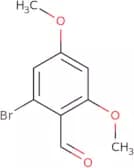
CAS:<p>Versatile small molecule scaffold</p>Formula:C11H13N3Purity:Min. 95%Molecular weight:187.24 g/mol2-Bromo-4,6-dimethoxybenzaldehyde
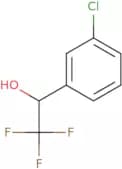
CAS:<p>2-Bromo-4,6-dimethoxybenzaldehyde is an arylation reagent that reacts with nucleophilic substrates (e.g., amines) through the formation of a covalent bond. 2-Bromo-4,6-dimethoxybenzaldehyde is used as an efficient way to synthesize halides and functional groups for research purposes. This compound has also been shown to have antibacterial activity against Staphylococcus aureus and methicillin resistant Staphylococcus aureus. 2-Bromo-4,6-dimethoxybenzaldehyde is synthesized by the reaction of styrene with bromine in the presence of base. It is also used in the synthesis of flavones, which are natural products found in plants that have anti-inflammatory properties.</p>Formula:C9H9BrO3Purity:Min. 95%Molecular weight:245.07 g/mol1-(3-Chlorophenyl)-2,2,2-trifluoroethanol
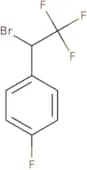
CAS:<p>Versatile small molecule scaffold</p>Formula:C8H6ClF3OPurity:Min. 95%Molecular weight:210.58 g/mol1-(1-Bromo-2,2,2-trifluoroethyl)-4-fluorobenzene
CAS:<p>Versatile small molecule scaffold</p>Formula:C8H5BrF4Purity:Min. 95%Molecular weight:257.02 g/mol

![2-[(2-Bromophenyl)formamido]acetic acid](/_next/image/?url=https%3A%2Fstatic.cymitquimica.com%2Fproducts%2F3D%2Fthumb-webp%2FGDA56883.webp&w=3840&q=75)
![Tricyclo[7.1.1.0,2,7]undeca-2,4,6-trien-8-ol](/_next/image/?url=https%3A%2Fstatic.cymitquimica.com%2Fproducts%2F3D%2Fthumb-webp%2FGDA56916.webp&w=3840&q=75)
![Tricyclo[7.1.1.0,2,7]undeca-2,4,6-triene-8-carboxylic acid](/_next/image/?url=https%3A%2Fstatic.cymitquimica.com%2Fproducts%2F3D%2Fthumb-webp%2FGDA56920.webp&w=3840&q=75)
![Tricyclo[7.1.1.0,2,7]undeca-2,4,6-trien-8-amine](/_next/image/?url=https%3A%2Fstatic.cymitquimica.com%2Fproducts%2F3D%2Fthumb-webp%2FGDA56922.webp&w=3840&q=75)