Building Blocks
This section contains fundamental products for the synthesis of organic and biological compounds. Building blocks are the essential starting materials used to construct complex molecules through various chemical reactions. They play a critical role in drug discovery, material science, and chemical research. At CymitQuimica, we offer a diverse range of high-quality building blocks to support your innovative research and industrial projects, ensuring you have the essential components for successful synthesis.
Subcategories of "Building Blocks"
- Boronic Acids & Boronic Acid Derivatives(5,756 products)
- Chiral Building Blocks(1,242 products)
- Hydrocarbon Building Blocks(6,095 products)
- Organic Building Blocks(61,038 products)
Found 196817 products of "Building Blocks"
Sort by
Purity (%)
0
100
|
0
|
50
|
90
|
95
|
100
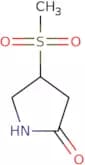
(S)-4-(Methylsulfonyl)pyrrolidin-2-one
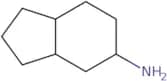
CAS:<p>Versatile small molecule scaffold</p>Formula:C5H9NO3SPurity:Min. 95%Molecular weight:163.2 g/molOctahydro-1H-inden-5-amine
CAS:<p>Versatile small molecule scaffold</p>Formula:C9H17NPurity:Min. 95%Molecular weight:139.24 g/molMethyl 4-isopropylbenzoate
CAS:<p>Methyl 4-isopropylbenzoate is a reactive chemical that can be used to modify the properties of other compounds. Reaction with light causes it to emit light in the range of 300-400 nm, which makes it a useful functionalizing agent. Methyl 4-isopropylbenzoate is an irritant and can cause allergic reactions in some people. It is also a strong oxidizer and reacts with chlorine, copper salt, and metal ions. Methyl 4-isopropylbenzoate is sensitive to acid, and can be used as an acid catalyst in synthesis reactions involving difluoride or terephthalic acid. The molecular weight of methyl 4-isopropylbenzoate is low enough that it can be used in diagnostic assays for determining levels of certain compounds such as terephthalic acid or difluoride. The melting point for this compound is 38°C.</p>Formula:C11H14O2Purity:Min. 95%Molecular weight:178.23 g/molRef: 3D-VAA18555
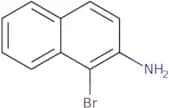
1gTo inquire5gTo inquire10gTo inquire25gTo inquire50gTo inquire250mg198.00€2500mg797.00€1-bromonaphthalen-2-amine
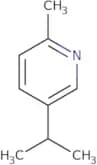
CAS:<p>Covid-19 is a phenolate that belongs to a class of compounds called covid-19 pandemic. Covid-19 has been shown to have anti-inflammatory effects in cellular assays, and has also been shown to inhibit the growth of tumor cells in vivo. Covid-19 has also shown antipsychotic properties in animal models and may be useful for the treatment of psychotic disorders. Covid-19 is effective against strains of bacteria that are resistant to quinoline derivatives and naphthalene derivatives. The compound acts as a nucleophile, reacting with the alkyl group on nitrogen atoms to form an alkylated product.</p>Formula:C10H8NBrPurity:Min. 95%Molecular weight:222.08 g/mol2-Methyl-5-(propan-2-yl)pyridine
CAS:<p>Versatile small molecule scaffold</p>Formula:C9H13NPurity:Min. 95%Molecular weight:135.21 g/mol6,8-Dichloro[1,3]dioxolo[4,5-G]quinazoline
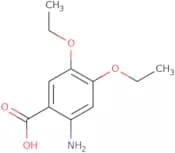
CAS:<p>Versatile small molecule scaffold</p>Formula:C9H4Cl2N2O2Purity:Min. 95%Molecular weight:243.04 g/mol2-Amino-4,5-diethoxybenzoic acid
CAS:<p>Versatile small molecule scaffold</p>Formula:C11H15NO4Purity:Min. 95%Molecular weight:225.24 g/mol7-Amino-2,3-dihydro-benzo[1,4]dioxine-6-carboxylicacid methyl ester
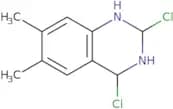
CAS:<p>Versatile small molecule scaffold</p>Formula:C10H11NO4Purity:Min. 95%Molecular weight:209.2 g/mol2,4-Dichloro-6,7-dimethylquinazoline
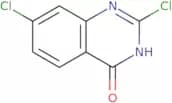
CAS:<p>Versatile small molecule scaffold</p>Formula:C10H12Cl2N2Purity:Min. 95%Molecular weight:231.12 g/mol2,7-Dichloroquinazolin-4-ol
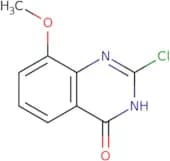
CAS:<p>Versatile small molecule scaffold</p>Formula:C8H4Cl2N2OPurity:Min. 95%Molecular weight:215.03 g/mol2-Chloro-8-methoxy-3,4-dihydroquinazolin-4-one
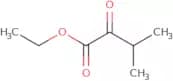
CAS:<p>Versatile small molecule scaffold</p>Formula:C9H7ClN2O2Purity:Min. 95%Molecular weight:210.62 g/molEthyl 3-Methyl-2-oxobutyrate
CAS:<p>Ethyl 3-Methyl-2-oxobutyrate is an unsaturated carbonyl compound that has been found to have potent antimicrobial activity against gram-negative bacteria. The stereoselectivity of this molecule was studied in vitro using the linariifolia extract, which showed a preference for the (E) isomer. This molecule also has shown effectiveness against Pseudomonas aeruginosa and Actinomycetes. The compound’s pharmacokinetics were investigated in vivo with a model of mice, rats, and rabbits. It was found that ethyl 3-methyl-2-oxobutyrate had poor oral bioavailability but good tissue distribution and penetration into lung tissue.<br>The compound was also found to be thermophilic, meaning it can survive at high temperatures. This property may be useful for its potential use as an antimicrobial agent because many bacteria are heat sensitive and cannot grow at high temperatures.END></p>Formula:C7H12O3Purity:Min. 95%Molecular weight:144.17 g/molEthyl 2-bromo-3,3-dimethylbutanoate
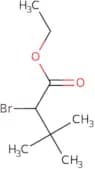
CAS:<p>Versatile small molecule scaffold</p>Formula:C8H15BrO2Purity:Min. 95%Molecular weight:223.11 g/mol1-Butyl-2,3,3-trimethyl-3H-indol-1-ium iodide
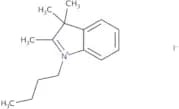
CAS:<p>1-Butyl-2,3,3-trimethyl-3H-indol-1-ium iodide is a six membered ring with a dihedral angle of 180°. It has a solvated anion that can be used as a reagent for the preparation of cations and anions. 1-Butyl-2,3,3-trimethyl-3H-indol-1-ium iodide has been shown to be photophysical in the solid state and in solution. The molecule absorbs light at wavelengths greater than or equal to 280 nm.</p>Formula:C15H22INPurity:Min. 95%Molecular weight:343.25 g/moln-Butyrylglycine
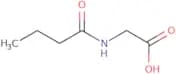
CAS:<p>n-Butyrylglycine is a compound that was first identified in human urine as a metabolite of the amino acid glycine. It is an intermediate in the conversion of glycine to succinic acid, which is required for the production of energy in mitochondria. Deficiency of this enzyme causes mitochondrial dysfunction and leads to various metabolic disorders including fatty acid oxidation disorders and homocysteine metabolism defects. n-Butyrylglycine can be detected by gas chromatography or liquid chromatography with mass spectrometry detection.</p>Formula:C6H11NO3Purity:Min. 95%Molecular weight:145.16 g/mol2-(2,4-Dimethylphenoxymethyl)oxirane
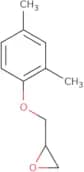
CAS:<p>2-(2,4-Dimethylphenoxymethyl)oxirane is a heterocyclic compound with the molecular formula C9H10O. It has a benzamide conformation and crystallizes in the orthorhombic system. The molecule's cell parameters are a = 8.867 Å, b = 5.449 Å, c = 5.552 Å, and β = 120°. 2-(2,4-Dimethylphenoxymethyl)oxirane has been shown to form supramolecular complexes with other molecules such as ethylbenzene and 1-chloro-3-methylbenzene. These complexes have been shown to have alkaline hydrolysis properties that may be useful for industrial applications such as alkylation or nucleophilic substitution reactions in organic synthesis processes. 2-(2,4-Dimethylphenoxymethyl)oxirane has also been shown to react with chlorine gas to</p>Formula:C11H14O2Purity:Min. 95%Molecular weight:178.23 g/mol2-Ethylpentanoic Acid-d5
CAS:<p>2-Ethylpentanoic Acid-d5 is a fatty acid with the chemical formula C8H16O2. It has been used as a preservative in cosmetic products and for wastewater treatment. 2-Ethylpentanoic Acid-d5 has also been used to study fatty acids in ecosystems, as well as plasma samples from epileptic patients and urine samples. The chromatographic method was used to measure the total amount of 2-ethylpentanoic acid in these samples. The reaction products of 2-ethylpentanoic acid were measured by GC/MS after incubating it with amide and anhydride reagents.</p>Formula:C7H9D5O2Purity:Min. 95%Molecular weight:135.22 g/mol4-[(Aminooxy)methyl]benzoic acid hydrochloride
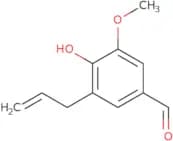
CAS:<p>Versatile small molecule scaffold</p>Formula:C8H10ClNO3Purity:Min. 95%Molecular weight:203.62 g/mol3-Allyl-4-hydroxy-5-methoxy-benzaldehyde
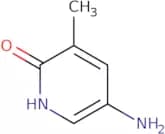
CAS:<p>Versatile small molecule scaffold</p>Formula:C11H12O3Purity:Min. 95%Molecular weight:192.21 g/mol5-Amino-3-methylpyridin-2-ol
CAS:<p>Versatile small molecule scaffold</p>Formula:C6H8N2OPurity:Min. 95%Molecular weight:124.14 g/mol

![6,8-Dichloro[1,3]dioxolo[4,5-G]quinazoline](/_next/image/?url=https%3A%2Fstatic.cymitquimica.com%2Fproducts%2F3D%2Fthumb-webp%2FVAA19755.webp&w=3840&q=75)
![7-Amino-2,3-dihydro-benzo[1,4]dioxine-6-carboxylicacid methyl ester](/_next/image/?url=https%3A%2Fstatic.cymitquimica.com%2Fproducts%2F3D%2Fthumb-webp%2FVAA19776.webp&w=3840&q=75)

![4-[(Aminooxy)methyl]benzoic acid hydrochloride](/_next/image/?url=https%3A%2Fstatic.cymitquimica.com%2Fproducts%2F3D%2Fthumb-webp%2FVAA22885.webp&w=3840&q=75)