Building Blocks
This section contains fundamental products for the synthesis of organic and biological compounds. Building blocks are the essential starting materials used to construct complex molecules through various chemical reactions. They play a critical role in drug discovery, material science, and chemical research. At CymitQuimica, we offer a diverse range of high-quality building blocks to support your innovative research and industrial projects, ensuring you have the essential components for successful synthesis.
Subcategories of "Building Blocks"
- Boronic Acids & Boronic Acid Derivatives(5,756 products)
- Chiral Building Blocks(1,242 products)
- Hydrocarbon Building Blocks(6,095 products)
- Organic Building Blocks(61,055 products)
Found 199650 products of "Building Blocks"
Sort by
Purity (%)
0
100
|
0
|
50
|
90
|
95
|
100
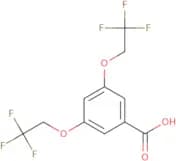
3,5-Bis(2,2,2-trifluoroethoxy)benzoic acid
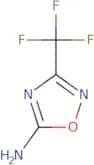
CAS:<p>Versatile small molecule scaffold</p>Formula:C11H8F6O4Purity:Min. 95%Molecular weight:318.17 g/mol3-(Trifluoromethyl)-1,2,4-oxadiazol-5-amine
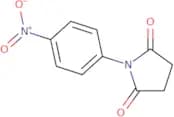
CAS:<p>Versatile small molecule scaffold</p>Formula:C3H2F3N3OPurity:Min. 95%Molecular weight:153.06 g/mol1-(4-Nitrophenyl)pyrrolidine-2,5-dione
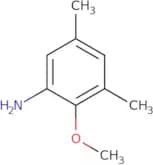
CAS:<p>Versatile small molecule scaffold</p>Formula:C10H8N2O4Purity:Min. 95%Molecular weight:220.18 g/mol2-Methoxy-3,5-dimethylaniline
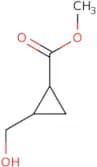
CAS:<p>Versatile small molecule scaffold</p>Formula:C9H13NOPurity:Min. 95%Molecular weight:151.21 g/molTrans-methyl 2-(hydroxymethyl)-cyclopropanecarboxylate
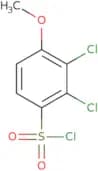
CAS:Versatile small molecule scaffoldFormula:C6H10O3Purity:Min. 95%Molecular weight:130.14 g/mol2,3-Dichloro-4-methoxybenzene-1-sulfonyl chloride
CAS:<p>Versatile small molecule scaffold</p>Formula:C7H5Cl3O3SPurity:Min. 95%Molecular weight:275.5 g/mol4-(4-Chlorophenyl)-1H-imidazole
CAS:<p>4-(4-Chlorophenyl)-1H-imidazole is a fluorescent probe that has been used to study the substrate binding site of the enzyme cytochrome P450. This probe has been shown to bind to the cavity of the enzyme, which is located at the interface between two domains of the α-subunit. The binding of 4-(4-chlorophenyl)-1H-imidazole has been shown to inhibit catalysis by interfering with substrate binding. Crystallographic analysis and X-ray crystallographic structures have shown that this compound is a tight inhibitor of cytochrome P450. The inhibitor binds in a way that blocks access to the active site, resulting in an increase in Km and decrease in kcat for substrates bound at this site. Functional studies have also shown that 4-(4-chlorophenyl)-1H-imidazole inhibits cytochrome P450 activity, reducing levels of NADPH oxidase and other reactive</p>Formula:C9H7ClN2Purity:Min. 95%Molecular weight:178.62 g/mol1-[2-Chloro-4-(methylsulfanyl)phenyl]ethan-1-one
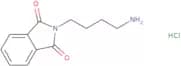
CAS:<p>Versatile small molecule scaffold</p>Formula:C9H9ClOSPurity:Min. 95%Molecular weight:200.69 g/mol2-(4-Aminobutyl)-2,3-dihydro-1H-isoindole-1,3-dione hydrochloride
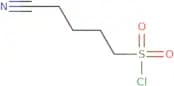
CAS:<p>Versatile small molecule scaffold</p>Formula:C12H15ClN2O2Purity:Min. 95%Molecular weight:254.71 g/mol4-Cyanobutane-1-sulfonyl chloride
CAS:<p>Versatile small molecule scaffold</p>Formula:C5H8ClNO2SPurity:Min. 95%Molecular weight:181.64 g/mol2-(Chloromethyl)bicyclo[2.2.1]heptane
CAS:<p>Versatile small molecule scaffold</p>Formula:C8H13ClPurity:Min. 95%Molecular weight:144.64 g/molMethyl bicyclo[2.2.1]heptane-2-carboxylate
CAS:<p>Versatile small molecule scaffold</p>Formula:C9H14O2Purity:Min. 95%Molecular weight:154.21 g/mol2,3-Diamino-6-methylpyrimidin-4(3H)-one
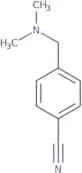
CAS:<p>2,3-Diamino-6-methylpyrimidin-4(3H)-one (2,3-DMP) is an acetoacetate derivative that stabilizes the pyrazole ring and prevents it from undergoing a condensation reaction. It has been shown to chelate metal ions and produce ethyl acetoacetate as a result of the condensation reaction. 2,3-DMP also has aminoguanidine-like activity in the treatment of diabetic neuropathy and may be used for the treatment of other neurological disorders.</p>Formula:C5H8N4OPurity:Min. 95%Molecular weight:140.15 g/mol4-((Dimethylamino)methyl)benzonitrile
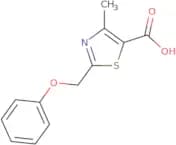
CAS:<p>4-((Dimethylamino)methyl)benzonitrile is a chemical pesticide that belongs to the group of insecticides. It has been shown to be effective against a wide range of insects, including mosquitoes and cockroaches. 4-((Dimethylamino)methyl)benzonitrile is found in many household products, such as flea repellents, ant baits, and mosquito coils. This compound has been shown to have no adverse effects on humans or mammals when used at low concentrations. However, it may cause skin irritation and respiratory problems at higher concentrations. 4-((Dimethylamino)methyl)benzonitrile has also been shown to have some biological activity against soil bacteria.</p>Formula:C10H12N2Purity:Min. 95%Molecular weight:160.22 g/mol4-Methyl-2-(phenoxymethyl)-1,3-thiazole-5-carboxylic acid
CAS:<p>Versatile small molecule scaffold</p>Formula:C12H11NO3SPurity:Min. 95%Molecular weight:249.29 g/molDimethoxy-1,2-thiazole-4-carbonitrile
CAS:<p>Versatile small molecule scaffold</p>Formula:C6H6N2O2SPurity:Min. 95%Molecular weight:170.19 g/molN,3-Dimethyl-1,2,4-Thiadiazol-5-Amine
CAS:<p>Versatile small molecule scaffold</p>Formula:C4H7N3SPurity:Min. 95%Molecular weight:129.18 g/mol6,7,8,9-Tetrahydro-5H-benzo[7]annulen-5-ol
CAS:<p>Tetrabenazine is a dopamine receptor antagonist that is used to treat Parkinson's disease. It has been shown to have a high affinity for the D2 dopamine receptor, which is associated with the symptoms of Parkinson's disease. Tetrabenazine inhibits the binding of dopamine to the D2 receptor by occupying its site and blocking it, thereby reducing the effect of dopamine on neurons.</p>Formula:C11H14OPurity:Min. 95%Molecular weight:162.23 g/mol4-(Methylsulfanyl)-1,2-dihydropyrimidin-2-one
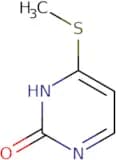
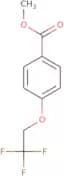
CAS:<p>4-(Methylsulfanyl)-1,2-dihydropyrimidin-2-one is a thione that has been studied in electrochemistry, photochemistry, and magnetic properties. The UV absorption spectrum of 4-(methylsulfanyl)-1,2-dihydropyrimidin-2-one displays the cyclic nature of this molecule. The structural features of the molecule have been elucidated by x-ray crystallography and functional theory. The tautomeric form has been characterized using magnetic studies and cyclic voltammetry. These studies reveal that the tautomeric form is more stable than the other forms at low pH values and increases in stability with increased electron density on sulfur atoms. Disulphide derivatives were obtained by reacting 4-(methylsulfanyl)-1,2-dihydropyrimidin-2-one with sodium dithionite.</p>Formula:C5H6N2OSPurity:Min. 95%Molecular weight:142.18 g/molMethyl 4-(2,2,2-trifluoroethoxy)benzoate
CAS:<p>Versatile small molecule scaffold</p>Formula:C10H9F3O3Purity:Min. 95%Molecular weight:234.17 g/mol


![1-[2-Chloro-4-(methylsulfanyl)phenyl]ethan-1-one](/_next/image/?url=https%3A%2Fstatic.cymitquimica.com%2Fproducts%2F3D%2Fthumb-webp%2FKBA51531.webp&w=3840&q=75)
![2-(Chloromethyl)bicyclo[2.2.1]heptane](/_next/image/?url=https%3A%2Fstatic.cymitquimica.com%2Fproducts%2F3D%2Fthumb-webp%2FKBA52066.webp&w=3840&q=75)
![Methyl bicyclo[2.2.1]heptane-2-carboxylate](/_next/image/?url=https%3A%2Fstatic.cymitquimica.com%2Fproducts%2F3D%2Fthumb-webp%2FKBA52081.webp&w=3840&q=75)



![6,7,8,9-Tetrahydro-5H-benzo[7]annulen-5-ol](/_next/image/?url=https%3A%2Fstatic.cymitquimica.com%2Fproducts%2F3D%2Fthumb-webp%2FKBA55094.webp&w=3840&q=75)