


Building Blocks
This section contains fundamental products for the synthesis of organic and biological compounds. Building blocks are the essential starting materials used to construct complex molecules through various chemical reactions. They play a critical role in drug discovery, material science, and chemical research. At CymitQuimica, we offer a diverse range of high-quality building blocks to support your innovative research and industrial projects, ensuring you have the essential components for successful synthesis.
Subcategories of "Building Blocks"
- Boronic Acids & Boronic Acid Derivatives(5,756 products)
- Chiral Building Blocks(1,242 products)
- Hydrocarbon Building Blocks(6,095 products)
- Organic Building Blocks(61,038 products)
Found 196817 products of "Building Blocks"
Sort by
Purity (%)
0
100
|
0
|
50
|
90
|
95
|
100
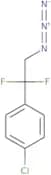
1-(2-Azido-1,1-difluoroethyl)-4-chlorobenzene
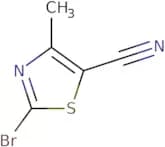
CAS:<p>Versatile small molecule scaffold</p>Formula:C8H6ClF2N3Purity:Min. 95%Molecular weight:217.6 g/mol2-Bromo-4-methylthiazole-5-carbonitrile
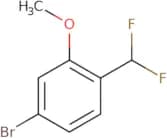
CAS:<p>Versatile small molecule scaffold</p>Formula:C5H3BrN2SPurity:Min. 95%Molecular weight:203.06 g/mol4-Bromo-1-(difluoromethyl)-2-methoxybenzene
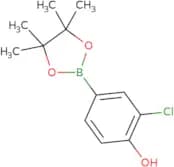
CAS:<p>Versatile small molecule scaffold</p>Formula:C8H7BrF2OPurity:Min. 95%Molecular weight:237.04 g/mol3-Chloro-4-hydroxyphenylboronic acid pinacol ester
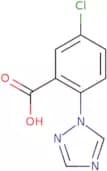
CAS:<p>Versatile small molecule scaffold</p>Formula:C12H16BClO3Purity:Min. 95%Molecular weight:254.52 g/mol5-Chloro-2-(1H-1,2,4-triazol-1-yl)benzoic acid
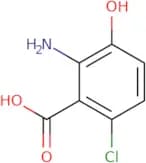
CAS:<p>Versatile small molecule scaffold</p>Formula:C9H6ClN3O2Purity:Min. 95%Molecular weight:223.61 g/mol2-Amino-6-chloro-3-hydroxybenzoic acid
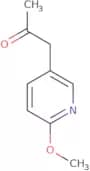
CAS:<p>Versatile small molecule scaffold</p>Formula:C7H6ClNO3Purity:Min. 95%Molecular weight:187.58 g/mol1-(6-Methoxypyridin-3-yl)propan-2-one
CAS:<p>Versatile small molecule scaffold</p>Formula:C9H11NO2Purity:Min. 95%Molecular weight:165.19 g/mol8-(Difluoromethoxy)quinolin-4-ol
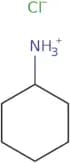
CAS:<p>Versatile small molecule scaffold</p>Formula:C10H7F2NO2Purity:Min. 95%Molecular weight:211.16 g/molCyclohexylamine Hydrochloride
CAS:<p>Cyclohexylamine hydrochloride (CHA) is a cyclohexane ring with an amine group on the side. It is used as a metabolic rate indicator, which can be seen through optical sensors. The most common use of CHA is in bladder studies, where it is used to test the effect of various chemicals on the cells lining the bladder. CHA also has long-term toxicity and particle effects, which have been shown in animal studies. Cyclohexylamine hydrochloride may also have carcinogenic potential because it binds to fatty acid receptors, leading to increased uptake and tumor growth. Cyclohexylamine hydrochloride also has an effect on glucocorticoid receptors that can lead to toxic effects on the testes and ovaries. Cyclohexylamine hydrochloride has no known interactions with any other drugs or chemicals.</p>Formula:C6H13N·HClPurity:Min. 95%Molecular weight:135.64 g/mol3-Ethyl-4-hydroxybenzonitrile
CAS:<p>Versatile small molecule scaffold</p>Formula:C9H9NOPurity:Min. 95%Molecular weight:147.17 g/mol3-(Pyrrolidin-1-yl)propanamide hydrochloride
CAS:<p>Versatile small molecule scaffold</p>Formula:C7H15ClN2OPurity:Min. 95%Molecular weight:178.66 g/mol5,6-Dimethylthieno[2,3-d]pyrimidin-4-amine
CAS:<p>5,6-Dimethylthieno[2,3-d]pyrimidin-4-amine is an ester of sucralose. It is a sweetener that can be used in sweetner compositions or solvates. 5,6-Dimethylthieno[2,3-d]pyrimidin-4-amine is an intermediate in the synthesis of sucralose.</p>Formula:C8H9N3SPurity:Min. 95%Molecular weight:179.24 g/mol3-(2-Aminoethyl)-1,3-dihydro-2H-indol-2-onehydrochloride
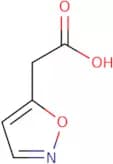
CAS:<p>Versatile small molecule scaffold</p>Formula:C10H13ClN2OPurity:Min. 95%Molecular weight:212.68 g/mol2-(1,2-Oxazol-5-yl)acetic acid
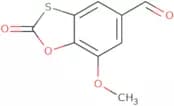
CAS:2-(1,2-Oxazol-5-yl)acetic acid is a cell-permeable compound that induces death of cancer cells via apoptosis. It has been shown to be effective in vitro against mouse melanoma cells, as well as in vivo treatment of mice with xenografts of human melanoma cells. This drug activates caspase 3 by inhibiting the mitochondrial membrane potential and releasing cytochrome C from mitochondria into the cytosol. 2-(1,2-Oxazol-5-yl)acetic acid also mediates apoptotic cell death by activating the chloride channel, reactive oxygen species (ROS), and voltage gated ion channels. In addition, it inhibits viral replication by inducing autophagic cell death and has tumoricidal effects when given to mice with established tumors. br>Formula:C5H5NO3Purity:Min. 95%Molecular weight:127.1 g/mol7-Methoxy-2-oxo-2H-1,3-benzoxathiole-5-carbaldehyde
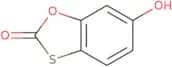
CAS:<p>Versatile small molecule scaffold</p>Formula:C9H6O4SPurity:Min. 95%Molecular weight:210.21 g/mol6-Hydroxy-1,3-benzoxathiol-2-one
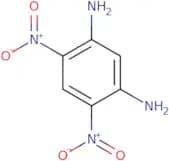
CAS:<p>6-Hydroxy-1,3-benzoxathiol-2-one is a solute compound that has been used as a food additive. It has been shown to inhibit the growth of various microorganisms including bacteria, yeast, and fungi. 6-Hydroxy-1,3-benzoxathiol-2-one is an inhibitor of enzymes such as beta-glucosidase and alpha amylase. It also has inhibitory properties against autoimmune diseases and bowel disease. Angelicae Dahuricae (AD) extract can be used as an alternative for 6HBO to treat leishmania infection. AD extract has synergistic antifungal activity with metal hydroxides or benzalkonium chloride when combined in vitro.</p>Formula:C7H4O3SPurity:Min. 95%Molecular weight:168.17 g/mol4,6-Dinitrobenzene-1,3-diamine
CAS:<p>4,6-Dinitrobenzene-1,3-diamine is an impurity in the manufacture of 4,6-dinitrotoluene. It was first synthesized by heating dinitrotoluene with nitric acid and ammonium hydroxide. The compound crystallizes as a trimorphic mixture of three polymorphs: α (monoclinic), β (orthorhombic), and γ (tetragonal). The α form has a melting point of 114°C, while the β form melts at 107°C. This compound has been used as a solvent for xylene and glycol ethers.</p>Formula:C6H6N4O4Purity:Min. 95%Molecular weight:198.14 g/mol1-Benzylbenzoimidazole
CAS:<p>1-Benzylbenzoimidazole is a benzimidazole derivative that inhibits the growth of fungi by inhibiting the production of mitochondrial membrane potential. It has been shown to inhibit angiogenesis and reduce tumor size in vivo, which may be due to its ability to induce apoptosis in endothelial cells. 1-Benzylbenzoimidazole also inhibits the synthesis of 2-hydroxyphenylacetic acid and nitrogen atoms from nitric oxide, which may be due to its ability to bind with chlorine atoms. 1-Benzylbenzoimidazole is not active against bacteria or mammalian cells, but it does inhibit the growth of fungi by binding with hydrogen bonds at the fungal cell wall.</p>Formula:C14H12N2Purity:Min. 95%Molecular weight:208.26 g/mol4'-Chlorobutyrophenone
CAS:<p>4'-Chlorobutyrophenone is a chlorinated aromatic compound that is synthesized by the Friedel-Crafts reaction of anhydrous aluminum chloride with 4-chlorobenzene. This reaction requires palladium as a catalyst. The product of this reaction has been shown to be a high yield, selective, and inexpensive method for the synthesis of aromatic compounds. 4'-Chlorobutyrophenone may also be used in the synthesis of other organic compounds. The chloride group on the phenyl ring provides unsaturation, which can be used for further reactions such as alkylation or arylation.</p>Formula:C10H11ClOPurity:Min. 95%Molecular weight:182.65 g/mol1-Methyl-4-[(methylsulfanyl)sulfonyl]benzene
CAS:<p>Versatile small molecule scaffold</p>Formula:C8H10O2S2Purity:Min. 95%Molecular weight:202.3 g/mol



![5,6-Dimethylthieno[2,3-d]pyrimidin-4-amine](/_next/image/?url=https%3A%2Fstatic.cymitquimica.com%2Fproducts%2F3D%2Fthumb-webp%2FEAA99489.webp&w=3840&q=75)



![1-Methyl-4-[(methylsulfanyl)sulfonyl]benzene](/_next/image/?url=https%3A%2Fstatic.cymitquimica.com%2Fproducts%2F3D%2Fthumb-webp%2FEAA97366.webp&w=3840&q=75)