Building Blocks
This section contains fundamental products for the synthesis of organic and biological compounds. Building blocks are the essential starting materials used to construct complex molecules through various chemical reactions. They play a critical role in drug discovery, material science, and chemical research. At CymitQuimica, we offer a diverse range of high-quality building blocks to support your innovative research and industrial projects, ensuring you have the essential components for successful synthesis.
Subcategories of "Building Blocks"
- Boronic Acids & Boronic Acid Derivatives(5,756 products)
- Chiral Building Blocks(1,242 products)
- Hydrocarbon Building Blocks(6,095 products)
- Organic Building Blocks(61,038 products)
Found 196817 products of "Building Blocks"
Sort by
Purity (%)
0
100
|
0
|
50
|
90
|
95
|
100
2,4-Dimethylthiazole-5-carboxylic Acid
CAS:<p>2,4-Dimethylthiazole-5-carboxylic Acid is a class of organic compounds that are used as a building block for the synthesis of polymers. The surface analysis of this compound reveals that it is a supramolecular polymer with an irregular crystal structure. This compound can be synthesized from 2,4-dimethylthiazol and 5-carboxylic acid in two steps. The X-ray diffraction analysis shows that the crystalline form is single and belongs to the orthorhombic system with space group Pbnm. Hydrogen bonds between the aromatic rings and carboxylate esters are present. This polymer has been shown to be active against graminis sclerotiorum and Sclerotinia graminicola.</p>Formula:C6H7NO2SPurity:Min. 95%Molecular weight:157.19 g/mol3-Bromo-N,N-diethylaniline
CAS:<p>Versatile small molecule scaffold</p>Formula:C10H14BrNPurity:Min. 95%Molecular weight:228.13 g/mol(But-2-yn-1-yl)(prop-2-yn-1-yl)amine hydrochloride
CAS:<p>Versatile small molecule scaffold</p>Formula:C7H10ClNPurity:Min. 95%Molecular weight:143.61 g/molN,N-Dimethyl-3-(morpholin-4-yl)propanamide
CAS:<p>Versatile small molecule scaffold</p>Formula:C9H18N2O2Purity:Min. 95%Molecular weight:186.25 g/mol5-Acetyl-2-amino-1,3-thiazole
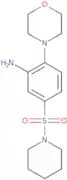
CAS:<p>5-Acetyl-2-amino-1,3-thiazole is a radiolabeled inhibitor of γ-secretase that binds to the active site of the enzyme. It has an IC50 value of 4.4 μM for γ-secretase with little or no inhibitory effect on other proteases such as trypsin and chymotrypsin.</p>Formula:C5H6N2OSPurity:Min. 95%Molecular weight:142.18 g/mol2-(Morpholin-4-yl)-5-(piperidine-1-sulfonyl)aniline
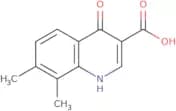
CAS:<p>Versatile small molecule scaffold</p>Formula:C15H23N3O3SPurity:Min. 95%Molecular weight:325.4 g/mol7,8-Dimethyl-4-hydroxyquinoline-3-carboxylic acid
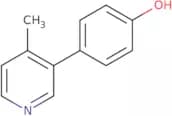
CAS:<p>Versatile small molecule scaffold</p>Formula:C12H11NO3Purity:Min. 95%Molecular weight:217.22 g/mol4-(4-Methylpyridin-3-yl)phenol
CAS:<p>Versatile small molecule scaffold</p>Formula:C12H11NOPurity:Min. 95%Molecular weight:185.22 g/molMethyl Succinamate
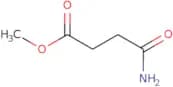
CAS:<p>Methyl succinate is a heterocyclic compound that has been shown to be effective in the treatment of autoimmune diseases. It has also been shown to inhibit cancer cells, as well as infectious diseases. Methyl Succinamate is an amide and intramolecular hydrogen bond donor. This chemical ionization technique can be used for the specific determination of this compound in biological fluids such as blood plasma or serum. The NMR spectra of methyl succinate are consistent with its structure, which consists of an amide group and three methyl groups. Methyl succinate binds to the bradykinin B2 receptor and inhibits its activity by blocking the binding site.</p>Formula:C5H9NO3Purity:Min. 95%Molecular weight:131.13 g/molThieno[2,3-b]pyridine-2-carbaldehyde
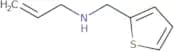
CAS:<p>Thieno[2,3-b]pyridine-2-carbaldehyde is a chemical compound that is structurally related to nicotine. It has been shown to be an inhibitor of CYP2A6 and coumarin 7-hydroxylase, the enzymes that catalyze the hydroxylation of coumarin to form 7-hydroxycoumarin. Thieno[2,3-b]pyridine-2-carbaldehyde has also shown inhibitory effects on the metabolism of formyl lead molecules. The IC50 values for thieno[2,3-b]pyridine-2-carbaldehyde are 0.01 μM for CYP2A6 and 0.1 μM for coumarin 7-hydroxylase.</p>Formula:C8H5NOSPurity:Min. 95%Molecular weight:163.2 g/mol(Prop-2-en-1-yl)(thiophen-2-ylmethyl)amine
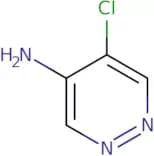
CAS:<p>Versatile small molecule scaffold</p>Formula:C8H11NSPurity:Min. 95%Molecular weight:153.25 g/mol5-Chloropyridazin-4-amine
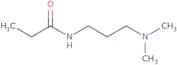
CAS:<p>5-Chloropyridazin-4-amine is a medicinal compound. It contains an aromatic ring and a heterocyclic amine group, which are connected by a nitrogen atom. 5-Chloropyridazin-4-amine has been used for the production of other compounds such as aminopyridazines, quinones, and betaines. 5-Chloropyridazin-4-amine can be used in research on the synthesis of cinnolines, azides, and pyridazines. This compound is also used to study the chemistry of sulfur.</p>Formula:C4H4ClN3Purity:Min. 95%Molecular weight:129.55 g/molN-(3-(Dimethylamino)propyl)propionamide
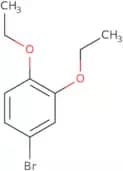
CAS:<p>Versatile small molecule scaffold</p>Formula:C8H18N2OPurity:Min. 95%Molecular weight:158.24 g/mol4-Bromo-1,2-diethoxybenzene
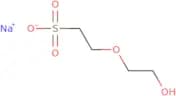
CAS:<p>Versatile small molecule scaffold</p>Formula:C10H13BrO2Purity:Min. 95%Molecular weight:245.11 g/molSodium 2-(2-hydroxyethoxy)ethane-1-sulfonate
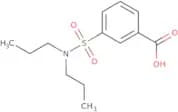
CAS:<p>Versatile small molecule scaffold</p>Formula:C4H9NaO5SPurity:Min. 95%Molecular weight:192.2 g/mol3-(Dipropylsulfamoyl)benzoic acid
CAS:<p>Versatile small molecule scaffold</p>Formula:C13H19NO4SPurity:Min. 95%Molecular weight:285.36 g/mol1-bromo-4-chloronaphthalene
CAS:<p>1-Bromo-4-chloronaphthalene is a chemical compound that has an aromatic ring and a chlorinated ring. It is paramagnetic, with magnetic susceptibility of 2.2x10⁻⁶ m3/kg, and can be found in nature. The frequency of the 1-bromo-4-chloronaphthalene molecule is 6.0x10¹⁵ Hz and it emits at 631 nm. There are about 7.2 billion people on Earth, with a population profile of 50% male and 50% female. The transfer rate for this molecule is mediated by resonance energy transfer from the excited state to the ground state, which is accomplished through collisions or dipole interactions between molecules.</p>Formula:C10H6BrClPurity:Min. 95%Molecular weight:241.51 g/mol3-Amino-2-methylphenol
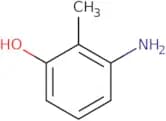
CAS:<p>3-Amino-2-methylphenol is a trypsin inhibitor that can be used for cancer therapy. It has been shown to inhibit the activity of proteases, such as trypsin, chymotrypsin and elastase. 3-Amino-2-methylphenol is also an inhibitor of polyclonal antibodies and has been shown to have anti-inflammatory properties. This compound has been found to be stable in a nutrient solution at pH 6 and 7.3, with a half life of more than 16 hours at pH 7.3 and more than 8 hours at pH 6. 3-Amino-2-methylphenol is not soluble in water or saline, but it dissolves well in ethanol, methanol and dimethylsulfoxide (DMSO).</p>Formula:C7H9NOPurity:Min. 95%Molecular weight:123.15 g/molN-Ethylpropargylamine hydrochloride
CAS:<p>Versatile small molecule scaffold</p>Formula:C5H10ClNPurity:Min. 95%Molecular weight:119.59 g/mol(Prop-2-yn-1-yl)(propyl)amine hydrochloride
CAS:<p>Versatile small molecule scaffold</p>Formula:C6H12ClNPurity:Min. 95%Molecular weight:133.62 g/mol


![Thieno[2,3-b]pyridine-2-carbaldehyde](/_next/image/?url=https%3A%2Fstatic.cymitquimica.com%2Fproducts%2F3D%2Fthumb-webp%2FDCA17498.webp&w=3840&q=75)