


Building Blocks
This section contains fundamental products for the synthesis of organic and biological compounds. Building blocks are the essential starting materials used to construct complex molecules through various chemical reactions. They play a critical role in drug discovery, material science, and chemical research. At CymitQuimica, we offer a diverse range of high-quality building blocks to support your innovative research and industrial projects, ensuring you have the essential components for successful synthesis.
Subcategories of "Building Blocks"
- Boronic Acids & Boronic Acid Derivatives(5,756 products)
- Chiral Building Blocks(1,242 products)
- Hydrocarbon Building Blocks(6,093 products)
- Organic Building Blocks(60,519 products)
Found 195533 products of "Building Blocks"
Sort by
Purity (%)
0
100
|
0
|
50
|
90
|
95
|
100
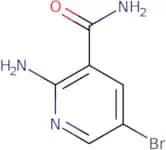
2-Amino-5-bromonicotinamide
CAS:<p>Versatile small molecule scaffold</p>Formula:C6H6BrN3OPurity:Min. 95%Molecular weight:216.04 g/mol6-fluoro-1,2,3,4-tetrahydronaphthalen-1-ol
CAS:<p>Versatile small molecule scaffold</p>Formula:C10H11OFPurity:Min. 95%Molecular weight:166.19 g/mol1-Benzylpyrrolidine-2,3-dione
CAS:<p>Versatile small molecule scaffold</p>Formula:C11H11NO2Purity:Min. 95%Molecular weight:189.21 g/mol1,2,3,4-Tetrahydronaphthalene-1,7-diamine dihydrochloride
CAS:<p>Versatile small molecule scaffold</p>Formula:C10H16Cl2N2Purity:Min. 95%Molecular weight:235.15 g/mol(1,2,3,4-Tetrahydronaphthalen-1-yl)urea
CAS:<p>(1,2,3,4-Tetrahydronaphthalen-1-yl)urea is an organic chemical that is used as a reagent in the synthesis of other substances. It has been shown to have growth inhibitory effects on bacteria and fungi at concentrations of 0.5% or greater. (1,2,3,4-Tetrahydronaphthalen-1-yl)urea has also been found to be stable at pH levels ranging from 2 to 11 and hydrolyzes in water to release carbon dioxide and urea. The compound's toxicity is low and it is not expected to cause any adverse effects in humans.</p>Formula:C11H14N2OPurity:Min. 95%Molecular weight:190.24 g/molN-(7-Nitro-1,2,3,4-tetrahydronaphthalen-1-ylidene)hydroxylamine
CAS:<p>Versatile small molecule scaffold</p>Formula:C10H10N2O3Purity:Min. 95%Molecular weight:206.2 g/mol4-(Pyridin-2-ylmethyl)phenol
CAS:<p>Versatile small molecule scaffold</p>Formula:C12H11NOPurity:Min. 95%Molecular weight:185.22 g/mol6-tert-Butylpyridin-2-ol
CAS:<p>Versatile small molecule scaffold</p>Formula:C9H13NOPurity:Min. 95%Molecular weight:151.21 g/mol6-Methoxy-2-methylpyridin-3-ol
CAS:<p>Versatile small molecule scaffold</p>Formula:C7H9NO2Purity:Min. 95%Molecular weight:139.15 g/mol2-Methoxy-5-methylphenylacetic acid
CAS:<p>2-Methoxy-5-methylphenylacetic acid is a chiral molecule that has been studied in the area of pyridine chemistry. It is an analogue of 2-methoxybenzaldehyde and has been used as a starting material for the synthesis of flavonoids, including trans-stilbene. The stereochemistry of this molecule is not known but it has been shown to be isomerized by treatment with boron trifluoride.</p>Formula:C10H12O3Purity:Min. 95%Molecular weight:180.2 g/moltert-Butyl 2-isothiocyanatoacetate
CAS:<p>Versatile small molecule scaffold</p>Formula:C7H11NO2SPurity:Min. 95%Molecular weight:173.24 g/mol2-{[(4-Methylphenyl)methyl]sulfanyl}acetic acid
CAS:<p>Versatile small molecule scaffold</p>Formula:C10H12O2SPurity:Min. 95%Molecular weight:196.27 g/mol7'A-Methyl-octahydrospiro[1,3-dioxolane-2,5'-indene]-1'-one
CAS:<p>Versatile small molecule scaffold</p>Formula:C12H18O3Purity:Min. 95%Molecular weight:210.3 g/mol5-Methoxy-1H-indazol-3-amine
CAS:<p>Versatile small molecule scaffold</p>Formula:C8H9N3OPurity:Min. 95%Molecular weight:163.18 g/mol3-Ethylpyridine-2-carbonitrile
CAS:<p>3-Ethylpyridine-2-carbonitrile is an experimental compound that has been used as a research tool in molecular and atomic orbitals. The proton coupling constants of 3-ethylpyridine-2-carbonitrile have been determined by various techniques to be 1.2 Hz, with no evidence of any isomeric or conformational effects. Using two dimensional nmr, the chemical shifts were found to be -3.5 ppm for the C=N protons, -1.8 ppm for the C=C protons, and 2.6 ppm for the methylene protons; these values are in agreement with other experimental values for this compound.</p>Formula:C8H8N2Purity:Min. 95%Molecular weight:132.16 g/mol4-methyl-1H-indole-2-carbaldehyde
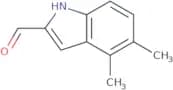
CAS:<p>Versatile small molecule scaffold</p>Formula:C10H9NOPurity:Min. 95%Molecular weight:159.18 g/mol4,5-Dimethyl-1H-indole-2-carbaldehyde
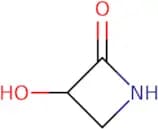
CAS:<p>Versatile small molecule scaffold</p>Formula:C11H11NOPurity:Min. 95%Molecular weight:173.21 g/mol3-Hydroxyazetidin-2-one
CAS:<p>Versatile small molecule scaffold</p>Formula:C3H5NO2Purity:Min. 95%Molecular weight:87.08 g/mol3-Ethylpiperidine hydrochloride
CAS:<p>Versatile small molecule scaffold</p>Formula:C7H16ClNPurity:Min. 95%Molecular weight:149.66 g/mol2-Chloro-1-ethyl-1H-benzo[d]imidazole
CAS:<p>2-Chloro-1-ethyl-1H-benzo[d]imidazole (2C1EB) is an experimental benzimidazole derivative that has shown antitumor activity in vitro and in vivo. 2C1EB inhibits the growth of cancer cells by inducing cell cycle arrest and apoptosis. It also inhibits the production of reactive oxygen species, which may be a potential mechanism for its anticancer activity. 2C1EB has been shown to inhibit tumor growth in mice models and to have cytotoxic effects against human lung adenocarcinoma A549 cells.</p>Formula:C9H9ClN2Purity:Min. 95%Molecular weight:180.64 g/mol


![2-{[(4-Methylphenyl)methyl]sulfanyl}acetic acid](/_next/image/?url=https%3A%2Fstatic.cymitquimica.com%2Fproducts%2F3D%2Fthumb-webp%2FICA51120.webp&w=3840&q=75)
![7'A-Methyl-octahydrospiro[1,3-dioxolane-2,5'-indene]-1'-one](/_next/image/?url=https%3A%2Fstatic.cymitquimica.com%2Fproducts%2F3D%2Fthumb-webp%2FICA51220.webp&w=3840&q=75)



![2-Chloro-1-ethyl-1H-benzo[d]imidazole](/_next/image/?url=https%3A%2Fstatic.cymitquimica.com%2Fproducts%2F3D%2Fthumb-webp%2FICA53315.webp&w=3840&q=75)