Building Blocks
This section contains fundamental products for the synthesis of organic and biological compounds. Building blocks are the essential starting materials used to construct complex molecules through various chemical reactions. They play a critical role in drug discovery, material science, and chemical research. At CymitQuimica, we offer a diverse range of high-quality building blocks to support your innovative research and industrial projects, ensuring you have the essential components for successful synthesis.
Subcategories of "Building Blocks"
- Boronic Acids & Boronic Acid Derivatives(5,756 products)
- Chiral Building Blocks(1,242 products)
- Hydrocarbon Building Blocks(6,095 products)
- Organic Building Blocks(61,055 products)
Found 199650 products of "Building Blocks"
Sort by
Purity (%)
0
100
|
0
|
50
|
90
|
95
|
100
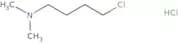
(4-chlorobutyl)dimethylamine hydrochloride
CAS:<p>Versatile small molecule scaffold</p>Formula:C6H15Cl2NPurity:Min. 95%Molecular weight:172.09 g/mol2-Methanesulfonyl-1,3-thiazole
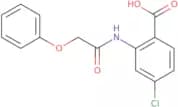
CAS:Versatile small molecule scaffoldFormula:C4H5NO2S2Purity:Min. 95%Molecular weight:163.2 g/mol4-Chloro-2-(2-phenoxyacetamido)benzoic acid
CAS:<p>Versatile small molecule scaffold</p>Formula:C15H12ClNO4Purity:Min. 95%Molecular weight:305.71 g/mol2-[2-(4-Chlorophenoxy)acetamido]benzoic acid
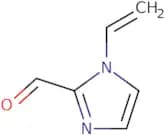
CAS:Versatile small molecule scaffoldFormula:C15H12ClNO4Purity:Min. 95%Molecular weight:305.71 g/mol1-Ethenyl-1H-imidazole-2-carboxaldehyde
CAS:<p>1-Ethenyl-1H-imidazole-2-carboxaldehyde is a molecule that contains a vinyl group and a hydrogen bond. It has an intramolecular interaction with the carbonyl group and interactions with the formyl group and the pyridine ring. The vinyl group is also able to interact with other vinyl groups in other molecules, creating cycles of these molecules.</p>Formula:C6H6N2OPurity:Min. 95%Molecular weight:122.12 g/mol3-Benzyl-5-(1-chloroethyl)-1,2,4-oxadiazole
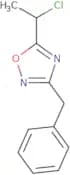
CAS:<p>Versatile small molecule scaffold</p>Formula:C11H11ClN2OPurity:Min. 95%Molecular weight:222.67 g/mol1-Bromo-4-(tert-butoxy)butane
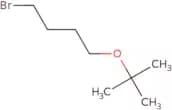
CAS:<p>Versatile small molecule scaffold</p>Formula:C8H17BrOPurity:Min. 95%Molecular weight:209.12 g/mol[2-(2-Methylphenoxy)ethyl]hydrazine hydrochloride
CAS:Versatile small molecule scaffoldFormula:C9H15ClN2OPurity:Min. 95%Molecular weight:202.68 g/mol[2-(4-Chlorophenoxy)ethyl]hydrazine hydrochloride
CAS:<p>Versatile small molecule scaffold</p>Formula:C8H12Cl2N2OPurity:Min. 95%Molecular weight:223.1 g/mol5-Aminopyrimidin-4(3H)-one
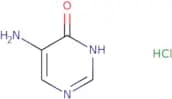
CAS:<p>5-Aminopyrimidin-4(3H)-one is an imidazole that is a precursor to the purines, which are nucleic acid bases. It is synthesized from the reaction of ammonium persulfate and 5-aminouracil with diacetate. This compound can be used as a fungicide and can also be used in the synthesis of 5-amino-1-(2,4,6-trichlorophenoxy)pyrimidine (5-ATP), a chemotherapeutic agent.</p>Purity:Min. 95%6-Methyl-1H,6H,7H-pyrazolo[3,4-d]pyridazin-7-one
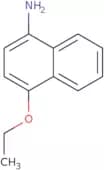
CAS:<p>Versatile small molecule scaffold</p>Formula:C6H6N4OPurity:Min. 95%Molecular weight:150.14 g/mol4-Ethoxynaphthalen-1-amine
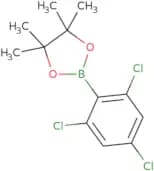
CAS:<p>Versatile small molecule scaffold</p>Formula:C12H13NOPurity:Min. 95%Molecular weight:187.24 g/mol4,4,5,5-Tetramethyl-2-(2,4,6-trichlorophenyl)-1,3,2-dioxaborolane
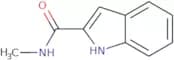
CAS:<p>Versatile small molecule scaffold</p>Formula:C12H14BCl3O2Purity:Min. 95%Molecular weight:307.41 g/molN-Methyl-1H-indole-2-carboxamide
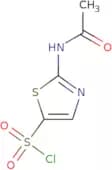
CAS:<p>N-Methyl-1H-indole-2-carboxamide is a molecule that has been optimized for antibacterial activity. It belongs to an indole family of molecules and has been shown to be active against the fungus, Neosartorya fischeri. In theory, this molecule could have potential as a drug agent for the prevention of bacterial infection. The optimization process was based on parameters such as carboxamide functional theory, nmr spectra, and potentials. The experimental data collected from NMR spectra and antibacterial activity confirmed that this molecule had a high degree of antibacterial activity against Gram-positive bacteria such as Staphylococcus aureus and Gram-negative bacteria such as Escherichia coli.</p>Formula:C10H10N2OPurity:Min. 95%Molecular weight:174.2 g/mol2-Acetamidothiazole-5-sulfonyl chloride
CAS:<p>2-Acetamidothiazole-5-sulfonyl chloride (2A5C) is a sulfonamide anticancer drug that exhibits cytotoxic activity. 2A5C is an indole derivative that has been synthesized for the purpose of developing a new class of anticancer agents. This drug has shown to have significant anti-tumor activity in molecular docking studies and can be used as a lead compound for future research.</p>Formula:C5H5ClN2O3S2Purity:Min. 95%Molecular weight:240.69 g/molBenzyl 4-(chlorosulfonyl)benzoate
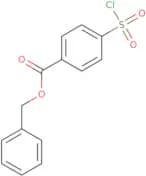
CAS:<p>Versatile small molecule scaffold</p>Formula:C14H11ClO4SPurity:Min. 95%Molecular weight:310.8 g/mol3-(aminocarbonyl)benzenesulfonyl chloride
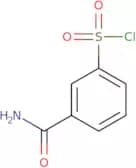
CAS:<p>3-(aminocarbonyl)benzenesulfonyl chloride (3-ACBSCl) is a compound that inhibits the life cycle of the HIV virus. It is a hexamer and binds to viral proteins, inhibiting the process of viral assembly. 3-ACBSCl helps to optimize lead compounds for antiviral drugs. This inhibitor has been shown to be active against HIV-1, and also inhibits other viruses that have an analogous life cycle. 3-ACBSCl has been shown to inhibit HIV-1 infection by binding to the capsid protein and preventing it from assembling into a functional virus particle.</p>Formula:C7H6ClNO3SPurity:Min. 95%Molecular weight:219.64 g/mol2-Methylene-1,3-dioxepane
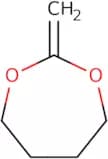
CAS:<p>2-Methylene-1,3-dioxepane is a biodegradable polymer that is used in the production of polyesters for use in film and packaging. It is synthesized by cationic polymerization, which involves the formation of ester linkages. 2-Methylene-1,3-dioxepane has been shown to be biocompatible in cell culture and can be used as a growth factor for tissue engineering. The melting point of this polymer is dependent on the molecular weight and it undergoes phase transition at temperatures around 130°C. This polymer degrades through hydrolysis when exposed to alkali or hydrogen chloride.2-Methylene-1,3-dioxepane has been observed to have an FTIR spectrum containing carbonyl absorption bands at 1710 cm−1 and 1650 cm−1. This material also displays a 13C NMR spectrum with peaks at -18 ppm and -7 ppm</p>Formula:C6H10O2Purity:Min. 95%Molecular weight:114.14 g/molMethyl 5-(chlorosulfonyl)thiophene-3-carboxylate
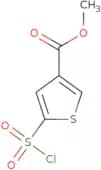
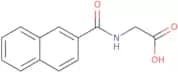
CAS:Versatile small molecule scaffoldFormula:C6H5ClO4S2Purity:Min. 95%Molecular weight:240.7 g/mol2-(Naphthalen-2-ylformamido)acetic acid
CAS:<p>2-(Naphthalen-2-ylformamido)acetic acid (Nafamid) is a toxic agent that can be used to induce experimental diabetes in animals. Nafamid is metabolized to benzoate and then to chloride, which can be detected in urine. Chromatographic experiments showed that Nafamid was not metabolized by rats or mice, but was eliminated as the mercapturic acid (MNA) and mercapturic acid glucuronide (MAG). MNA has been isolated from urine samples of rats injected with Nafamid. The metabolic pathways for Nafamid are the same for animals and humans.</p>Formula:C13H11NO3Purity:Min. 95%Molecular weight:229.23 g/mol


![2-[2-(4-Chlorophenoxy)acetamido]benzoic acid](/_next/image/?url=https%3A%2Fstatic.cymitquimica.com%2Fproducts%2F3D%2Fthumb-webp%2FUCA76409.webp&w=3840&q=75)
![[2-(2-Methylphenoxy)ethyl]hydrazine hydrochloride](/_next/image/?url=https%3A%2Fstatic.cymitquimica.com%2Fproducts%2F3D%2Fthumb-webp%2FUCA78193.webp&w=3840&q=75)
![[2-(4-Chlorophenoxy)ethyl]hydrazine hydrochloride](/_next/image/?url=https%3A%2Fstatic.cymitquimica.com%2Fproducts%2F3D%2Fthumb-webp%2FUCA78224.webp&w=3840&q=75)
![6-Methyl-1H,6H,7H-pyrazolo[3,4-d]pyridazin-7-one](/_next/image/?url=https%3A%2Fstatic.cymitquimica.com%2Fproducts%2F3D%2Fthumb-webp%2FUCA79272.webp&w=3840&q=75)