Building Blocks
This section contains fundamental products for the synthesis of organic and biological compounds. Building blocks are the essential starting materials used to construct complex molecules through various chemical reactions. They play a critical role in drug discovery, material science, and chemical research. At CymitQuimica, we offer a diverse range of high-quality building blocks to support your innovative research and industrial projects, ensuring you have the essential components for successful synthesis.
Subcategories of "Building Blocks"
- Boronic Acids & Boronic Acid Derivatives(5,756 products)
- Chiral Building Blocks(1,242 products)
- Hydrocarbon Building Blocks(6,095 products)
- Organic Building Blocks(61,037 products)
Found 196139 products of "Building Blocks"
Sort by
Purity (%)
0
100
|
0
|
50
|
90
|
95
|
100
1-(Piperidin-1-yl)pentan-3-one
CAS:<p>Versatile small molecule scaffold</p>Formula:C10H19NOPurity:Min. 95%Molecular weight:169.3 g/molGlyoxal hydrate trimer
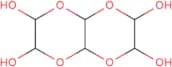
CAS:<p>Glyoxal hydrate trimer is a growth factor that interacts with integrin receptors to activate the intracellular signaling pathway. It can also inhibit the aggregation of amyloid protein and is used in the treatment of inflammatory diseases. Glyoxal hydrate trimer has been shown to be an antagonist of γ-secretase, which is an enzyme involved in the processing of amyloid precursor protein into amyloid β-protein (Aβ). This leads to a reduction in Aβ production, as well as reducing inflammation associated with Alzheimer's disease.</p>Formula:C6H10O8Purity:Min. 95%Molecular weight:210.14 g/mol2-(dimethylamino)-5-nitrobenzoic acid
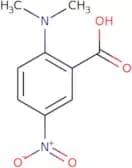
CAS:<p>Versatile small molecule scaffold</p>Formula:C9H10N2O4Purity:Min. 95%Molecular weight:210.2 g/mol4-Methyl-4-phenylpentanoic acid
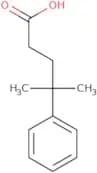
CAS:<p>4-Methyl-4-phenylpentanoic acid is an organic compound that is used as a starting material in the preparation of other compounds. It reacts with cobaltic oxide (CoO) to form an organometallic complex. The mechanism for this reaction has been studied and it was found that the oxidation of 4-methyl-4-phenylpentanoic acid proceeds via a stepwise oxidation process. This reaction is substantiated by the formation of two products, one from each oxidation step. The mechanistic pathway for this reaction can be summarized as follows:<br><br>1) 4-methyl-4-phenylpentanoic acid + CoO → [Co(CH)] <br>2) [Co(CH)] + O → [Co(OH)] + CH3CHO <br>3) [Co(OH)] → HO + CO2 <br>4) CO2 → CO + H2O</p>Formula:C12H16O2Purity:Min. 95%Molecular weight:192.25 g/molPhosphonoacetic acid
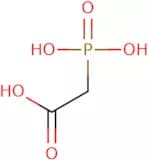
CAS:<p>Phosphonoacetic acid is a phosphonoacetic acid. It inhibits the polymerase enzyme, which is essential for the replication of DNA. Phosphonoacetic acid inhibits the polymerase enzyme by competing with adenosine triphosphate and forming stable complexes with dna template. This blocks the progression of DNA polymerization and prevents the formation of a strand complementary to the template strand. This chemical has been shown to be effective against wild-type strains of virus, as well as resistant mutants that are unable to replicate in the presence of phosphonoacetic acid.</p>Formula:C2H5O5PPurity:Min. 95%Molecular weight:140.03 g/mol2,2-Bis(thiophen-2-yl)acetic acid
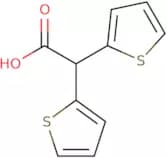
CAS:<p>2,2-Bis(thiophen-2-yl)acetic acid is an inorganic compound that has been shown to have a bidentate ligand with alkali metals such as zinc and copper. It is also known to be a linear polymer, which means it is composed of repeating units of monomeric subunits. 2,2-Bis(thiophen-2-yl)acetic acid can be used for the production of coatings or in organic synthesis reactions.</p>Formula:C10H8O2S2Purity:Min. 95%Molecular weight:224.3 g/molDodec-2-enoic acid
CAS:<p>Dodec-2-enoic acid is a fatty acid that is produced by the oxidation of dodecanoic acid. It has been shown to inhibit the growth of bladder cancer cells and human pathogens, including Escherichia coli, Salmonella enterica, Staphylococcus aureus, and Pseudomonas aeruginosa. Dodec-2-enoic acid also inhibits efflux pumps in bacteria and has been shown to be a potential polymerase chain reaction (PCR) substrate. Dodec-2-enoic acid can be produced from fatty acids found in animal feedstocks. Dodec-2-enoic acid is an amide with an angular shape and isomerizes into its cis form when heated.</p>Formula:C12H22O2Purity:Min. 95%Molecular weight:198.3 g/mol(Furan-2-yl)methanesulfonamide
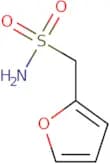
CAS:<p>Versatile small molecule scaffold</p>Formula:C5H7NO3SPurity:Min. 95%Molecular weight:161.2 g/mol3-Methyl-2-furoic acid
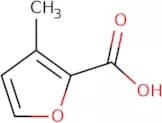
CAS:<p>3-Methyl-2-furoic acid is a heterocycle that is used in the synthesis of azelaic acid and nicotine. It is also used as an analytical reagent for the separation of halides by liquid chromatography, as well as for the separation of aldehydes. 3-Methyl-2-furoic acid has been shown to have anti-inflammatory effects on inflammatory diseases such as rheumatoid arthritis, and could be used as an antibiotic against bacteria that are resistant to other antibiotics.</p>Formula:C6H6O3Purity:Min. 95%Molecular weight:126.11 g/mol4,5-Dimethyl-2-phenylfuran-3-carboxylic acid
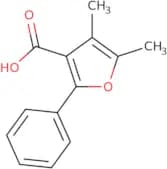
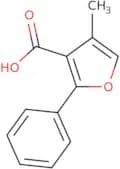
CAS:<p>Versatile small molecule scaffold</p>Formula:C13H12O3Purity:Min. 95%Molecular weight:216.23 g/mol4-Methyl-2-phenylfuran-3-carboxylic acid
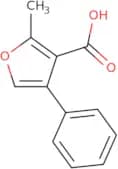
CAS:<p>Versatile small molecule scaffold</p>Formula:C12H10O3Purity:Min. 95%Molecular weight:202.21 g/mol2-Methyl-4-phenylfuran-3-carboxylic acid
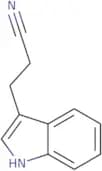
CAS:<p>Versatile small molecule scaffold</p>Formula:C12H10O3Purity:Min. 95%Molecular weight:202.21 g/mol3-(1H-Indol-3-yl)propanenitrile
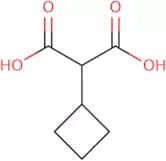
CAS:<p>Versatile small molecule scaffold</p>Formula:C11H10N2Purity:Min. 95%Molecular weight:170.21 g/mol2-Cyclobutylpropanedioic acid
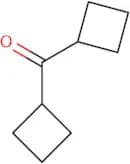
CAS:<p>2-Cyclobutylpropanedioic acid is a hydrophobic compound that is used in the production of vaccines. It is also known as a polypeptide antibiotic and has been used to clone organisms and genetically engineer them. 2-Cyclobutylpropanedioic acid is an extender for chemokines and can be used to biosynthesize proteins. This compound binds to the receptor activity of chemokines, which may lead to its anti-inflammatory properties.</p>Formula:C7H10O4Purity:Min. 95%Molecular weight:158.15 g/molDicyclobutylmethanone
CAS:<p>Dicyclobutylmethanone is an active substance that has been shown to inhibit the growth of cancer cells in vitro. It has also been shown to be effective against skin cancer cells and has a high photostability. Dicyclobutylmethanone may have immunomodulatory effects and can be used for the treatment of a variety of cancers, such as prostate cancer, breast cancer and brain tumors. This compound has also been shown to be effective against diabetic neuropathy. Dicyclobutylmethanone is an amide that interacts with fatty acids, ns3 protease and other protein-modifying enzymes, which may contribute to its biological properties.</p>Formula:C9H14OPurity:Min. 95%Molecular weight:138.21 g/mol(2R,4R)-1-Boc-2-hydroxymethyl-4-aminopyrrolidine hydrochloride
CAS:<p>Versatile small molecule scaffold</p>Formula:C10H21ClN2O3Purity:Min. 95%Molecular weight:252.74 g/mol8-Methoxy-2H,3H-[1,2,4]triazolo[4,3-a]pyridin-3-one
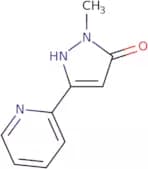
CAS:<p>Versatile small molecule scaffold</p>Formula:C7H7N3O2Purity:Min. 95%Molecular weight:165.15 g/mol1-methyl-3-(pyridin-2-yl)-1h-pyrazol-5-ol
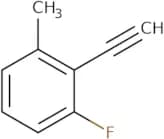
CAS:<p>Versatile small molecule scaffold</p>Formula:C9H9N3OPurity:Min. 95%Molecular weight:175.19 g/mol2-Ethynyl-1-fluoro-3-methylbenzene
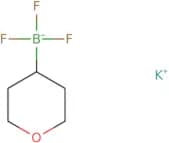
CAS:<p>Versatile small molecule scaffold</p>Formula:C9H7FPurity:Min. 95%Molecular weight:134.15 g/molPotassium Tetrahydro-2H-pyran-4-trifluoroborate
CAS:<p>Versatile small molecule scaffold</p>Formula:C5H9BOF3·KPurity:Min. 95%Molecular weight:192.02 g/mol


![8-Methoxy-2H,3H-[1,2,4]triazolo[4,3-a]pyridin-3-one](/_next/image/?url=https%3A%2Fstatic.cymitquimica.com%2Fproducts%2F3D%2Fthumb-webp%2FEBC08906.webp&w=3840&q=75)