Building Blocks
This section contains fundamental products for the synthesis of organic and biological compounds. Building blocks are the essential starting materials used to construct complex molecules through various chemical reactions. They play a critical role in drug discovery, material science, and chemical research. At CymitQuimica, we offer a diverse range of high-quality building blocks to support your innovative research and industrial projects, ensuring you have the essential components for successful synthesis.
Subcategories of "Building Blocks"
- Boronic Acids & Boronic Acid Derivatives(5,756 products)
- Chiral Building Blocks(1,242 products)
- Hydrocarbon Building Blocks(6,095 products)
- Organic Building Blocks(61,055 products)
Found 199650 products of "Building Blocks"
Sort by
Purity (%)
0
100
|
0
|
50
|
90
|
95
|
100
3-[(4-chlorophenyl)sulfonyl]propanenitrile
CAS:<p>Versatile small molecule scaffold</p>Formula:C9H8NO2SClPurity:Min. 95%Molecular weight:229.68 g/molMethyl 3-(4-bromobenzenesulfonyl)propanoate
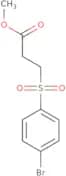
CAS:<p>Versatile small molecule scaffold</p>Formula:C10H11BrO4SPurity:Min. 95%Molecular weight:307.16 g/mol[1-(Hydroxymethyl)-2-phenylcyclopropyl]methanol
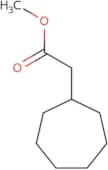
CAS:<p>Versatile small molecule scaffold</p>Formula:C11H14O2Purity:Min. 95%Molecular weight:178.2 g/molMethyl 2-cycloheptylacetate
CAS:<p>Methyl 2-cycloheptylacetate is a prophylactic drug that belongs to the group of pharmaceutical salts. It is used for the treatment of bipolar disorder and depression, but not for prophylactic purposes. Methyl 2-cycloheptylacetate encompasses gabapentin, which is used to treat epilepsy and neuropathic pain. The mechanism of action of methyl 2-cycloheptylacetate has not been elucidated yet, but it may act as an agonist at GABA receptors.</p>Formula:C10H18O2Purity:Min. 95%Molecular weight:170.25 g/mol2-Cycloheptylacetamide
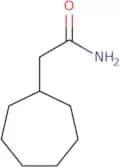
CAS:<p>2-Cycloheptylacetamide is a trisubstituted compound that is structurally related to the cannabinoid receptor agonist WIN 55212-2. This drug has been shown to inhibit proteasome activity and to have anti-cancer effects in vitro. 2-Cycloheptylacetamide has also been shown to inhibit the activity of the enzyme monoamine oxidase, which may be associated with its antidepressant and anxiolytic activities. 2-Cycloheptylacetamide has been shown to prevent oxidative damage in neuronal cells, suggesting that it may be useful for the treatment of Alzheimer's disease and depression.</p>Formula:C9H17NOPurity:Min. 95%Molecular weight:155.24 g/mol2-(1H-1,3-Benzodiazol-2-yl)-4-methylphenol
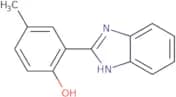
CAS:<p>Versatile small molecule scaffold</p>Formula:C14H12N2OPurity:Min. 95%Molecular weight:224.26 g/mol4-(Trifluoromethyl)bicyclo[2.2.2]octane-1-carboxylic acid
CAS:<p>Versatile small molecule scaffold</p>Formula:C10H13F3O2Purity:Min. 95%Molecular weight:222.2 g/mol4-(Propan-2-yl)benzene-1,3-diamine
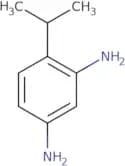
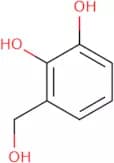
CAS:<p>4-(Propan-2-yl)benzene-1,3-diamine is a mutagenic compound that belongs to the class of hydrolytic cleavage compounds. It has been shown to have mutagenic activity in Salmonella typhimurium and Escherichia coli. 4-(Propan-2-yl)benzene-1,3-diamine also has a high viscosity. This chemical is used as an intercept in tests for mutagens and carcinogens.br>br> <br>4-(Propan-2-yl)benzene-1,3-diamine hydrolyzes to form solvents such as isopropyl alcohol and water. The molecular weight of this compound is 162.17 g/mol.br>br> <br>4-(Propan-2-yl)benzene-1,3-diamine has not been shown to be carcin</p>Formula:C9H14N2Purity:Min. 95%Molecular weight:150.22 g/mol3-(Hydroxymethyl)benzene-1,2-diol
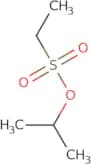
CAS:<p>3-(Hydroxymethyl)benzene-1,2-diol is an organic compound. The product is a colorless solid that has a molecular weight of 144.17 g/mol. 3-(Hydroxymethyl)benzene-1,2-diol reacts with metal surfaces and can be used in the synthesis of amides and amido groups. This product is reactive and acidic at high temperatures, but will not react with alcohols or amines. 3-(Hydroxymethyl)benzene-1,2-diol is also a reaction product from the synthesis of dopamine.</p>Formula:C7H8O3Purity:Min. 95%Molecular weight:140.14 g/molEthanesulfonic acid, 1-methylethyl ester
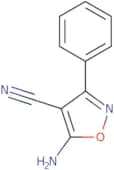
CAS:<p>Ethanesulfonic acid, 1-methylethyl ester is a sealant that is used to coat the inside of an artery or vein. It has a low energy and is made up of formyl group, attenuating hydroxyl group, and chloride. This product also contains serine protease which can hydrolyze proteins in the plaque. The sealant contains functional groups such as cationic polymerization initiator and particle.</p>Formula:C5H12O3SPurity:Min. 95%Molecular weight:152.21 g/mol5-Amino-3-phenyl-1,2-oxazole-4-carbonitrile
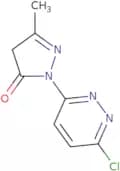
CAS:<p>Versatile small molecule scaffold</p>Formula:C10H7N3OPurity:Min. 95%Molecular weight:185.18 g/mol1-(6-Chloropyridazin-3-yl)-3-methyl-4,5-dihydro-1H-pyrazol-5-one
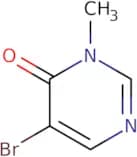
CAS:<p>1-(6-Chloropyridazin-3-yl)-3-methyl-4,5-dihydro-1H-pyrazol-5-one (1) was found to be a potent inhibitor of β amyloid fibril formation and a lead compound for the treatment of Alzheimer's disease. The compound inhibits amyloid fibril formation by binding to the hydrophobic region in the core of the fibrils and preventing crosslinking. 1 also inhibits pancreatic β cell secretion, resulting in reduced production of insulin, which causes glucose intolerance. This drug has been shown to reduce glycemic levels in diabetic mice without causing hypoglycemia.</p>Formula:C8H7ClN4OPurity:Min. 95%Molecular weight:210.62 g/mol5-Bromo-3-methyl-3,4-dihydropyrimidin-4-one
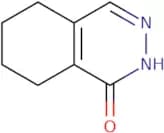
CAS:<p>Versatile small molecule scaffold</p>Formula:C5H5BrN2OPurity:Min. 95%Molecular weight:189.01 g/mol1,2,5,6,7,8-Hexahydrophthalazin-1-one
CAS:<p>Hexahydrophthalazin-1-one is a histamine H3 receptor antagonist. It has been shown to be a potent inhibitor of colon cancer cell growth in vitro, and it has been shown to inhibit the binding of histamine to the H3 receptor and interfere with the activation of this receptor. Hexahydrophthalazin-1-one also inhibits acidic ph histamine release from mast cells in vitro.</p>Formula:C8H10N2OPurity:Min. 95%Molecular weight:150.18 g/mol2,2-Dimethylheptanoic acid
CAS:<p>2,2-Dimethylheptanoic acid is a carboxylic acid that is also known as 2,2-dimethylpentanoic acid. It has the molecular formula of C8H16O2. This compound is an isomer of hexanoic acid and heptanoic acid. 2,2-Dimethylheptanoic acid is used in the production of lubricating oils and can be produced by the hydrogenation of fatty acids or glycerol. It also acts as an antioxidant, which protects polyunsaturated fats from oxidation.<br>2,2-Dimethylheptanoic acid has a boiling point of 150°C and a melting point of -62°C. It has a density of 0.891 g/cm3 at 20°C and a refractive index of 1.468 at 20°C. The colorless liquid can be found in the form of an oily liquid with a strong odor at room temperature.</p>Formula:C9H18O2Purity:Min. 95%Molecular weight:158.24 g/mol3-Bicyclo[3.2.1]octanone
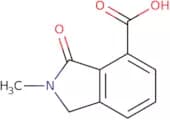
CAS:<p>3-Bicyclo[3.2.1]octanone is an organic compound that has a cyclohexane ring with a peroxide group. It is used as a synthon in the synthesis of other compounds. 3-Bicyclo[3.2.1]octanone can be synthesized by reacting α-pinene with carbon tetrachloride and cyclohexane in the presence of UV light and an oxidant, or by treating enolate with hydrogen peroxide catalysed with uv absorption to form a ketone and hydroperoxide. This product has been shown to possess UV absorption properties at 220 nm, which make it suitable for use in polymer films where it can absorb ultraviolet radiation and convert it into heat energy. The 3-bicyclo[3.2.1]octanone molecule is chiral, so only one stereoisomer will have these photochemical properties.</p>Formula:C8H12OPurity:Min. 95%Molecular weight:124.18 g/mol2-Methyl-3-oxo-2,3-dihydro-1 H -isoindole-4-carboxylic acid
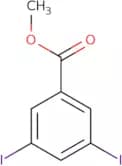
CAS:<p>Versatile small molecule scaffold</p>Formula:C10H9NO3Purity:Min. 95%Molecular weight:191.19 g/molMethyl 3,5-diiodobenzoate
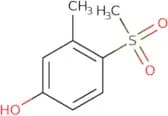
CAS:<p>Versatile small molecule scaffold</p>Formula:C8H6I2O2Purity:Min. 95%Molecular weight:387.94 g/mol4-Methanesulfonyl-3-methylphenol
CAS:<p>4-Methanesulfonyl-3-methylphenol is a chromatographic and spectrometric reagent that reacts with sulfoxides to form sulfones. It is used in the analysis of pesticides, herbicides, and other organic chemicals. The reaction system consists of two components: the 4-methanesulfonyl-3-methylphenol reagent and the sulfoxide substrate. The linear range is from 0.1 to 100 micrograms per milliliter for 4-methanesulfonyl-3-methylphenol and from 1 to 500 micrograms per milliliter for sulfoxide. This chemical has been found to be resistant to hypersalinity, tissue acclimation, and oxidation products.</p>Formula:C8H10O3SPurity:Min. 95%Molecular weight:186.23 g/mol1-Methyl-2-oxo-1,2,3,4-tetrahydroquinoline-4-carboxylic acid
CAS:<p>Versatile small molecule scaffold</p>Formula:C11H11NO3Purity:Min. 95%Molecular weight:205.21 g/mol
![3-[(4-chlorophenyl)sulfonyl]propanenitrile](/_next/image/?url=https%3A%2Fstatic.cymitquimica.com%2Fproducts%2F3D%2Fthumb-webp%2FPAA22322.webp&w=3840&q=75)

![[1-(Hydroxymethyl)-2-phenylcyclopropyl]methanol](/_next/image/?url=https%3A%2Fstatic.cymitquimica.com%2Fproducts%2F3D%2Fthumb-webp%2FPAA22451.webp&w=3840&q=75)
![4-(Trifluoromethyl)bicyclo[2.2.2]octane-1-carboxylic acid](/_next/image/?url=https%3A%2Fstatic.cymitquimica.com%2Fproducts%2F3D%2Fthumb-webp%2FPAA23409.webp&w=3840&q=75)

![3-Bicyclo[3.2.1]octanone](/_next/image/?url=https%3A%2Fstatic.cymitquimica.com%2Fproducts%2F3D%2Fthumb-webp%2FPAA25205.webp&w=3840&q=75)