Building Blocks
This section contains fundamental products for the synthesis of organic and biological compounds. Building blocks are the essential starting materials used to construct complex molecules through various chemical reactions. They play a critical role in drug discovery, material science, and chemical research. At CymitQuimica, we offer a diverse range of high-quality building blocks to support your innovative research and industrial projects, ensuring you have the essential components for successful synthesis.
Subcategories of "Building Blocks"
- Boronic Acids & Boronic Acid Derivatives(5,756 products)
- Chiral Building Blocks(1,242 products)
- Hydrocarbon Building Blocks(6,095 products)
- Organic Building Blocks(61,051 products)
Found 199813 products of "Building Blocks"
Sort by
Purity (%)
0
100
|
0
|
50
|
90
|
95
|
100
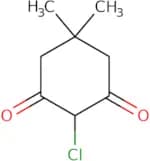
2-Chlorodimedone
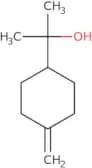
CAS:<p>2-Chlorodimedone is an antimicrobial agent that inhibits the growth of bacteria by binding to chloroperoxidase and preventing the conversion of chloride ions to hypochlorous acid. It has been shown to be effective against a wide variety of microorganisms, including Gram-positive and Gram-negative bacteria, fungi, and yeast. The effectiveness of 2-chlorodimedone has been demonstrated in a model system in which it inhibited the growth of hl-60 cells at concentrations over 10 mM. This anti-microbial agent also has a linear calibration curve with optical sensor measurements and can be used for monitoring chlorination levels in water systems. 2-Chlorodimedone belongs to a class of compounds called chlorinating agents. Chlorinating agents are chemical reagents that produce chlorine when they react with water or other substances. These reactions typically involve oxidation by transfer of electrons from hydrogen peroxide or another substance, such as myeloperoxidase in</p>Formula:C8H11ClO2Purity:Min. 95%Molecular weight:174.62 g/mol2-(4-Methylidenecyclohexyl)propan-2-ol
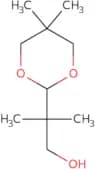
CAS:<p>Terpinen-4-ol is a fatty acid that is found in a variety of plants, including camphor and tea tree. It has been shown to have antibacterial properties. Terpinen-4-ol also interacts with proteins on the surface of bacteria, inhibiting their growth. This inhibition is related to the formation of fatty acid esters, which cause changes in the cell membrane and inhibit protein synthesis. Terpinen-4-ol has been shown to reduce the growth of Camphora and other bacteria by interfering with energy metabolism.</p>Formula:C10H18OPurity:Min. 95%Molecular weight:154.25 g/mol2-(5,5-Dimethyl-1,3-dioxan-2-yl)-2-methylpropan-1-ol
CAS:Versatile small molecule scaffoldFormula:C10H20O3Purity:Min. 95%Molecular weight:188.26 g/mol1,4-Butanediol Bis(3-aminopropyl) Ether
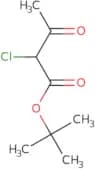
CAS:Controlled Product<p>1,4-Butanediol Bis(3-aminopropyl) Ether is a ether compound that can be used as a chemical reagent. It is a heterobifunctional reagent that can react with two different functional groups to form ether linkages. 1,4-Butanediol Bis(3-aminopropyl) Ether has been shown to be an efficient catalyst for the synthesis of nicotinic acetylcholine in oocytes from the frog Xenopus laevis. More importantly, it has been shown to be an effective catalyst for the synthesis of chiral amines. This chemical reaction occurs through an activating hydrogen atom transfer (HAT) process between nitrogen atoms and chloride ions. The activation energy for this reaction is significantly lower than that of other reactions involving chlorine ions or thallium ions.</p>Formula:C10H24N2O2Purity:Min. 95%Molecular weight:204.31 g/moltert-Butyl 2-chloro-3-oxobutanoate
CAS:<p>Versatile small molecule scaffold</p>Formula:C8H13ClO3Purity:Min. 95%Molecular weight:192.64 g/mol1-[(Pyrrolidin-1-yl)methyl]pyrrolidine
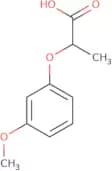
CAS:<p>1-[(Pyrrolidin-1-yl)methyl]pyrrolidine is a chemical compound that is structurally related to the neurotransmitter κ-opioid receptor. This drug has been used as a model system to study the effects of nitro, which is an endogenous agonist of the κ-opioid receptor. 1-[(Pyrrolidin-1-yl)methyl]pyrrolidine has been shown to have depressant effects on the central nervous system. The drug also has a direct effect on renal proximal tubules, leading to potassium secretion and natriuresis. 1-[(Pyrrolidin-1-yl)methyl]pyrrolidine also binds with moderate affinity to mineralocorticoid receptors and growth factor receptors.</p>Formula:C9H18N2Purity:Min. 95%Molecular weight:154.25 g/mol2-(3-Methoxy-phenoxy)-propionic acid
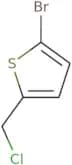
CAS:<p>2-(3-Methoxy-phenoxy)-propionic acid is a chiral compound that is used in organic synthesis. The racemic form of this molecule can be crystallized with the help of other molecules such as cocrystallization, heterodimers, underscores and enantiomers. It crystallizes in two different forms: the α-form and the β-form. The α-form has a melting point of 120 °C, whereas the β-form melts at 138 °C. The polymorphic nature of 2-(3-methoxy-phenoxy)-propionic acid is due to its structural differences in the crystal lattice. These differences are made possible by supramolecular interactions between neighboring molecules.</p>Formula:C10H12O4Purity:Min. 95%Molecular weight:196.2 g/mol2-Bromo-5-(chloromethyl)thiophene
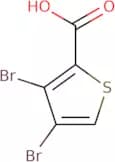
CAS:<p>Versatile small molecule scaffold</p>Formula:C5H4BrClSPurity:Min. 95%Molecular weight:211.51 g/mol3,4-dibromothiophene-2-carboxylic acid
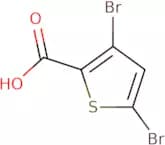
CAS:<p>Versatile small molecule scaffold</p>Formula:C5H2Br2O2SPurity:Min. 95%Molecular weight:285.9 g/mol3,5-Dibromothiophene-2-carboxylic acid
CAS:Versatile small molecule scaffoldFormula:C5H2Br2O2SPurity:Min. 95%Molecular weight:285.94 g/mol5-Bromo-1-benzothiophene-3-carboxylic acid
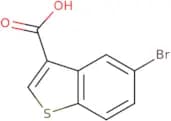
CAS:<p>Versatile small molecule scaffold</p>Formula:C9H5BrO2SPurity:Min. 95%Molecular weight:257.1 g/mol5-Vinylbenzo[d][1,3]dioxole
CAS:Controlled Product<p>5-Vinylbenzo[d][1,3]dioxole is an organic compound that belongs to the amide class. It has been shown to be a potent inhibitor of leishmania and related protozoan parasites. 5-Vinylbenzo[d][1,3]dioxole inhibits these parasites by targeting the amine group on their surface, which is responsible for the conversion of ammonium nitrate into nitric oxide. 5-Vinylbenzo[d][1,3]dioxole also has reactive properties and can form covalent bonds with other molecules in a process called redox chemistry. This property makes it useful as a reactive intermediate in chemical synthesis. 5-Vinylbenzo[d][1,3]dioxole is an example of a primary amino compound because it does not contain any secondary or tertiary amines.</p>Formula:C9H8O2Purity:Min. 95%Molecular weight:148.16 g/mol3-Methyl-4-oxo-4-phenylbutanoic acid
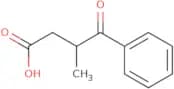
CAS:<p>Versatile small molecule scaffold</p>Formula:C11H12O3Purity:Min. 95%Molecular weight:192.21 g/molDiethyl [(oxiran-2-yl)methyl]phosphonate
CAS:<p>Diethyl [(oxiran-2-yl)methyl]phosphonate is a monoepoxide that can be used as a nucleophile in organic reactions. The hydroxylamine group of diethyl [(oxiran-2-yl)methyl]phosphonate reacts with a variety of substrates, including polyesters and silicone resins. This reaction is catalyzed by hydrochloric acid or other acids. Diethyl [(oxiran-2-yl)methyl]phosphonate is also known to react with diphenylmethane to produce oxirane.</p>Formula:C7H15O4PPurity:Min. 95%Molecular weight:194.17 g/molMethyl[1-(phenylsulfanyl)propan-2-yl]amine
CAS:<p>Versatile small molecule scaffold</p>Formula:C10H15NSPurity:Min. 95%Molecular weight:181.3 g/mol1,2-Epoxyhexadecane
CAS:<p>1,2-Epoxyhexadecane is a calcium stearate that inhibits the growth of cells. It has been shown to have an inhibitory effect on cell growth when used in combination with piperonyl butoxide and glauberite. 1,2-Epoxyhexadecane can also be used as a cationic surfactant for extraction of intracellular targets with monolayer partitioning. This product is also known to cause cancer.</p>Formula:C16H32OPurity:Min. 95%Molecular weight:240.43 g/mol2-Bromophenyl Methyl Sulfoxide
CAS:<p>2-Bromophenyl Methyl Sulfoxide is a chiral molecule that has been studied for its light emission properties. It has potentials as an electrochemical oxidant, which can be used to oxidize organic compounds and hydrogen peroxide. 2-Bromophenyl Methyl Sulfoxide is soluble in solvents such as triflic acid, sulfur dioxide, and carbon tetrachloride. The oxidation of the sulfoxides with 2-bromophenyl methyl sulfoxide yields the corresponding sulfones. This compound has also been studied for its optical properties.</p>Formula:C7H7BrOSPurity:Min. 95%Molecular weight:219.1 g/mol1-Methyl-1H-imidazo[4,5-c]pyridine-2-thiol
CAS:<p>Versatile small molecule scaffold</p>Formula:C7H7N3SPurity:Min. 95%Molecular weight:165.22 g/mol3-[(Butan-2-yl)sulfamoyl]benzoic acid
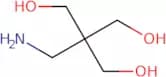
CAS:<p>Versatile small molecule scaffold</p>Formula:C11H15NO4SPurity:Min. 95%Molecular weight:257.31 g/mol2-(Aminomethyl)-2-(hydroxymethyl)propane-1,3-diol
CAS:<p>2-(Aminomethyl)-2-(hydroxymethyl)propane-1,3-diol (DMAPP) is a plant amino acid that is an intermediate in the synthesis of aminobutyric acid. It is also involved in the synthesis of ethylene, which is important for fruit ripening. DMAPP has been shown to be a precursor for the α-subunit of carbonic anhydrase and it has been detected in urine samples and assays. The uptake of DMAPP from water by plants has been studied using gas chromatography and ultracentrifugation. DMAPP has also been used as a biochemical marker for plant physiology studies.</p>Formula:C5H13NO3Purity:Min. 95%Molecular weight:135.16 g/mol


![1-[(Pyrrolidin-1-yl)methyl]pyrrolidine](/_next/image/?url=https%3A%2Fstatic.cymitquimica.com%2Fproducts%2F3D%2Fthumb-webp%2FHAA30947.webp&w=3840&q=75)
![5-Vinylbenzo[d][1,3]dioxole](/_next/image/?url=https%3A%2Fstatic.cymitquimica.com%2Fproducts%2F3D%2Fthumb-webp%2FHAA31532.webp&w=3840&q=75)
![Diethyl [(oxiran-2-yl)methyl]phosphonate](/_next/image/?url=https%3A%2Fstatic.cymitquimica.com%2Fproducts%2F3D%2Fthumb-webp%2FHAA31637.webp&w=3840&q=75)
![Methyl[1-(phenylsulfanyl)propan-2-yl]amine](/_next/image/?url=https%3A%2Fstatic.cymitquimica.com%2Fproducts%2F3D%2Fthumb-webp%2FHAA31999.webp&w=3840&q=75)

![1-Methyl-1H-imidazo[4,5-c]pyridine-2-thiol](/_next/image/?url=https%3A%2Fstatic.cymitquimica.com%2Fproducts%2F3D%2Fthumb-webp%2FHAA32194.webp&w=3840&q=75)
![3-[(Butan-2-yl)sulfamoyl]benzoic acid](/_next/image/?url=https%3A%2Fstatic.cymitquimica.com%2Fproducts%2F3D%2Fthumb-webp%2FHAA32676.webp&w=3840&q=75)