Building Blocks
This section contains fundamental products for the synthesis of organic and biological compounds. Building blocks are the essential starting materials used to construct complex molecules through various chemical reactions. They play a critical role in drug discovery, material science, and chemical research. At CymitQuimica, we offer a diverse range of high-quality building blocks to support your innovative research and industrial projects, ensuring you have the essential components for successful synthesis.
Subcategories of "Building Blocks"
- Boronic Acids & Boronic Acid Derivatives(5,756 products)
- Chiral Building Blocks(1,242 products)
- Hydrocarbon Building Blocks(6,095 products)
- Organic Building Blocks(61,037 products)
Found 196139 products of "Building Blocks"
Sort by
Purity (%)
0
100
|
0
|
50
|
90
|
95
|
100
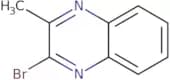
2-Bromo-3-methylquinoxaline
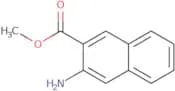
CAS:<p>Versatile small molecule scaffold</p>Formula:C9H7BrN2Purity:Min. 95%Molecular weight:223.07 g/molmethyl 3-aminonaphthalene-2-carboxylate
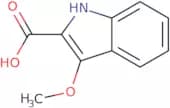
CAS:<p>Methyl 3-aminonaphthalene-2-carboxylate, also known as 3-amino-N-(4-hydroxyphenyl)naphthalene-2-carboxamide, is a chiral molecule that has two stereogenic centers. The crystal structure of this compound is in the form of a pyridine ring with a methyl group on one side and an amine group on the other. This molecule can serve as a sensor by reacting with metal ions to form coordination complexes with chiral recognition sites. It participates in imine formation, which can be used to imprint cotton fabrics with patterns. 3-Aminonaphthalene-2-carboxylic acid (3ANAC) is an axial diastereomer of methyl 3ANAC. The signal for this compound is a pyridine ring at the top of the molecule.</p>Formula:C12H11NO2Purity:Min. 95%Molecular weight:201.2 g/mol3-Methoxy-1H-indole-2-carboxylic acid
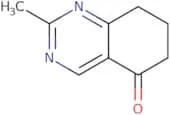
CAS:<p>Versatile small molecule scaffold</p>Formula:C10H9NO3Purity:Min. 95%Molecular weight:191.18 g/mol2-Methyl-5,6,7,8-tetrahydroquinazolin-5-one
CAS:<p>Versatile small molecule scaffold</p>Formula:C9H10N2OPurity:Min. 95%Molecular weight:162.19 g/mol8a-Methyl-hexahydro-pyrrolo[1,2-a]pyrimidin-6-one
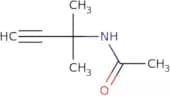
CAS:<p>Versatile small molecule scaffold</p>Formula:C8H14N2OPurity:Min. 95%Molecular weight:154.21 g/molN-(2-Methylbut-3-yn-2-yl)acetamide
CAS:<p>Versatile small molecule scaffold</p>Formula:C7H11NOPurity:Min. 95%Molecular weight:125.17 g/mol2,3,4,5-Tetrahydro-1-benzothiepin-5-one
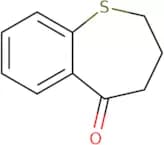
CAS:<p>2,3,4,5-Tetrahydro-1-benzothiepin-5-one is a chemical compound that belongs to the class of chromanones. The molecule has three chiral centers and can exist as four stereoisomers. It is synthesized by reacting an allylic alcohol with sulfur and base in the presence of bromine. This chemical has been shown to have antituberculosis activity.</p>Formula:C10H10OSPurity:Min. 95%Molecular weight:178.25 g/molMethyl 2-amino-6-hydroxypyrimidine-4-carboxylate
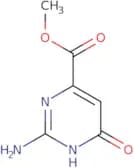
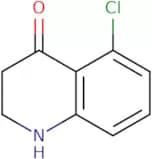
CAS:<p>Versatile small molecule scaffold</p>Formula:C6H7N3O3Purity:Min. 95%Molecular weight:169.14 g/mol5-Chloro-1,2,3,4-tetrahydroquinolin-4-one
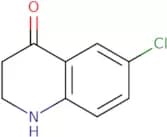
CAS:<p>Versatile small molecule scaffold</p>Formula:C9H8ClNOPurity:Min. 95%Molecular weight:181.62 g/mol6-Chloro-2,3-dihydroquinolin-4(1H)-one
CAS:<p>6-Chloro-2,3-dihydroquinolin-4(1H)-one is a congestive heart remedy. It is an oxime that is used to treat acute or chronic congestion in the lungs, nose or throat. 6-Chloro-2,3-dihydroquinolin-4(1H)-one may also be used as a diluent for other medicines. This drug has been shown to cause hypotension and diuresis; however, it can also have adverse effects on the heart, such as arrhythmias and congestive heart failure.</p>Formula:C9H8ClNOPurity:Min. 95%Molecular weight:181.62 g/mol5-[(3-Hydroxyphenyl)methyl]oxolan-2-one
CAS:<p>Versatile small molecule scaffold</p>Formula:C11H12O3Purity:Min. 95%Molecular weight:192.21 g/molDiethyl 3-Cyclopentene-1,1-dicarboxylate
CAS:<p>Diethyl 3-Cyclopentene-1,1-dicarboxylate is a chemical compound that is used as an intermediate in the synthesis of other organic compounds. It can be obtained by reacting hexane with malonate in the presence of a chiral catalyst. The reaction proceeds via alkylation and solvents are not required for this process. Diethyl 3-Cyclopentene-1,1-dicarboxylate has been shown to promote the reaction between diethyl ester and eluting in coordination chemistry. This compound has also been shown to be catalytic for metathesis reactions involving ethylene, propylene, and butadiene.</p>Formula:C11H16O4Purity:Min. 95%Molecular weight:212.24 g/mol2-(Cyclopent-1-en-1-yl)acetic acid
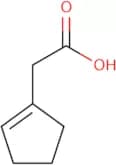
CAS:<p>2-(Cyclopent-1-en-1-yl)acetic acid (CPEAA) is a molecule that is found in food. It is an alkoxy radical, which are molecules with oxygen atoms attached to an alicyclic carbon atom. CPEAA has been shown to have various health benefits when taken as a functional food additive. It can stimulate the uptake of glucose from the blood into cells and reduce insulin resistance. CPEAA also has beneficial effects on liver cells by reducing hepatic steatosis, or fatty liver disease, and tuberculatus, a type of tuberculosis caused by Mycobacterium tuberculosis. The biosynthesis of 2-(Cyclopent-1-en-1-yl)acetic acid begins with acetate and ends with cyclopentanol.</p>Formula:C7H10O2Purity:Min. 95%Molecular weight:126.15 g/mol1,1-Bis(bromomethyl)cyclohexane
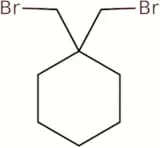
CAS:<p>Versatile small molecule scaffold</p>Formula:C8H14Br2Purity:Min. 95%Molecular weight:270 g/mol2-(Bromomethyl)-5-nitrobenzoic acid
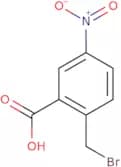
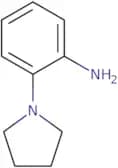
CAS:<p>Versatile small molecule scaffold</p>Formula:C8H6BrNO4Purity:Min. 95%Molecular weight:260.04 g/mol2-(Pyrrolidin-1-yl)aniline
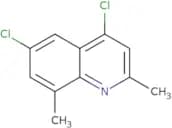
CAS:<p>2-(Pyrrolidin-1-yl)aniline is a natural alkaloid that belongs to the group of pyrrolidines. It is a substrate for coupling reactions. 2-(Pyrrolidin-1-yl)aniline can be used as an oxidant and electrochemical catalyst. It is also used in the preparation of quinolinones, benzimidazoles, and dehydrogenation products such as vasicinone. 2-(Pyrrolidin-1-yl)aniline has nitrogen functional groups and can be used in metal catalyzed reactions.</p>Formula:C10H14N2Purity:Min. 95%Molecular weight:162.24 g/mol4,6-Dichloro-2,8-dimethylquinoline
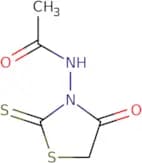
CAS:<p>Versatile small molecule scaffold</p>Formula:C11H9NCl2Purity:Min. 95%Molecular weight:226.1 g/molN-(4-Oxo-2-sulfanylidene-1,3-thiazolidin-3-yl)acetamide
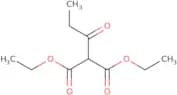
CAS:<p>Versatile small molecule scaffold</p>Formula:C5H6N2O2S2Purity:Min. 95%Molecular weight:190.2 g/mol1,3-Diethyl 2-propanoylpropanedioate
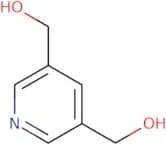
CAS:<p>1,3-Diethyl 2-propanoylpropanedioate is a chiral drug that can be used for the treatment of respiratory diseases. It acts by inhibiting the muscarinic acetylcholine receptors in the lungs, which prevents bronchoconstriction and reduces mucus production. 1,3-Diethyl 2-propanoylpropanedioate is an active substance that belongs to a group of c1-6 alkyl drugs labeled with radioactive iodine-131. The labeling process involves substituting an atom of either carbon or hydrogen with an atom of iodine-131 to create a radioactive compound. This process can be used to identify substances that have similar properties, such as immunoassays and pharmacophores. The main difference between 1,3-diethyl 2-propanoylpropanedioate and its geometric isomers is the orientation of two methyl groups on the propanediol molecule. The</p>Formula:C10H16O5Purity:Min. 95%Molecular weight:216.23 g/molPyridine-3,5-diyldimethanol
CAS:<p>Pyridine-3,5-diyldimethanol is a supramolecular compound that can be encapsulated in the form of palladium macrocycles. It has been shown to have high regioisomeric purity and excellent ligand efficiency. Pyridine-3,5-diyldimethanol is also a coordination compound with tridentate ligands. It can be used as a catalyst for organic reactions. Pyridine-3,5-diyldimethanol has been shown to react with various anions and halides in the presence of palladium as a catalyst. The reaction mixture is then purified by column chromatography or recrystallization. This chemical is also known by keywords such as "pyridinium", "pyridinium chloride", and "pyridine".</p>Formula:C7H9NO2Purity:Min. 95%Molecular weight:139.15 g/mol

![8a-Methyl-hexahydro-pyrrolo[1,2-a]pyrimidin-6-one](/_next/image/?url=https%3A%2Fstatic.cymitquimica.com%2Fproducts%2F3D%2Fthumb-webp%2FWAA60368.webp&w=3840&q=75)
![5-[(3-Hydroxyphenyl)methyl]oxolan-2-one](/_next/image/?url=https%3A%2Fstatic.cymitquimica.com%2Fproducts%2F3D%2Fthumb-webp%2FWAA61891.webp&w=3840&q=75)