Building Blocks
This section contains fundamental products for the synthesis of organic and biological compounds. Building blocks are the essential starting materials used to construct complex molecules through various chemical reactions. They play a critical role in drug discovery, material science, and chemical research. At CymitQuimica, we offer a diverse range of high-quality building blocks to support your innovative research and industrial projects, ensuring you have the essential components for successful synthesis.
Subcategories of "Building Blocks"
- Boronic Acids & Boronic Acid Derivatives(5,756 products)
- Chiral Building Blocks(1,242 products)
- Hydrocarbon Building Blocks(6,095 products)
- Organic Building Blocks(61,051 products)
Found 199813 products of "Building Blocks"
Sort by
Purity (%)
0
100
|
0
|
50
|
90
|
95
|
100
1-(Adamantan-1-yl)propan-2-one
CAS:<p>1-(Adamantan-1-yl)propan-2-one is an enolate reagent that is used in the synthesis of organic compounds. It reacts with chloride to form a chloroformate and can be used for the preparation of ketones, nitro compounds, and nitroalkanes. The 1-(Adamantan-1-yl)propan-2-one is also an enolate anion that has been shown to react with ethylmercury, nitroethane, and piperidine.</p>Formula:C13H20OPurity:Min. 95%Molecular weight:192.3 g/mol3-Methyl-2-oxazolidone
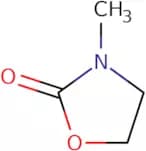
CAS:<p>3-Methyl-2-oxazolidone is an organic compound that is soluble in water and has a molecular weight of 114.3 g/mol. It can be produced by the reaction of methanol with oxalic acid, acetic acid, or malonic acid. 3-Methyl-2-oxazolidone is used as a solvent to dissolve other compounds and is used in the manufacture of sulfa drugs, hydrogen chloride, glycol ethers, and tetraphenylborates. 3-Methyl-2-oxazolidone has been shown to have electrochemical properties including proton conductivity and hydroxyl group oxidation. It also exhibits magnetic resonance properties due to its solute nature.</p>Formula:C4H7NO2Purity:Min. 95%1,4-Dioxaspiro[4.4]nonan-2-ylmethanol
CAS:<p>Versatile small molecule scaffold</p>Formula:C8H14O3Purity:Min. 95%Molecular weight:158.19 g/mol4-Amino-N-(2-chlorophenyl)benzene-1-sulfonamide
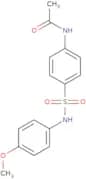
CAS:<p>Versatile small molecule scaffold</p>Formula:C12H11ClN2O2SPurity:Min. 95%Molecular weight:282.75 g/molN-(4-(N-(4-Methoxyphenyl)sulfamoyl)phenyl)acetamide
CAS:<p>Versatile small molecule scaffold</p>Formula:C15H16N2O4SPurity:Min. 95%Molecular weight:320.4 g/mol4-(Diphenylmethyl)piperidine
CAS:Controlled Product<p>4-(Diphenylmethyl)piperidine is a molecule that has been used to study the effects of dimethylsulfate on pancreatic cells. It can also be used to induce diabetes in humans and animals. 4-(Diphenylmethyl)piperidine binds to chloride ions in the cytoplasm and isomers are formed, which may have an effect on cell morphology and cell toxicity. This drug does not have any pharmacologic activity in humans or animals, but it has been shown to be diabetogenic in animal models.</p>Formula:C18H21NPurity:Min. 95%Molecular weight:251.4 g/mol2-Amino-5-ethyl-pyridine
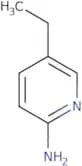
CAS:<p>Versatile small molecule scaffold</p>Formula:C7H10N2Purity:Min. 95%Molecular weight:122.17 g/mol3-Ethyl-1,4-dihydropyridin-4-imine hydrochloride
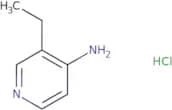
CAS:<p>Versatile small molecule scaffold</p>Formula:C7H11ClN2Purity:Min. 95%Molecular weight:158.63 g/mol2,3,4,6-Tetrafluorobenzaldehyde
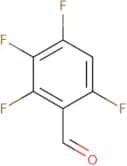
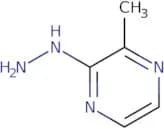
CAS:<p>Versatile small molecule scaffold</p>Formula:C7H2F4OPurity:Min. 95%Molecular weight:178.08 g/mol2-Hydrazinyl-3-methylpyrazine
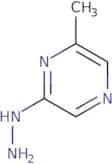
CAS:<p>Versatile small molecule scaffold</p>Formula:C5H8N4Purity:Min. 95%Molecular weight:124.14 g/mol2-Hydrazinyl-6-methylpyrazine
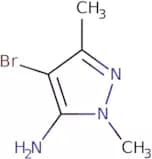
CAS:<p>Versatile small molecule scaffold</p>Formula:C5H8N4Purity:Min. 95%Molecular weight:124.14 g/mol4-bromo-1,3-dimethyl-1H-pyrazol-5-amine
CAS:<p>Versatile small molecule scaffold</p>Formula:C5H8BrN3Purity:Min. 95%Molecular weight:190 g/mol2-Phenylbenzyl Bromide
CAS:<p>2-Phenylbenzyl Bromide is a compound that is used as an analytical reagent to measure the amount of fatty acids and carboxylic acids in water. It is a good indicator for measuring the degree of pollution in wastewater treatment plants. The fluorescence properties of 2-Phenylbenzyl Bromide are also used for analytical purposes, such as monitoring the reactions between sodium hydroxide solution and ester hydrochlorides. This product has been shown to be active against inflammatory diseases such as arthritis and asthma, as well as cervical cancer. 2-Phenylbenzyl Bromide has also been shown to activate AMPK activators and may be beneficial for the treatment of obesity and diabetes.</p>Formula:C13H11BrPurity:Min. 95%Molecular weight:247.13 g/mol5,7-Dichloro-6-methylquinoxaline
CAS:<p>5,7-Dichloro-6-methylquinoxaline is an intermediate in the synthesis of quinoxalines. It can be synthesized by reacting alkali with 5,7-dichloroquinoxaline. This reaction produces 2 chloromethylquinoxalines and dichloromethylquinoxaline as well as the desired product 5,7-dichloro-6-methylquinoxaline. The yields for this reaction are about 50%. The major product of this reaction is 5,7-dichloro-6-methylquinoxaline due to its greater stability.</p>Formula:C9H6Cl2N2Purity:Min. 95%Molecular weight:213.06 g/mol3-(4-Methylpiperidin-1-yl)propanoic acid hydrochloride
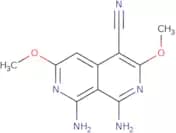
CAS:Versatile small molecule scaffoldFormula:C9H18ClNO2Purity:Min. 95%Molecular weight:207.7 g/mol1,8-Diamino-3,6-dimethoxy-2,7-naphthyridine-4-carbonitrile
CAS:<p>Versatile small molecule scaffold</p>Formula:C11H11N5O2Purity:Min. 95%Molecular weight:245.24 g/mol5-Phenylpyrrolidine-2,4-dione
CAS:<p>Versatile small molecule scaffold</p>Formula:C10H9NO2Purity:Min. 95%Molecular weight:175.18 g/mol2,4-Dichloro-5-nitrobenzoic acid
CAS:<p>2,4-Dichloro-5-nitrobenzoic acid is an organic compound with the chemical formula CHNO2. It has a molecular weight of 180.069 g/mol and is soluble in water. This product has been shown to have powder diffraction data from x-ray powder diffraction (XRPD) experiments with parameters of d=1.814 nm and a=11.076° 2θ±0.004° 2θ for the monoclinic crystal system, as well as x-ray diffraction (XRD) data with a peak at θ=31.00° 2θ±0.01° 2θ for the monoclinic crystal system.</p>Formula:C7H3Cl2NO4Purity:Min. 95%Molecular weight:236.01 g/mol5-Amino-1-benzyl-1H-pyrazole-4-carboxylic acid
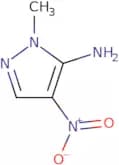
CAS:<p>Versatile small molecule scaffold</p>Formula:C11H11N3O2Purity:Min. 95%Molecular weight:217.22 g/mol1-Methyl-4-nitro-1H-pyrazol-5-amine
CAS:<p>Versatile small molecule scaffold</p>Formula:C4H6N4O2Purity:Min. 95%Molecular weight:142.12 g/mol


![1,4-Dioxaspiro[4.4]nonan-2-ylmethanol](/_next/image/?url=https%3A%2Fstatic.cymitquimica.com%2Fproducts%2F3D%2Fthumb-webp%2FUAA83764.webp&w=3840&q=75)