Building Blocks
This section contains fundamental products for the synthesis of organic and biological compounds. Building blocks are the essential starting materials used to construct complex molecules through various chemical reactions. They play a critical role in drug discovery, material science, and chemical research. At CymitQuimica, we offer a diverse range of high-quality building blocks to support your innovative research and industrial projects, ensuring you have the essential components for successful synthesis.
Subcategories of "Building Blocks"
- Boronic Acids & Boronic Acid Derivatives(5,756 products)
- Chiral Building Blocks(1,242 products)
- Hydrocarbon Building Blocks(6,093 products)
- Organic Building Blocks(60,525 products)
Found 195533 products of "Building Blocks"
Sort by
Purity (%)
0
100
|
0
|
50
|
90
|
95
|
100
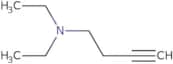
(But-3-yn-1-yl)diethylamine
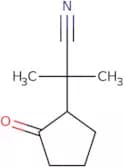
CAS:<p>Versatile small molecule scaffold</p>Formula:C8H15NPurity:Min. 95%Molecular weight:125.21 g/mol2-Methyl-2-(2-oxocyclopentyl)propanenitrile
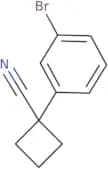
CAS:<p>Versatile small molecule scaffold</p>Formula:C9H13NOPurity:Min. 95%Molecular weight:151.21 g/mol1-(3-Bromophenyl)cyclobutane-1-carbonitrile
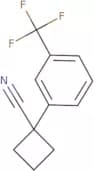
CAS:<p>Versatile small molecule scaffold</p>Formula:C11H10BrNPurity:Min. 95%Molecular weight:236.11 g/mol1-(3-(trifluoromethyl)phenyl)cyclobutanecarbonitrile
CAS:<p>Versatile small molecule scaffold</p>Formula:C12H10F3NPurity:Min. 95%Molecular weight:225.21 g/mol1-[4-(Trifluoromethyl)phenyl]-cyclobutanecarbonitrile
CAS:<p>Versatile small molecule scaffold</p>Formula:C12H10F3NPurity:Min. 95%Molecular weight:225.21 g/molSpiro[3.5]nonan-1-one
CAS:<p>Versatile small molecule scaffold</p>Formula:C9H14OPurity:Min. 95%Molecular weight:138.21 g/molSpiro[3.5]nonan-2-one
CAS:<p>Spiro[3.5]nonan-2-one is an intermediate in the synthesis of a number of analogues, including the anti-tuberculosis drugs ethambutol and isoniazid.</p>Formula:C9H14OPurity:Min. 95%Molecular weight:138.21 g/molMethyl 4-Pyridinylacetate
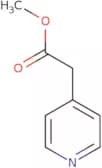
CAS:<p>Methyl 4-Pyridinylacetate is a reactive compound that reacts with trifluoromethylthiolation. It also inhibits the aromatase enzyme and has been shown to react with benzoates to form stereoselective products. Methyl 4-Pyridinylacetate is an aromatic compound that can be used in the synthesis of anilines. It is synthesized from pyridine compounds, which are heterocycles, and methyl chloride. Methyl 4-Pyridinylacetate has not been shown to be reactive with sesbanine or unreactive to chiral compounds.</p>Formula:C8H9NO2Purity:Min. 95%Molecular weight:151.16 g/molN1,N1-Dimethyl-3-phenylpropane-1,2-diamine dihydrochloride
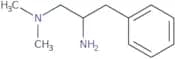
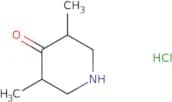
CAS:<p>Versatile small molecule scaffold</p>Formula:C11H18N2Purity:Min. 95%Molecular weight:178.27 g/molrac-(3R,5S)-3,5-Dimethylpiperidin-4-one hydrochloride
CAS:<p>Versatile small molecule scaffold</p>Formula:C7H14ClNOPurity:Min. 95%Molecular weight:163.6 g/mol1-(4-Chlorophenyl)prop-2-yn-1-ol
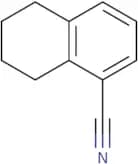
CAS:<p>Versatile small molecule scaffold</p>Formula:C9H7ClOPurity:Min. 95%Molecular weight:166.6 g/mol5,6,7,8-Tetrahydronaphthalene-1-carbonitrile
CAS:<p>5,6,7,8-Tetrahydronaphthalene-1-carbonitrile is a reactive chemical that has been used as a photochemical precursor to other organic molecules. It can be synthesized by the Birch reaction and the Robinson annulation. It reacts with acetonitrile in an acid-catalyzed reaction to form a biradical species that can undergo intramolecular cyclization to form tetralin or undergo intermolecular reactions with other molecules. The photophysical properties of 5,6,7,8-tetrahydronaphthalene-1-carbonitrile have been studied using fluorescence data.<br>5,6,7,8-Tetrahydronaphthalene-1-carbonitrile is also used as a substrate for quantum yields experiments.</p>Formula:C11H11NPurity:Min. 95%Molecular weight:157.21 g/molo-Decylhydroxylamine
CAS:<p>O-Decylhydroxylamine is a chlorine-containing fatty acid that has been shown to inhibit serine proteases, nitro compounds, and ornithine decarboxylase. It also has amide and dialkylamino groups. O-Decylhydroxylamine is used as a cross-linking agent in the treatment of chronic bronchitis and has been found to be effective in reducing inflammation associated with prostate cancer cells. O-Decylhydroxylamine also inhibits insulin resistance in cells by preventing the release of proinflammatory cytokines such as tumor necrosis factor-α (TNF-α) or interleukin-6 (IL6).</p>Formula:C10H23NOPurity:Min. 95%Molecular weight:173.3 g/mol1-Benzylcyclopropan-1-amine hydrochloride
CAS:<p>Versatile small molecule scaffold</p>Formula:C10H14ClNPurity:Min. 95%Molecular weight:183.68 g/mol1-[(3-Chlorophenyl)methyl]cyclopropan-1-amine hydrochloride
CAS:<p>Versatile small molecule scaffold</p>Formula:C10H13Cl2NPurity:Min. 95%Molecular weight:218.12 g/mol1-[(4-Bromophenyl)methyl]cyclopropan-1-amine hydrochloride
CAS:<p>Versatile small molecule scaffold</p>Formula:C10H13BrClNPurity:Min. 95%Molecular weight:262.57 g/mol1-{[4-(Trifluoromethyl)phenyl]methyl}cyclopropan-1-amine hydrochloride
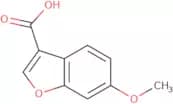
CAS:<p>Versatile small molecule scaffold</p>Formula:C11H13ClF3NPurity:Min. 95%Molecular weight:251.67 g/mol6-Methoxy-1-benzofuran-3-carboxylic acid
CAS:<p>Versatile small molecule scaffold</p>Formula:C10H8O4Purity:Min. 95%Molecular weight:192.17 g/molN-Benzyl-N-methylacetamide
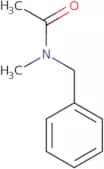
CAS:<p>N-Benzyl-N-methylacetamide is a cardiac stimulant and thermogenic that has been shown to increase the rate of metabolism in mammals. It is an electrophile that can be converted to a reactive form by perchlorates and other oxidizing agents. The resulting n-oxide reacts with amino acids, yielding iminium ions that react with amide bonds in proteins, altering their structure and function. N-Benzyl-N-methylacetamide has also been shown to have antioxidant properties in vivo studies on mice. It may also have carcinogenic effects due to its ability to induce oxidative stress and DNA damage.</p>Formula:C10H13NOPurity:Min. 95%Molecular weight:163.22 g/mol2-Acetamido-N,N-dimethylacetamide
CAS:<p>Versatile small molecule scaffold</p>Formula:C6H12N2O2Purity:Min. 95%Molecular weight:144.17 g/mol

![1-[4-(Trifluoromethyl)phenyl]-cyclobutanecarbonitrile](/_next/image/?url=https%3A%2Fstatic.cymitquimica.com%2Fproducts%2F3D%2Fthumb-webp%2FEBA78644.webp&w=3840&q=75)
![Spiro[3.5]nonan-1-one](/_next/image/?url=https%3A%2Fstatic.cymitquimica.com%2Fproducts%2F3D%2Fthumb-webp%2FEBA80045.webp&w=3840&q=75)
![Spiro[3.5]nonan-2-one](/_next/image/?url=https%3A%2Fstatic.cymitquimica.com%2Fproducts%2F3D%2Fthumb-webp%2FEBA80056.webp&w=3840&q=75)



![1-[(3-Chlorophenyl)methyl]cyclopropan-1-amine hydrochloride](/_next/image/?url=https%3A%2Fstatic.cymitquimica.com%2Fproducts%2F3D%2Fthumb-webp%2FEBA81297.webp&w=3840&q=75)
![1-[(4-Bromophenyl)methyl]cyclopropan-1-amine hydrochloride](/_next/image/?url=https%3A%2Fstatic.cymitquimica.com%2Fproducts%2F3D%2Fthumb-webp%2FEBA81299.webp&w=3840&q=75)
![1-{[4-(Trifluoromethyl)phenyl]methyl}cyclopropan-1-amine hydrochloride](/_next/image/?url=https%3A%2Fstatic.cymitquimica.com%2Fproducts%2F3D%2Fthumb-webp%2FEBA81302.webp&w=3840&q=75)