Building Blocks
This section contains fundamental products for the synthesis of organic and biological compounds. Building blocks are the essential starting materials used to construct complex molecules through various chemical reactions. They play a critical role in drug discovery, material science, and chemical research. At CymitQuimica, we offer a diverse range of high-quality building blocks to support your innovative research and industrial projects, ensuring you have the essential components for successful synthesis.
Subcategories of "Building Blocks"
- Boronic Acids & Boronic Acid Derivatives(5,756 products)
- Chiral Building Blocks(1,242 products)
- Hydrocarbon Building Blocks(6,095 products)
- Organic Building Blocks(61,038 products)
Found 196817 products of "Building Blocks"
Sort by
Purity (%)
0
100
|
0
|
50
|
90
|
95
|
100
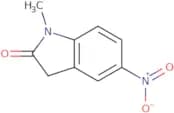
1-Methyl-5-nitro-2,3-dihydro-1H-indol-2-one
CAS:<p>Versatile small molecule scaffold</p>Formula:C9H8N2O3Purity:Min. 95%Molecular weight:192.17 g/molEthyl 2-(4-hydroxyphenoxy)acetate
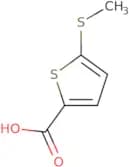
CAS:<p>Ethyl 2-(4-hydroxyphenoxy)acetate is a heterocyclic compound that binds to insulin receptor and activates it. It has been shown to be an agonist of the insulin receptor and has also been shown to increase glucose uptake in cells. This compound has been found to be effective in animal models for type 2 diabetes, as well as showing efficacy in cell culture experiments. Ethyl 2-(4-hydroxyphenoxy)acetate is lipophilic, which means it can cross the blood-brain barrier, making it a potential candidate for treatment of neurological disorders such as Alzheimer's disease.</p>Formula:C10H12O4Purity:Min. 95%Molecular weight:196.2 g/mol5-Methylsulfanylthiophene-2-carboxylic acid
CAS:<p>Versatile small molecule scaffold</p>Formula:C6H6O2S2Purity:Min. 95%Molecular weight:174.23 g/mol4-hydroxy-N,N-dimethylbenzamide
CAS:<p>4-Hydroxy-N,N-dimethylbenzamide is a synthetic agonist of the peroxisome proliferator-activated receptor gamma (PPARγ). It is structurally related to other PPARγ agonists such as amide and piperazine.<br>The intraperitoneal administration of 4-hydroxy-N,N-dimethylbenzamide in mice has been shown to decrease intraperitoneal glucose levels and increase the level of glycolytic enzymes. The PPARγ agonist activity of 4-hydroxy-N,N-dimethylbenzamide has been demonstrated using an experiment that involved synthesizing spirocyclic compounds. These compounds were then tested for their ability to catalyze the isotope exchange between methylene protons and deuterium atoms. This process is called catalysis. Finally, 4-hydroxyn,N,N-dimethylbenzamide was tested for agonistic activity on carbox</p>Formula:C9H11NO2Purity:Min. 95%Molecular weight:165.19 g/mol5-methyl-2H-benzo[d][1,3]oxazine-2,4(1H)-dione
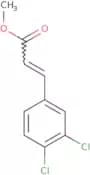
CAS:<p>5-Methyl-2H-benzo[d][1,3]oxazine-2,4(1H)-dione is a synthetic chemical compound that consists of an acid derivative. It is a multistep synthesis involving a reaction between 2-aminoethanol and benzoic acid. The product is isolated as a white solid. It has not been shown to have any biological activity.</p>Formula:C9H7NO3Purity:Min. 95%Molecular weight:177.16 g/molMethyl 3-(3,4-dichlorophenyl)acrylate
CAS:<p>Versatile small molecule scaffold</p>Formula:C10H8Cl2O2Purity:Min. 95%Molecular weight:231.07 g/mol3-(Propane-2-sulfonyl)benzoic acid
CAS:<p>Versatile small molecule scaffold</p>Formula:C10H12O4SPurity:Min. 95%Molecular weight:228.27 g/mol2-Methylsulfanyl-5-nitro-pyridine
CAS:<p>Versatile small molecule scaffold</p>Formula:C6H6N2O2SPurity:Min. 95%Molecular weight:170.19 g/mol2-[(Phenylamino)methyl]aniline
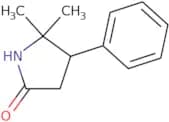
CAS:<p>Versatile small molecule scaffold</p>Formula:C13H14N2Purity:Min. 95%Molecular weight:198.26 g/mol5,5-Dimethyl-4-phenylpyrrolidin-2-one
CAS:<p>Versatile small molecule scaffold</p>Formula:C12H15NOPurity:Min. 95%Molecular weight:189.25 g/mol1-(Furan-2-yl)-2-hydroxypropan-1-one
CAS:<p>Versatile small molecule scaffold</p>Formula:C7H8O3Purity:Min. 95%Molecular weight:140.14 g/mol6-Methyl-2,3-dihydro-1-benzofuran-3-one
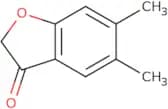
CAS:<p>6-Methyl-2,3-dihydro-1-benzofuran-3-one is a heterocyclic compound that is oxidized to the corresponding carboxylic acid by treatment with sodium hypochlorite in the presence of hydrochloric acid. This reaction is an example of cyclocondensation. The initial product is an anhydride, which reacts with one molecule of the other reactant to form a condensation product.</p>Formula:C9H8O2Purity:Min. 95%Molecular weight:148.16 g/mol5,6-Dimethyl-2,3-dihydro-1-benzofuran-3-one
CAS:<p>Versatile small molecule scaffold</p>Formula:C10H10O2Purity:Min. 95%Molecular weight:162.18 g/mol1-(2-Chloro-6-nitrophenyl)ethan-1-one
CAS:<p>Versatile small molecule scaffold</p>Formula:C8H6ClNO3Purity:Min. 95%Molecular weight:199.59 g/mol1-(2-Amino-6-chlorophenyl)ethan-1-one
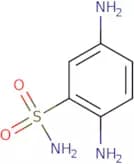
CAS:<p>Versatile small molecule scaffold</p>Formula:C8H8ClNOPurity:Min. 95%Molecular weight:169.61 g/mol2,5-Diaminobenzenesulfonamide
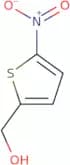
CAS:<p>Versatile small molecule scaffold</p>Formula:C6H9N3O2SPurity:Min. 95%Molecular weight:187.22 g/mol(5-Nitrothiophen-2-yl)methanol
CAS:<p>5-Nitrothiophen-2-yl)methanol is a synthetic compound that is used in the synthesis of prednisolone. It has been shown to be bioreductive, meaning that it can be reduced by cytochrome P450 enzymes and other reductases. 5-Nitrothiophen-2-yl)methanol reduces nitro groups on a variety of substrates, including steroids, which are conjugated with glutathione or glucuronic acid. This product also has been shown to reduce chloride ions inside cells and vessels, leading to vasoconstriction. The microenvironment around the tumor may lead to cancer development.</p>Formula:C5H5NO3SPurity:Min. 95%Molecular weight:159.17 g/mol1-Butoxynaphthalene
CAS:<p>Versatile small molecule scaffold</p>Formula:C14H16OPurity:Min. 95%Molecular weight:200.28 g/mol3-Bromo-4-(methylsulfanyl)aniline
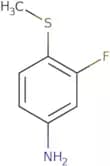
CAS:<p>Versatile small molecule scaffold</p>Formula:C7H8BrNSPurity:Min. 95%Molecular weight:218.12 g/mol3-Fluoro-4-(methylsulfanyl)aniline
CAS:<p>Versatile small molecule scaffold</p>Formula:C7H8FNSPurity:Min. 95%Molecular weight:157.21 g/mol



![5-methyl-2H-benzo[d][1,3]oxazine-2,4(1H)-dione](/_next/image/?url=https%3A%2Fstatic.cymitquimica.com%2Fproducts%2F3D%2Fthumb-webp%2FVAA87781.webp&w=3840&q=75)


![2-[(Phenylamino)methyl]aniline](/_next/image/?url=https%3A%2Fstatic.cymitquimica.com%2Fproducts%2F3D%2Fthumb-webp%2FVAA88706.webp&w=3840&q=75)