Building Blocks
This section contains fundamental products for the synthesis of organic and biological compounds. Building blocks are the essential starting materials used to construct complex molecules through various chemical reactions. They play a critical role in drug discovery, material science, and chemical research. At CymitQuimica, we offer a diverse range of high-quality building blocks to support your innovative research and industrial projects, ensuring you have the essential components for successful synthesis.
Subcategories of "Building Blocks"
- Boronic Acids & Boronic Acid Derivatives(5,756 products)
- Chiral Building Blocks(1,242 products)
- Hydrocarbon Building Blocks(6,095 products)
- Organic Building Blocks(61,055 products)
Found 199650 products of "Building Blocks"
Sort by
Purity (%)
0
100
|
0
|
50
|
90
|
95
|
100
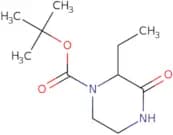
tert-Butyl 2-ethyl-3-oxopiperazine-1-carboxylate
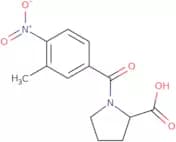
CAS:Versatile small molecule scaffoldFormula:C11H20N2O3Purity:Min. 95%Molecular weight:228.29 g/mol1-(3-Methyl-4-nitrobenzoyl)pyrrolidine-2-carboxylic acid
CAS:Versatile small molecule scaffoldFormula:C13H14N2O5Purity:Min. 95%Molecular weight:278.26 g/mol1-(5-Nitrofuran-2-carbonyl)pyrrolidine-2-carboxylic acid
CAS:<p>Versatile small molecule scaffold</p>Formula:C10H10N2O6Purity:Min. 95%Molecular weight:254.2 g/molN-(2,5-Dichlorophenyl)piperidine-2-carboxamide
CAS:<p>Versatile small molecule scaffold</p>Formula:C12H14Cl2N2OPurity:Min. 95%Molecular weight:273.15 g/molMethyl 3-(propan-2-yl)-1H-pyrazole-5-carboxylate
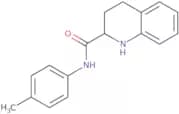
CAS:Versatile small molecule scaffoldFormula:C8H12N2O2Purity:Min. 95%Molecular weight:168.19 g/molN-(4-Methylphenyl)-1,2,3,4-tetrahydroquinoline-2-carboxamide
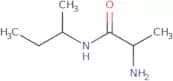
CAS:<p>Versatile small molecule scaffold</p>Formula:C17H18N2OPurity:Min. 95%Molecular weight:266.34 g/mol2-Amino-N-(butan-2-yl)propanamide
CAS:<p>Versatile small molecule scaffold</p>Formula:C7H16N2OPurity:Min. 95%Molecular weight:144.21 g/mol2-Boc-2-aza-spiro[3.5]non-6-ene-7-boronic acid pinacol ester
CAS:<p>Versatile small molecule scaffold</p>Formula:C19H32BNO4Purity:Min. 95%Molecular weight:349.3 g/mol2-(Methylamino)-3-phenylpropanoic acid
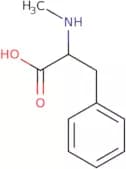
CAS:<p>2-(Methylamino)-3-phenylpropanoic acid is a proton ionophore that inhibits the growth of bacteria by binding to amine groups in cell walls. 2-(Methylamino)-3-phenylpropanoic acid has been shown to inhibit the growth of tumor cells by preventing ATP production. It binds to lysine residues on the bacterial cell wall and blocks the proton channel, which prevents the accumulation of protons inside the cell and leads to a loss of energy production. This agent also inhibits protein synthesis in eukaryotic cells by inhibiting messenger RNA (mRNA) function. 2-(Methylamino)-3-phenylpropanoic acid has been used as a model system to study biochemical properties of amines and tetracycline resistance in corynebacterium glutamicum.</p>Formula:C10H13NO2Purity:Min. 95%Molecular weight:179.22 g/mol1,1,3-Trichloro-1-propene
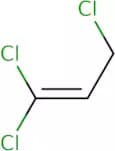
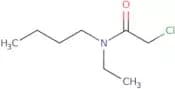
CAS:<p>1,1,3-Trichloro-1-propene is a chlorinated hydrocarbon with a chemical formula of CCCH. It is used in the production of isomers of 1,2-dichloroethane and 1,1-dichloroethene. It has been shown to be genotoxic in vitro. The peroxides and hydrogen chloride produced from this compound are unstable and can lead to carcinogenic effects.</p>Formula:C3H3Cl3Purity:Min. 95%Molecular weight:145.41 g/molN-Butyl-2-chloro-N-ethylacetamide
CAS:<p>Versatile small molecule scaffold</p>Formula:C8H16ClNOPurity:Min. 95%Molecular weight:177.67 g/mol2-Chloro-N-cyclohexyl-N-ethylacetamide
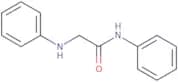
CAS:<p>Versatile small molecule scaffold</p>Formula:C10H18ClNOPurity:Min. 95%Molecular weight:203.71 g/molN-Phenyl-2-(phenylamino)acetamide
CAS:<p>Versatile small molecule scaffold</p>Formula:C14H14N2OPurity:Min. 95%Molecular weight:226.27 g/mol2-Hydroxybicyclo[3.3.1]nonan-9-one
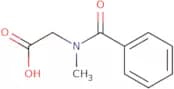
CAS:<p>Versatile small molecule scaffold</p>Formula:C9H14O2Purity:Min. 95%Molecular weight:154.21 g/molN-Benzoyl-N-methylglycine
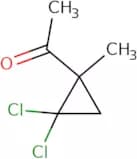
CAS:<p>N-Benzoyl-N-methylglycine is a chemical compound that is used as an intermediate for the production of pharmaceuticals and skin care products. It can be synthesized from hippuric acid or benzoic acid, which are found in urine samples. N-Benzoyl-N-methylglycine has been shown to have a kinetic rate of cleavage of amides with a bond adjacent to the carbonyl group. This compound also has an intermolecular hydrogen bonding interaction with hippuric acid and a transfer reaction with chloride ions. The N-benzoyl derivatives of N-methylglycine can be separated by chromatography into two isomers, one being more reactive than the other. The perchlorates anions can replace the chloride ion in this compound, leading to different profiles and properties.</p>Formula:C10H11NO3Purity:Min. 95%Molecular weight:193.2 g/mol1-(2,2-Dichloro-1-methylcyclopropyl)ethan-1-one
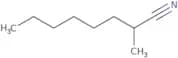
CAS:<p>Versatile small molecule scaffold</p>Formula:C6H8Cl2OPurity:Min. 95%Molecular weight:167.03 g/mol2-Methyloctanenitrile
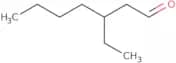
CAS:<p>2-Methyloctanenitrile is an oxime that can be hydrocyanated to produce a regioselective addition product. This reaction is catalyzed by the presence of hydroxylamine, which acts as a ligand in the transition state. The reaction proceeds with anti-markovnikov selectivity, which is due to the hydroxyl group on the methyl group. This reaction has been optimized for frequency and rates of reaction, and can be used with aldoximes as well.</p>Formula:C9H17NPurity:Min. 95%Molecular weight:139.24 g/mol3-Ethylheptanal
CAS:<p>Versatile small molecule scaffold</p>Formula:C9H18OPurity:Min. 95%Molecular weight:142.24 g/mol{bicyclo[2.2.2]octan-1-ylmethanol
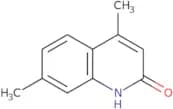
CAS:<p>Versatile small molecule scaffold</p>Formula:C9H16OPurity:Min. 95%Molecular weight:140.23 g/mol4,7-Dimethyl-1,2-dihydroquinolin-2-one
CAS:<p>Versatile small molecule scaffold</p>Formula:C11H11NOPurity:Min. 95%Molecular weight:173.21 g/mol



![2-Boc-2-aza-spiro[3.5]non-6-ene-7-boronic acid pinacol ester](/_next/image/?url=https%3A%2Fstatic.cymitquimica.com%2Fproducts%2F3D%2Fthumb-webp%2FBUD27613.webp&w=3840&q=75)

![2-Hydroxybicyclo[3.3.1]nonan-9-one](/_next/image/?url=https%3A%2Fstatic.cymitquimica.com%2Fproducts%2F3D%2Fthumb-webp%2FCAA56821.webp&w=3840&q=75)
![{bicyclo[2.2.2]octan-1-ylmethanol](/_next/image/?url=https%3A%2Fstatic.cymitquimica.com%2Fproducts%2F3D%2Fthumb-webp%2FCAA57442.webp&w=3840&q=75)