Building Blocks
This section contains fundamental products for the synthesis of organic and biological compounds. Building blocks are the essential starting materials used to construct complex molecules through various chemical reactions. They play a critical role in drug discovery, material science, and chemical research. At CymitQuimica, we offer a diverse range of high-quality building blocks to support your innovative research and industrial projects, ensuring you have the essential components for successful synthesis.
Subcategories of "Building Blocks"
- Boronic Acids & Boronic Acid Derivatives(5,756 products)
- Chiral Building Blocks(1,242 products)
- Hydrocarbon Building Blocks(6,093 products)
- Organic Building Blocks(60,522 products)
Found 195533 products of "Building Blocks"
Sort by
Purity (%)
0
100
|
0
|
50
|
90
|
95
|
100
4-(Trifluoromethylsulfonamido)benzoic acid
CAS:<p>Versatile small molecule scaffold</p>Formula:C8H6F3NO4SPurity:Min. 95%Molecular weight:269.2 g/molN,N-Dimethylmorpholine-4-sulfonamide
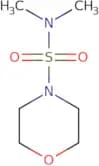
CAS:<p>Versatile small molecule scaffold</p>Formula:C6H14N2O3SPurity:Min. 95%Molecular weight:194.25 g/molN2,N2-Dimethyl-9H-purine-2,6-diamine
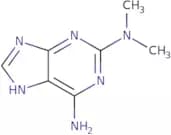
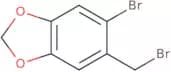
CAS:<p>Versatile small molecule scaffold</p>Formula:C7H10N6Purity:Min. 95%Molecular weight:178.2 g/mol5-Bromo-6-bromomethyl-1,3-benzodioxole
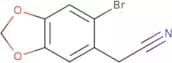
CAS:<p>5-Bromo-6-bromomethyl-1,3-benzodioxole is a diarylmethane which is reactive and can be used in the synthesis of amides. It has been shown to inhibit tumor growth and cancer cell proliferation. 5-Bromo-6-bromomethyl-1,3-benzodioxole has also been shown to bind to the ligand binding site of the enzyme cytidine deaminase, which is involved in DNA synthesis. This drug may also have anticancer activity by inhibiting hepatocyte growth and cellular proliferation.</p>Formula:C8H6Br2O2Purity:Min. 95%Molecular weight:293.94 g/mol2-(6-Bromo-1,3-dioxaindan-5-yl)acetonitrile
CAS:<p>Versatile small molecule scaffold</p>Formula:C9H6BrNO2Purity:Min. 95%Molecular weight:240.05 g/mol1-(2-Chlorophenyl)butan-1-ol
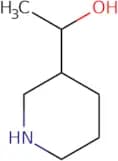
CAS:<p>Versatile small molecule scaffold</p>Formula:C10H13ClOPurity:Min. 95%Molecular weight:184.66 g/mol1-(Piperidin-3-yl)ethan-1-ol
CAS:<p>Versatile small molecule scaffold</p>Formula:C7H15NOPurity:Min. 95%Molecular weight:129.2 g/mol2-(2,6-Dimethoxyphenoxymethyl)oxirane
CAS:<p>Versatile small molecule scaffold</p>Formula:C11H14O4Purity:Min. 95%Molecular weight:210.23 g/mol1H-Benzo[d]imidazole-2-sulfonamide
CAS:<p>1H-Benzo[d]imidazole-2-sulfonamide is a transcriptional regulator that is used in the treatment of bowel disease. It has been shown to be active against autoimmune diseases, such as inflammatory bowel disease and rheumatoid arthritis. 1H-Benzo[d]imidazole-2-sulfonamide regulates gene expression by binding to response elements in the promoter region of certain genes. The drug is an inhibitor of human serum proteases, which may lead to decreased inflammation and improved symptoms of inflammation bowel disease. The drug also has pharmacokinetic properties that make it suitable for oral administration.</p>Formula:C7H7N3O2SPurity:Min. 95%Molecular weight:197.21 g/mol2-Amino-3-ethylbenzoic acid
CAS:<p>2-Amino-3-ethylbenzoic acid is an aliphatic amino acid that is involved in the synthesis of polyunsaturated fatty acids. It is found in groundnut, and as a result plays a role in vitellogenesis. 2-Amino-3-ethylbenzoic acid has been shown to have biochemical effects on catfish and juvenile catfish. It can be used to increase the diameter of the eggs produced by these animals, and also has a positive effect on their maturation, enzyme activities, and linolenic acid levels.</p>Formula:C9H11NO2Purity:Min. 95%Molecular weight:165.19 g/mol4-Phenyl-cyclohexanol
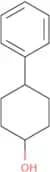
CAS:<p>4-Phenyl-cyclohexanol is a cyclohexane ring with a hydroxyl group on it. It is an aromatic hydrocarbon and can be found in many natural products, such as naphthalene, carbonyl group, geometric isomers, c–h bond. 4-Phenyl-cyclohexanol has been shown to have synergic effects when combined with other compounds, such as furyl and isopropylbenzyl alcohol. It has been isolated from the fungus Myrothecium verrucaria and also produced by enzymatic conversion of phenol. 4-Phenyl-cyclohexanol can be used to reduce ferredoxin to ferrodoxin and form NADPH in the biosynthesis of aromatic amino acids.</p>Formula:C12H16OPurity:Min. 95%Molecular weight:176.26 g/mol2-Amino-1-(1-piperidinyl)-1-ethanone hydrochloride
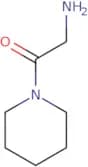
CAS:<p>2-Amino-1-(1-piperidinyl)-1-ethanone hydrochloride is an achiral and enantioselective chiral catalyst. It has been shown to catalyze the transfer of alkyl groups from one molecule to another, including imine, initially alkylated, and chiral substrates. 2-Amino-1-(1-piperidinyl)-1-ethanone hydrochloride has been used in asymmetric synthesis of levobupivacaine with high optical purity.</p>Formula:C7H15ClN2OPurity:Min. 95%Molecular weight:178.66 g/mol4-(1H-Pyrrol-1-yl)benzene-1-sulfonamide
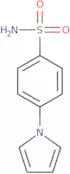
CAS:<p>Versatile small molecule scaffold</p>Formula:C10H10N2O2SPurity:Min. 95%Molecular weight:222.27 g/mol4-Cyano-2-ethoxyphenyl acetate
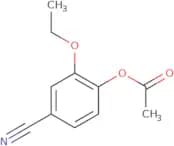
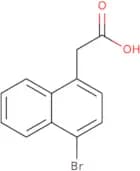
CAS:<p>Versatile small molecule scaffold</p>Formula:C11H11NO3Purity:Min. 95%Molecular weight:205.21 g/mol2-(4-Bromonaphthalen-1-yl)acetic acid
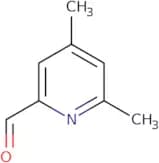
CAS:<p>Versatile small molecule scaffold</p>Formula:C12H9BrO2Purity:Min. 95%Molecular weight:265.1 g/mol4,6-Dimethylpyridine-2-carbaldehyde
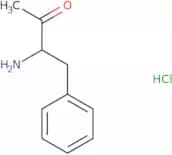
CAS:<p>Versatile small molecule scaffold</p>Formula:C8H9NOPurity:Min. 95%Molecular weight:135.16 g/mol3-Amino-4-phenylbutan-2-one hydrochloride
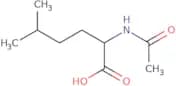
CAS:<p>Versatile small molecule scaffold</p>Formula:C10H14ClNOPurity:Min. 95%Molecular weight:199.68 g/mol2-Acetamido-5-methylhexanoic acid
CAS:<p>2-Acetamido-5-methylhexanoic acid is a postulated compound that is synthesized in two steps from 2-methyl-3-buten-2-ol. The first step involves the sequential dehydration of an α,β unsaturated ketone with aqueous sodium hydroxide and then phosphoric acid. The second step entails the addition of an acetylamino group to the β position of the carboxyl group, forming the desired compound. The synthesis of 2-acetamido-5 methylhexanoic acid was confirmed by spectroscopic methods, including IR, NMR, and MS. This chemical has been shown to be catalytic in allylic alcohols and isomerized allylic alcohols.</p>Formula:C9H17NO3Purity:Min. 95%Molecular weight:187.24 g/mol4-Phenylsemicarbazide hydrochloride
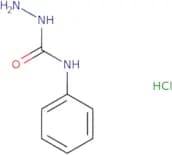
CAS:<p>4-Phenylsemicarbazide hydrochloride is a compound that is created by the oxidation of selenium or selenium salts. 4-Phenylsemicarbazide hydrochloride is used as a photoelectron to generate energy in the metabolism of fatty acids. It has been shown to decrease levels of chloride in rats and mice, which may be due to its ability to reduce monochloride. The biochemical pathways for this substance are not well understood, but it has been shown to have health effects on animals such as aluminum toxicity and lipid peroxidation.</p>Formula:C7H9N3O·HClPurity:Min. 95%Molecular weight:187.63 g/molN-Methyl-2-nitrobenzylamine Hydrochloride
CAS:<p>Versatile small molecule scaffold</p>Formula:C8H11ClN2O2Purity:Min. 95%Molecular weight:202.64 g/mol



![1H-Benzo[d]imidazole-2-sulfonamide](/_next/image/?url=https%3A%2Fstatic.cymitquimica.com%2Fproducts%2F3D%2Fthumb-webp%2FFAA43531.webp&w=3840&q=75)