Building Blocks
This section contains fundamental products for the synthesis of organic and biological compounds. Building blocks are the essential starting materials used to construct complex molecules through various chemical reactions. They play a critical role in drug discovery, material science, and chemical research. At CymitQuimica, we offer a diverse range of high-quality building blocks to support your innovative research and industrial projects, ensuring you have the essential components for successful synthesis.
Subcategories of "Building Blocks"
- Boronic Acids & Boronic Acid Derivatives(5,756 products)
- Chiral Building Blocks(1,242 products)
- Hydrocarbon Building Blocks(6,095 products)
- Organic Building Blocks(61,038 products)
Found 196817 products of "Building Blocks"
Sort by
Purity (%)
0
100
|
0
|
50
|
90
|
95
|
100
2-Phenylquinoxaline
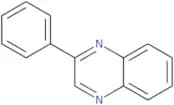
CAS:<p>2-Phenylquinoxaline is a compound that belongs to the aryl halide group. It has been used as a solvent in organic synthesis, and it has also been shown to be able to transport substances. 2-Phenylquinoxaline has been found to induce cancer in laboratory animals and is known for its ability to cause DNA damage. The chemical structure of 2-phenylquinoxaline contains nitrogen atoms, which are important for its reactivity. The <br>chemical reaction mechanism of 2-phenylquinoxaline is nucleophilic addition, with biphenyl acting as the nucleophile. This chemical reaction takes place in the presence of palladium as a catalyst.</p>Formula:C14H10N2Purity:Min. 95%Molecular weight:206.24 g/mol2-[4-Chloro-5-methyl-2-(propan-2-yl)phenoxy]acetic acid
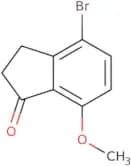
CAS:<p>Versatile small molecule scaffold</p>Formula:C12H15ClO3Purity:Min. 95%Molecular weight:242.7 g/mol4-Bromo-7-methoxy-1-indanone
CAS:<p>Versatile small molecule scaffold</p>Formula:C10H9BrO2Purity:Min. 95%Molecular weight:241.08 g/mol4-Chloro-1,6-dimethyl-1H-pyrazolo[3,4-d]pyrimidine
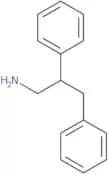
CAS:<p>Versatile small molecule scaffold</p>Formula:C7H7ClN4Purity:Min. 95%Molecular weight:182.61 g/mol2,3-Diphenylpropan-1-amine
CAS:<p>Versatile small molecule scaffold</p>Formula:C15H17NPurity:Min. 95%Molecular weight:211.3 g/mol2-[(Dimethylamino)methyl]prop-2-enoic acid
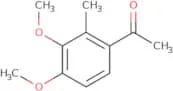
CAS:<p>Versatile small molecule scaffold</p>Formula:C6H11NO2Purity:Min. 95%Molecular weight:129.16 g/mol1-(3,4-Dimethoxy-2-methylphenyl)ethan-1-one
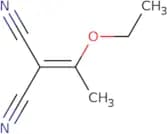
CAS:<p>Versatile small molecule scaffold</p>Formula:C11H14O3Purity:Min. 95%Molecular weight:194.23 g/mol(ethoxyethylidene)methane-1,1-dicarbonitrile
CAS:<p>(EtO)2CCHCN is a chemical compound that has been shown to have anticancer activity. This drug binds to the glutamate receptor subtype and inhibits the binding of glutamate to its receptor, which leads to cell death. The chemical structure of (EtO)2CCHCN is similar to that of adenosine, which also has anticancer properties. In addition, (EtO)2CCHCN has been shown to be a competitive inhibitor for both the A1 adenosine receptor and the NMDA glutamate receptor. (EtO)2CCHCN may be effective in treating depression by inhibiting glutamate-induced excitotoxicity in certain regions of the brain.</p>Formula:C7H8N2OPurity:Min. 95%Molecular weight:136.15 g/mol2-Chloro-4h-pyrido[1,2-a]pyrimidin-4-one
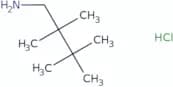
CAS:<p>2-Chloro-4h-pyrido[1,2-a]pyrimidin-4-one is an azido compound that reacts with hydrazine to form a piperidinium salt. The reaction between the azide and hydrazine forms a cyclization product that undergoes nitrosation to form a hydrazone. This molecule can be converted into a cyanoguanidine by reacting it with hydroxylamine. br> br> The 2-chloro-4h-pyrido[1,2-a]pyrimidin-4-one molecule contains both nucleophilic and electrophilic groups. These groups react with each other in the presence of acid or base to produce an alkyl halide or amine respectively. This property makes the molecule useful for many purposes including as an intermediate in organic synthesis and as a precursor to biochemicals such as antibiotics and antihist</p>Formula:C8H5ClN2OPurity:Min. 95%Molecular weight:180.59 g/mol2,2,3,3-Tetramethylbutan-1-amine hydrochloride
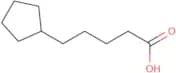
CAS:<p>Versatile small molecule scaffold</p>Formula:C8H20ClNPurity:Min. 95%Molecular weight:165.7 g/mol5-Cyclopentylpentanoic acid
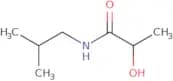
CAS:<p>Cyclopentylpentanoic acid is a carboxylic acid that is produced by the condensation of two molecules of acetaldehyde. It has been shown to have antibacterial activities against Pseudomonas aeruginosa and Aeruginosa and has been used to treat bacterial infections in animals. Cyclopentylpentanoic acid also inhibits virulence factors, such as the production of exotoxins, proteases, and hemolysin, which are enzymes that destroy red blood cells. This compound also inhibits the growth of A. baumannii through sensing mechanisms mediated by an unknown factor.</p>Formula:C10H18O2Purity:Min. 95%Molecular weight:170.25 g/mol2-Hydroxy-N-(2-methylpropyl)propanamide
CAS:<p>Versatile small molecule scaffold</p>Formula:C7H15NO2Purity:Min. 95%Molecular weight:145.2 g/mol2-[(Quinazolin-4-yl)amino]ethan-1-ol
CAS:<p>Versatile small molecule scaffold</p>Formula:C10H11N3OPurity:Min. 95%Molecular weight:189.21 g/mol2-Amino-N,3-diphenylpropanamide
CAS:<p>2-Amino-N,3-diphenylpropanamide is a chiral compound that can be synthesized from 2-propanol and amide. It has two moieties, which are the amide and the protonated amino group. The amide moiety is a chiral center because it has four different substituents. The experimental thermodynamic experiments show that the enantiomer with the R configuration has higher energy than the one with the S configuration. This is due to its high steric hindrance and its electron donating property.</p>Formula:C15H16N2OPurity:Min. 95%Molecular weight:240.3 g/mol2-Hydroxy-4-(phenylmethoxy)benzoic Acid Methyl Ester
CAS:<p>2-Hydroxy-4-(phenylmethoxy)benzoic Acid Methyl Ester is a benzene derivative that inhibits the binding of xanthones to the benzene ring in a variety of ways. This compound is formed by reacting phenol with methyl benzoate in the presence of acid and heat. The low energy ligand inhibits the binding of xanthones to benzene by forming hydrogen bonds, covalent bonds, or van der Waals forces with the anion. 2-Hydroxy-4-(phenylmethoxy)benzoic acid methyl ester has shown anti-inflammatory properties, which may be due to its ability to inhibit leukocyte adhesion at inflammatory sites.</p>Formula:C15H14O4Purity:Min. 95%Molecular weight:258.27 g/mol4-Chloro-N-[2-(diethylamino)ethyl]aniline
CAS:<p>Versatile small molecule scaffold</p>Formula:C12H19ClN2Purity:Min. 95%Molecular weight:226.74 g/mol2-[(2-Nitrophenyl)amino]acetic acid
CAS:<p>2-[(2-Nitrophenyl)amino]acetic acid (2NPA) is a selective antagonist with high affinity for the acetylcholine receptor. It has been shown to inhibit ionic currents in Xenopus oocytes expressing α-subunits of the nicotinic acetylcholine receptor. The compound binds to the site on the receptor that is normally occupied by acetylcholine and prevents it from binding to its normal binding site, thereby inhibiting functional activity. 2NPA was found to be a potent inhibitor of acetylcholine release in rat brain synaptosomes and inhibited acetylcholinesterase activity. 2NPA also inhibits cholinergic neurotransmission in the hippocampus, which may be due to its ability to block nicotinic receptors.</p>Formula:C8H8N2O4Purity:Min. 95%Molecular weight:196.16 g/mol4-Bromo-2-hydroxybenzamide
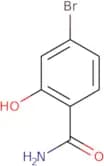
CAS:<p>4-Bromo-2-hydroxybenzamide is a nonlinear, bioisostere molecule with low nanomolar in vivo antitumor activity. It inhibits tumor growth and induces apoptosis by inhibiting the cell cycle at G1 phase. 4-Bromo-2-hydroxybenzamide has been shown to inhibit the growth of cancer cells in vitro and in vivo through its ability to induce apoptosis. This drug has also been shown to selectively target tumor cells, including human breast cancer, colon cancer, and leukemia cells. 4-Bromo-2-hydroxybenzamide has not been shown to cause toxicity in animal models, suggesting that it may be a promising agent for the treatment of cancers that are resistant to current therapies.</p>Formula:C7H6BrNO2Purity:Min. 95%Molecular weight:216.03 g/molEthyl 2-(1H-1,3-benzodiazol-2-ylsulfanyl)acetate
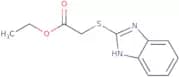
CAS:<p>Versatile small molecule scaffold</p>Formula:C11H12N2O2SPurity:Min. 95%Molecular weight:236.29 g/molSodium (phenylcarbamoyl)methanesulfonate
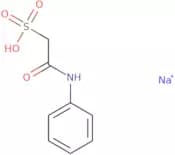
CAS:<p>Versatile small molecule scaffold</p>Formula:C8H9NNaO4SPurity:Min. 95%Molecular weight:238.22 g/mol

![2-[4-Chloro-5-methyl-2-(propan-2-yl)phenoxy]acetic acid](/_next/image/?url=https%3A%2Fstatic.cymitquimica.com%2Fproducts%2F3D%2Fthumb-webp%2FFAA41111.webp&w=3840&q=75)
![4-Chloro-1,6-dimethyl-1H-pyrazolo[3,4-d]pyrimidine](/_next/image/?url=https%3A%2Fstatic.cymitquimica.com%2Fproducts%2F3D%2Fthumb-webp%2FFAA41396.webp&w=3840&q=75)
![2-[(Dimethylamino)methyl]prop-2-enoic acid](/_next/image/?url=https%3A%2Fstatic.cymitquimica.com%2Fproducts%2F3D%2Fthumb-webp%2FFAA41598.webp&w=3840&q=75)
![2-Chloro-4h-pyrido[1,2-a]pyrimidin-4-one](/_next/image/?url=https%3A%2Fstatic.cymitquimica.com%2Fproducts%2F3D%2Fthumb-webp%2FFAA41894.webp&w=3840&q=75)
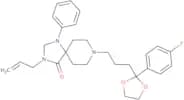
![2-[(Quinazolin-4-yl)amino]ethan-1-ol](/_next/image/?url=https%3A%2Fstatic.cymitquimica.com%2Fproducts%2F3D%2Fthumb-webp%2FFAA42359.webp&w=3840&q=75)

![4-Chloro-N-[2-(diethylamino)ethyl]aniline](/_next/image/?url=https%3A%2Fstatic.cymitquimica.com%2Fproducts%2F3D%2Fthumb-webp%2FFAA42735.webp&w=3840&q=75)
![2-[(2-Nitrophenyl)amino]acetic acid](/_next/image/?url=https%3A%2Fstatic.cymitquimica.com%2Fproducts%2F3D%2Fthumb-webp%2FFAA42799.webp&w=3840&q=75)