Building Blocks
This section contains fundamental products for the synthesis of organic and biological compounds. Building blocks are the essential starting materials used to construct complex molecules through various chemical reactions. They play a critical role in drug discovery, material science, and chemical research. At CymitQuimica, we offer a diverse range of high-quality building blocks to support your innovative research and industrial projects, ensuring you have the essential components for successful synthesis.
Subcategories of "Building Blocks"
- Boronic Acids & Boronic Acid Derivatives(5,756 products)
- Chiral Building Blocks(1,242 products)
- Hydrocarbon Building Blocks(6,093 products)
- Organic Building Blocks(60,522 products)
Found 195533 products of "Building Blocks"
Sort by
Purity (%)
0
100
|
0
|
50
|
90
|
95
|
100
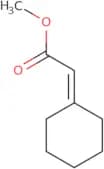
Methyl 2-cyclohexylideneacetate
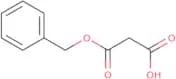
CAS:<p>Methyl 2-cyclohexylideneacetate is a stereospecific, geranyl, and biomimetic chemical compound. It has been shown to be an effective inhibitor of bacterial enzymes that produce ozonides. Methyl 2-cyclohexylideneacetate also inhibits the biosynthesis of phytosteroids in plants and the synthesis of farnesyl diphosphate, which is an intermediate in the production of cholesterol. The compound has been postulated to inhibit bacterial enzyme activity by binding to the active site on the enzyme.</p>Formula:C9H14O2Purity:Min. 95%Molecular weight:154.21 g/molmono-Benzyl malonate
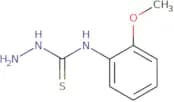
CAS:<p>Mono-benzyl malonate is a synthetic molecule that inhibits the growth of cancer cells. It has an intramolecular hydrogen bond that stabilizes the molecule, and it has been shown to be effective at a low dose in preventing tumor growth. Mono-benzyl malonate also binds to receptors and blocks their activity, which may help to reduce insulin resistance in a similar way as metformin. The biological properties of this compound are still being studied.</p>Formula:C10H10O4Purity:Min. 95%Molecular weight:194.18 g/mol4-(2-Methoxyphenyl)-3-thiosemicarbazide
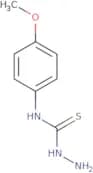
CAS:<p>4-(2-Methoxyphenyl)-3-thiosemicarbazide is a fluorescent compound that has been shown to have an inhibitory effect on bacteria. This compound binds to anions and can be used in the clarification of water. 4-(2-Methoxyphenyl)-3-thiosemicarbazide is also active as an antibacterial agent against gram-negative bacteria, such as Escherichia coli and Klebsiella pneumoniae. The antibacterial activity of 4-(2-Methoxyphenyl)-3-thiosemicarbazide may be due to its ability to inhibit the synthesis of proteins necessary for cell division.<br>4-(2-Methoxyphenyl)-3-thiosemicarbazide is a tautomeric, fluorescent compound that belongs to the class of antibiotic drugs. It has been shown to have chemosensor properties and can be used in the detection</p>Formula:C8H11N3OSPurity:Min. 95%Molecular weight:197.26 g/mol4-(4-Methoxyphenyl)-3-thiosemicarbazide
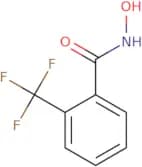
CAS:<p>4-(4-Methoxyphenyl)-3-thiosemicarbazide is a carbonyl compound that has been shown to have anticancer activity. It inhibits the growth of cancer cells by binding to the DNA of tumor cells, causing them to undergo apoptosis. 4-(4-Methoxyphenyl)-3-thiosemicarbazide also inhibits influenza virus and bacteria by inhibiting the enzyme ribonucleotide reductase and preventing the synthesis of viral RNA. This agent has potent inhibitory activity against gram-negative species such as Escherichia coli and Pseudomonas aeruginosa.</p>Formula:C8H11N3OSPurity:Min. 95%Molecular weight:197.26 g/molN-Hydroxy-2-(trifluoromethyl)benzamide
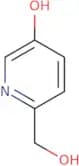
CAS:<p>Versatile small molecule scaffold</p>Formula:C8H6F3NO2Purity:Min. 95%Molecular weight:205.13 g/mol6-(hydroxymethyl)pyridin-3-ol
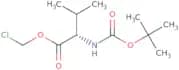
CAS:<p>6-(hydroxymethyl)pyridin-3-ol is a metabolite of the indole alkaloid, bufotenine. It has been shown to have cytotoxic activity against the human lung carcinoma cell line A549 and adipose cells, as well as antioxidant properties. 6-(hydroxymethyl)pyridin-3-ol also has been shown to modulate the production of reactive oxygen species in cells by inhibiting lipid peroxidation. This compound can be found in neutral pH environments, such as water and soil. 6-(hydroxymethyl)pyridin-3-ol can be synthesized from furfural or 5-hydroxymethylfurfural (HMF), which are produced through the degradation of glucose and other carbohydrates. The reaction between HMF with urea produces 6-(hydroxymethyl)pyridin-3-ol, leading to its presence in food chemistry.</p>Formula:C6H7NO2Purity:Min. 95%Molecular weight:125.12 g/mol(S)-Chloromethyl 2-((tert-butoxycarbonyl)amino)-3-methylbutanoate
CAS:<p>Versatile small molecule scaffold</p>Formula:C11H20ClNO4Purity:Min. 95%Molecular weight:265.73 g/mol3-[(3-Aminopropyl)amino]-1-propanol
CAS:<p>3-[(3-Aminopropyl)amino]-1-propanol is a complex chemical compound. It is a convergent synthesis and has the potential to be used in the field of chemistry, where it can be used to create new molecules with complex structures. 3-[(3-Aminopropyl)amino]-1-propanol can also be used to synthesize dendrons and dendrimers, which are highly symmetrical and designed architectures that have been shown to have orthogonal reactivity.</p>Formula:C6H16N2OPurity:Min. 95%Molecular weight:132.21 g/mol[4-(Hydroxymethyl)-1,3-thiazol-2-yl]methanol
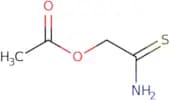
CAS:<p>Thiazole is a heterocyclic organic compound that is composed of three carbon atoms and two sulfur atoms. They are classified as either acidic or basic, depending on the substituents. 4-(Hydroxymethyl)-1,3-thiazol-2-yl]methanol is a diluent that is used in pharmaceuticals and other chemical products. It has been shown to have cardiovascular, nervous and circulatory effects, as well as an effect on the central nervous system. This diluent also acts as a cholinesterase inhibitor, which causes acetylcholine to accumulate at nerve endings and results in paralysis of the victim’s voluntary muscles. This can lead to death if the victim cannot be treated with an antidote.</p>Formula:C5H7NO2SPurity:Min. 95%Molecular weight:145.18 g/molCarbamothioylmethyl acetate
CAS:<p>Versatile small molecule scaffold</p>Formula:C4H7NO2SPurity:Min. 95%Molecular weight:133.17 g/molEthyl 2-(hydroxymethyl)thiazole-4-carboxylate
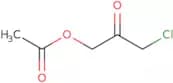
CAS:<p>Versatile small molecule scaffold</p>Formula:C7H9NO3SPurity:Min. 95%Molecular weight:187.22 g/mol3-Chloro-2-oxopropyl acetate
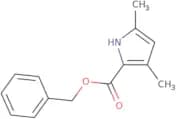
CAS:<p>3-Chloro-2-oxopropyl acetate is a chloride compound that is used as an acid catalyst. It has been shown to exhibit hypochlorous and cytostatic effects in animals. 3-Chloro-2-oxopropyl acetate is also a structural modification of chloroacetone, which has been shown to have antitumor effects. This compound can be used as an acid catalyst for the synthesis of chlorinated benzoates. 3-Chloro-2-oxopropyl acetate also exhibits cytostatic and antiinflammatory activities in animal studies.</p>Formula:C5H7ClO3Purity:Min. 95%Molecular weight:150.56 g/molBenzyl 3,5-dimethylpyrrole-2-carboxylate
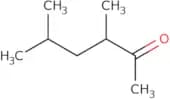
CAS:Controlled Product<p>Benzyl 3,5-dimethylpyrrole-2-carboxylate is an enol ether that is stabilized by hydrogen bonds. This compound has a polymeric structure and forms dimers and dimers. The chains of the molecule are stabilized by hydrogen bonds. It has a carbonyl group and a carbonyl group that form hydrogen bonds with each other. There are also hydrogen bonding interactions between the benzyl chain and the acetyl groups present in the molecule. Benzyl 3,5-dimethylpyrrole-2-carboxylate is a part of the class of compounds known as polymeric ketones or polyketones, which are characterized by their chains of repeating units.</p>Formula:C14H15NO2Purity:Min. 95%Molecular weight:229.27 g/mol3,5-Dimethylhexan-2-one
CAS:<p>Versatile small molecule scaffold</p>Formula:C8H16OPurity:Min. 95%Molecular weight:128.21 g/mol3-Propylhexan-2-one
CAS:<p>Versatile small molecule scaffold</p>Formula:C9H18OPurity:Min. 95%Molecular weight:142.2 g/mol4,6-Dimethylheptan-3-one
CAS:<p>Versatile small molecule scaffold</p>Formula:C9H18OPurity:Min. 95%Molecular weight:142.2 g/mol1,2,3,6-Tetrahydropyridine-1-carbonyl chloride
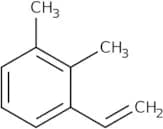
CAS:<p>Versatile small molecule scaffold</p>Formula:C6H8ClNOPurity:Min. 95%Molecular weight:145.59 g/mol1-Ethenyl-2,3-dimethylbenzene
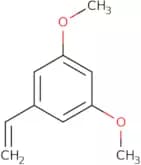
CAS:<p>1-Ethenyl-2,3-dimethylbenzene is a monomer that is used to prepare polymers. It has coagulation properties and can be used as a solid catalyst for the production of polyurethanes. 1-Ethenyl-2,3-dimethylbenzene is an oxidizing agent that can react with styrene to form copolymers. This chemical has been immobilized on silica gel using a surfactant coating to produce coatings. The hydroxyl group in this compound is acidic and reacts with inorganic acids such as hydrochloric acid or sulfuric acid to form esters.</p>Formula:C10H12Purity:Min. 95%Molecular weight:132.2 g/mol1-Ethenyl-3,5-dimethoxybenzene
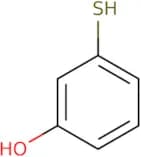
CAS:<p>1-Ethenyl-3,5-dimethoxybenzene is a monomer that can be used for anionic polymerization. This monomer is characterized by its high yield, which is consistent with the predictable conformation of the phenyl ring and the symmetric nature of the magnetic resonance spectra. The 1-ethenyl-3,5-dimethoxybenzene molecule has an anionic charge. It is also known to have a phenolic group, which provides ultraviolet absorption properties. The temperature range for this monomer's transition ranges from -20°C to 100°C.</p>Formula:C10H12O2Purity:Min. 95%Molecular weight:164.2 g/mol3-Hydroxybenzenethiol
CAS:<p>3-Hydroxybenzenethiol is a reactive chemical that binds to human liver microsomes and inhibits the activity of cytochrome P450, an enzyme that is required for the metabolism of many drugs. 3-Hydroxybenzenethiol has been shown to have inhibitory properties against a number of bacterial enzymes including beta-lactamase and penicillinase. 3-Hydroxybenzenethiol also inhibits the uptake of flavonoids by cells, which may be due to its ability to bind to flavonoid derivatives. The molecule has been used in studies on monoclonal antibodies and enzyme inhibitors.</p>Formula:C6H6OSPurity:Min. 95%Molecular weight:126.17 g/mol

![3-[(3-Aminopropyl)amino]-1-propanol](/_next/image/?url=https%3A%2Fstatic.cymitquimica.com%2Fproducts%2F3D%2Fthumb-webp%2FQBA22615.webp&w=3840&q=75)
![[4-(Hydroxymethyl)-1,3-thiazol-2-yl]methanol](/_next/image/?url=https%3A%2Fstatic.cymitquimica.com%2Fproducts%2F3D%2Fthumb-webp%2FQBA23557.webp&w=3840&q=75)