Building Blocks
This section contains fundamental products for the synthesis of organic and biological compounds. Building blocks are the essential starting materials used to construct complex molecules through various chemical reactions. They play a critical role in drug discovery, material science, and chemical research. At CymitQuimica, we offer a diverse range of high-quality building blocks to support your innovative research and industrial projects, ensuring you have the essential components for successful synthesis.
Subcategories of "Building Blocks"
- Boronic Acids & Boronic Acid Derivatives(5,756 products)
- Chiral Building Blocks(1,242 products)
- Hydrocarbon Building Blocks(6,093 products)
- Organic Building Blocks(60,522 products)
Found 195533 products of "Building Blocks"
Sort by
Purity (%)
0
100
|
0
|
50
|
90
|
95
|
100
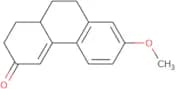
7-Methoxy-1,2,3,9,10,10a-hexahydrophenanthren-3-one
CAS:<p>Versatile small molecule scaffold</p>Formula:C15H16O2Purity:Min. 95%Molecular weight:228.3 g/mol4-[2-(4-Methoxyphenyl)ethenyl]phenol
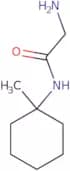
CAS:<p>Versatile small molecule scaffold</p>Formula:C15H14O2Purity:Min. 95%Molecular weight:226.27 g/mol2-Amino-N-(1-methylcyclohexyl)acetamide
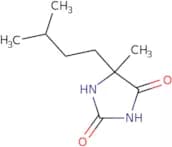
CAS:<p>Versatile small molecule scaffold</p>Formula:C9H18N2OPurity:Min. 95%Molecular weight:170.25 g/mol5-Methyl-5-(3-methylbutyl)imidazolidine-2,4-dione
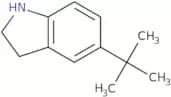
CAS:<p>Versatile small molecule scaffold</p>Formula:C9H16N2O2Purity:Min. 95%Molecular weight:184.24 g/mol5-tert-Butyl-2,3-dihydro-1H-indole
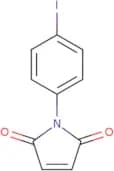
CAS:<p>Versatile small molecule scaffold</p>Formula:C12H17NPurity:Min. 95%Molecular weight:175.27 g/mol1-(4-Iodophenyl)-1H-pyrrole-2,5-dione
CAS:<p>1-(4-Iodophenyl)-1H-pyrrole-2,5-dione (1IPD) is a molecule that belongs to the endocannabinoid class of molecules. 1IPD is a lipophilic compound that can be identified by fluorescent spectroscopy and has been found in fatty acid and cholesterol esters. 1IPD binds to the active site of the enzyme fatty acid amide hydrolase, which is responsible for the breakdown of anandamide and other related molecules. This binding inhibits the activity of the enzyme, leading to an increase in levels of anandamide and other related molecules in cells.</p>Formula:C10H6INO2Purity:Min. 95%Molecular weight:299.06 g/molMethyl 5-methoxy-2,3-dihydro-1H-indene-2-carboxylate
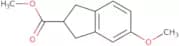
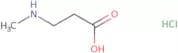
CAS:<p>Versatile small molecule scaffold</p>Formula:C12H14O3Purity:Min. 95%Molecular weight:206.24 g/mol3-(Methylamino)propanoic acid hydrochloride
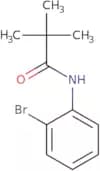
CAS:<p>Versatile small molecule scaffold</p>Formula:C4H10ClNO2Purity:Min. 95%Molecular weight:139.58 g/molN-(2-Bromophenyl)-2,2-dimethylpropanamide
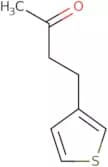
CAS:<p>Versatile small molecule scaffold</p>Formula:C11H14BrNOPurity:Min. 95%Molecular weight:256.14 g/mol4-(Thiophen-3-yl)butan-2-one
CAS:<p>Versatile small molecule scaffold</p>Formula:C8H10OSPurity:Min. 95%Molecular weight:154.23 g/mol3-methylbicyclo[1.1.1]pentane-1-carboxylic acid
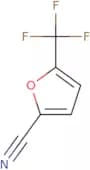
CAS:<p>Versatile small molecule scaffold</p>Formula:C7H10O2Purity:Min. 95%Molecular weight:126.2 g/mol5-(Trifluoromethyl)furan-2-carbonitrile
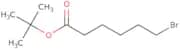
CAS:<p>Versatile small molecule scaffold</p>Formula:C6H2F3NOPurity:Min. 95%Molecular weight:161.08 g/moltert-Butyl 6-bromohexanoate
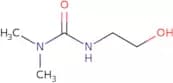
CAS:<p>Tert-Butyl 6-bromohexanoate is an intermediate in the synthesis of a variety of organic compounds, including pharmaceuticals. It is also used as a reagent for various reactions and as a solvent in chemical syntheses. Tert-Butyl 6-bromohexanoate can be used to generate other chemicals through the following reactions: 1) Organic Synthesis 2) Addition of Grignard Reagents 3) Reduction of Ketones 4) Alkylation with Bromides 5) Dehydration with HBr 6) Conversion to Halides 7) Reduction of Esters 8) Oxidation with PCC or MCPBA 9) Conversion to Nitriles 10) The Williamson Reaction</p>Formula:C10H19BrO2Purity:Min. 95%Molecular weight:251.16 g/mol3-(2-Hydroxyethyl)-1,1-dimethylurea
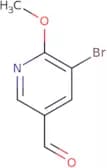
CAS:<p>Versatile small molecule scaffold</p>Formula:C5H12N2O2Purity:Min. 95%Molecular weight:132.16 g/mol5-Bromo-6-methoxynicotinaldehyde
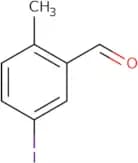
CAS:<p>Versatile small molecule scaffold</p>Formula:C7H6BrNO2Purity:Min. 95%Molecular weight:216.03 g/mol5-iodo-2-methylbenzaldehyde
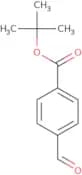
CAS:<p>Versatile small molecule scaffold</p>Formula:C8H7IOPurity:Min. 95%Molecular weight:246.05 g/mol4-Formyl-benzoic acid mono tert-butyl ester
CAS:<p>Versatile small molecule scaffold</p>Formula:C12H14O3Purity:Min. 95%Molecular weight:206.2 g/mol[(4-Chlorophenyl)methyl][2-(dimethylamino)ethyl]amine
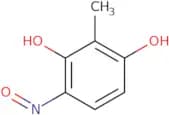
CAS:<p>Versatile small molecule scaffold</p>Formula:C11H17ClN2Purity:Min. 95%Molecular weight:212.72 g/mol2-Methyl-4-nitrosobenzene-1,3-diol
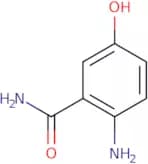
CAS:<p>Versatile small molecule scaffold</p>Formula:C7H7NO3Purity:Min. 95%Molecular weight:153.14 g/mol2-Amino-5-hydroxybenzamide
CAS:<p>2-Amino-5-hydroxybenzamide (2AB) is a hydroxylating agent that activates the microsomal enzyme cytochrome P450. This activation leads to an increase in the activity of various drug metabolizing enzymes, including those involved in the metabolism of drugs and xenobiotics. 2AB has been shown to denature proteins, such as anthranilamide and tyrosine, in rat liver homogenates. The activation of this hydroxylase may be due to the presence of copper ions or 2AB binding to tyrosine residues on proteins.</p>Formula:C7H8N2O2Purity:Min. 95%Molecular weight:152.15 g/mol

![4-[2-(4-Methoxyphenyl)ethenyl]phenol](/_next/image/?url=https%3A%2Fstatic.cymitquimica.com%2Fproducts%2F3D%2Fthumb-webp%2FQCA81934.webp&w=3840&q=75)
![3-methylbicyclo[1.1.1]pentane-1-carboxylic acid](/_next/image/?url=https%3A%2Fstatic.cymitquimica.com%2Fproducts%2F3D%2Fthumb-webp%2FQCA86201.webp&w=3840&q=75)
![[(4-Chlorophenyl)methyl][2-(dimethylamino)ethyl]amine](/_next/image/?url=https%3A%2Fstatic.cymitquimica.com%2Fproducts%2F3D%2Fthumb-webp%2FQCA87544.webp&w=3840&q=75)