


Building Blocks
This section contains fundamental products for the synthesis of organic and biological compounds. Building blocks are the essential starting materials used to construct complex molecules through various chemical reactions. They play a critical role in drug discovery, material science, and chemical research. At CymitQuimica, we offer a diverse range of high-quality building blocks to support your innovative research and industrial projects, ensuring you have the essential components for successful synthesis.
Subcategories of "Building Blocks"
- Boronic Acids & Boronic Acid Derivatives(5,756 products)
- Chiral Building Blocks(1,242 products)
- Hydrocarbon Building Blocks(6,093 products)
- Organic Building Blocks(60,522 products)
Found 195533 products of "Building Blocks"
Sort by
Purity (%)
0
100
|
0
|
50
|
90
|
95
|
100
2-Methyl-6-indolizinecarbonitrile
CAS:<p>2-Methyl-6-indolizinecarbonitrile is a natural product that belongs to the class of isothiocyanates. It has been shown to inhibit the growth of Pekinensis (a type of bacteria) and also has antioxidant properties. 2-Methyl-6-indolizinecarbonitrile also contains flavonoids, glucosinolates, phenolic compounds, and carbohydrates. The volatile compounds in this extract have been shown to have a variety of physiological effects, such as reducing inflammation and relieving symptoms of respiratory tract infections.</p>Formula:C10H8N2Purity:Min. 95%Molecular weight:156.18 g/mol2,5-Dimethylbenzoyl chloride
CAS:<p>2,5-Dimethylbenzoyl chloride is an oxadiazole that was studied for pharmacological applications. It has been shown to be a potent inhibitor of the vasopressin receptor and is therefore a potential lead compound for the development of drugs to treat diseases such as diabetes and hypertension. The chloro group in 2,5-dimethylbenzoyl chloride can be modified by substituting it with another group, such as hydrogen or chlorine. This substitution changes the properties of the molecule, which can be beneficial for certain applications. For example, 2-methylbenzoyl chloride is more soluble in water than 2,5-dimethylbenzoyl chloride.<br>2,5-Dimethylbenzoyl chloride was also synthesized using phosphorus pentachloride and ethyl group as starting materials. The x-ray data showed that the molecule has a planar structure with four chiral centers (C1, C2, C3 and</p>Formula:C9H9ClOPurity:Min. 95%Molecular weight:168.62 g/molEthyl 2,3-Dihydroindene-1-acetate
CAS:<p>Versatile small molecule scaffold</p>Formula:C13H16O2Purity:Min. 95%Molecular weight:204.27 g/mol7-Chloro-4,5-dihydro-1H-benzo[b]azepin-2(3H)-one
CAS:<p>Versatile small molecule scaffold</p>Formula:C10H10ClNOPurity:Min. 95%Molecular weight:195.64 g/mol2-Methyl-5,6,7,8-tetrahydroquinolin-4-amine
CAS:<p>Versatile small molecule scaffold</p>Formula:C10H14N2Purity:Min. 95%Molecular weight:162.23 g/mol3-Phenyl-2-(pyridin-2-yl)prop-2-enenitrile
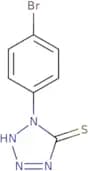
CAS:<p>Versatile small molecule scaffold</p>Formula:C14H10N2Purity:Min. 95%Molecular weight:206.24 g/mol1-(4-Bromophenyl)-4,5-dihydro-1H-1,2,3,4-tetrazole-5-thione
CAS:<p>1-(4-Bromophenyl)-4,5-dihydro-1H-1,2,3,4-tetrazole-5-thione (BPHT) is a potent thyroid hormone antagonist that inhibits the synthesis of thyroxine by binding to the thyroxine receptor. It has been shown to be effective in animals and humans with hypothyroidism. BPHT has also been shown to inhibit adenosine deaminase and cyclic adenosine monophosphate (cAMP) levels in certain cell types. BPHT has also been shown to have a weak effect on the liver enzymes alanine aminotransferase and aspartate aminotransferase.</p>Formula:C7H5BrN4SPurity:Min. 95%Molecular weight:257.11 g/moltrans-4-(Methylamino)cyclohexanol
CAS:<p>Versatile small molecule scaffold</p>Formula:C7H15NOPurity:Min. 95%Molecular weight:129.2 g/molIodomethanesulfonyl chloride
CAS:<p>Iodomethanesulfonyl chloride is a ligand that binds to metal carbonyl complexes. It is used as a polymerization initiator for the production of polyurethane and as a reagent in organic syntheses. Iodomethanesulfonyl chloride is prepared by reacting methanesulfonyl chloride with elemental iodine. The molecule has a hydrocarbon group and two chlorine atoms, which are present in a stereoselective arrangement. The hydroxy group is bonded to one chlorine atom, while the other has a hydroxyl group.</p>Formula:CH2ClIO2SPurity:Min. 95%Molecular weight:240.45 g/molIodomethanesulfonamide
CAS:<p>Iodomethanesulfonamide is a hydrogenolysis agent that functions by reacting with organic materials and inactivating them. It inhibits the growth of bacteria by binding to their ribosomes and preventing protein synthesis. Iodomethanesulfonamide has been shown to be non-selective, reacting with both aminoglycoside antibiotics and alkylating agents. This compound has also been shown to have osmotic effects on plant cells, which can be used for weed control. Iodomethanesulfonamide is also used as an intermediate in the production of other pharmaceuticals.</p>Formula:CH4INO2SPurity:Min. 95%Molecular weight:221 g/mol3-Amino-1,4-dimethyl-4,5-dihydro-1H-1,2,4-triazol-5-one
CAS:<p>Versatile small molecule scaffold</p>Formula:C4H8N4OPurity:Min. 95%Molecular weight:128.13 g/mol3-Bromo-1,4-dimethyl-4,5-dihydro-1H-1,2,4-triazol-5-one
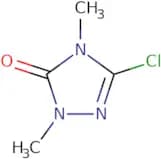
CAS:<p>Versatile small molecule scaffold</p>Formula:C4H6BrN3OPurity:Min. 95%Molecular weight:192.01 g/mol3-Chloro-1,4-dimethyl-4,5-dihydro-1H-1,2,4-triazol-5-one
CAS:<p>Versatile small molecule scaffold</p>Formula:C4H6ClN3OPurity:Min. 95%Molecular weight:147.56 g/mol2-(4-Nitrophenyl)propan-2-ol
CAS:<p>2-(4-Nitrophenyl)propan-2-ol is a reactive chemical that immobilizes fatty acids. It has been shown to inhibit the enzyme lipase, an esterase that hydrolyzes esters and triglycerides, in hexane. The reaction between 2-(4-nitrophenyl)propan-2-ol and the headspace of glycolaldehyde, cell membrane, or sarin, an organophosphate nerve agent, has yielded a covalent adduct. This immobilization method can be used to study the reactivity of fatty acids with other chemicals in a reactive environment.</p>Formula:C9H11NO3Purity:Min. 95%Molecular weight:181.19 g/mol2-(3-Nitrophenyl)propan-2-ol
CAS:<p>Versatile small molecule scaffold</p>Formula:C9H11NO3Purity:Min. 95%Molecular weight:181.2 g/mol2-Bromo-5-methanesulfonylbenzoic acid
CAS:<p>Versatile small molecule scaffold</p>Formula:C8H7BrO4SPurity:Min. 95%Molecular weight:279.11 g/mol2-Bromo-5-(ethanesulfonyl)benzoic acid
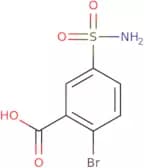
CAS:<p>Versatile small molecule scaffold</p>Formula:C9H9BrO4SPurity:Min. 95%Molecular weight:293.14 g/mol5-(Aminosulfonyl)-2-bromobenzoic acid
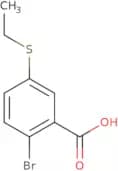
CAS:<p>Versatile small molecule scaffold</p>Formula:C7H6BrNO4SPurity:Min. 95%Molecular weight:280.1 g/mol2-Bromo-5-(ethylsulfanyl)benzoic acid
CAS:<p>Versatile small molecule scaffold</p>Formula:C9H9BrO2SPurity:Min. 95%Molecular weight:261.14 g/mol4H-Thiochromeno[3,4-d][1,2]oxazole
CAS:<p>Versatile small molecule scaffold</p>Formula:C10H7NOSPurity:Min. 95%Molecular weight:189.24 g/mol


![7-Chloro-4,5-dihydro-1H-benzo[b]azepin-2(3H)-one](/_next/image/?url=https%3A%2Fstatic.cymitquimica.com%2Fproducts%2F3D%2Fthumb-webp%2FXAA34477.webp&w=3840&q=75)






![4H-Thiochromeno[3,4-d][1,2]oxazole](/_next/image/?url=https%3A%2Fstatic.cymitquimica.com%2Fproducts%2F3D%2Fthumb-webp%2FXAA36253.webp&w=3840&q=75)