Building Blocks
This section contains fundamental products for the synthesis of organic and biological compounds. Building blocks are the essential starting materials used to construct complex molecules through various chemical reactions. They play a critical role in drug discovery, material science, and chemical research. At CymitQuimica, we offer a diverse range of high-quality building blocks to support your innovative research and industrial projects, ensuring you have the essential components for successful synthesis.
Subcategories of "Building Blocks"
- Boronic Acids & Boronic Acid Derivatives(5,756 products)
- Chiral Building Blocks(1,242 products)
- Hydrocarbon Building Blocks(6,093 products)
- Organic Building Blocks(60,522 products)
Found 195533 products of "Building Blocks"
Sort by
Purity (%)
0
100
|
0
|
50
|
90
|
95
|
100
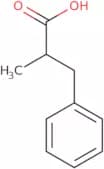
(2S)-2-Methyl-3-phenylpropanoic acid
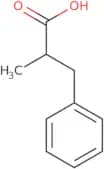
CAS:<p>(2S)-2-Methyl-3-phenylpropanoic acid is a chiral organic compound that can be catalysed to produce enantioenriched products. It has been shown to be an efficient catalyst for the ester hydrolysis reaction, with a rate constant of 10.8 x 10 M s. The enzyme lipase catalyzes this reaction by hydrolyzing ester bonds in (2S)-2-methyl-3-phenylpropanoic acid, producing a mixture of the enantiomers 2R-(+)-2-methyl-3-phenylpropanoic acid and 2S-(−)-2-methyl-3-phenylpropanoic acid. Lipases are proteins that specifically hydrolyze fats, which means they only work on one specific type of molecule. This is advantageous because it allows for higher stereoselectivity in the production of the desired product. Pseudomonas fluorescens produces lipases that are</p>Formula:C10H12O2Purity:Min. 95%Molecular weight:164.2 g/mol(2R)-2-Methyl-3-phenylpropanoic acid
CAS:<p>Versatile small molecule scaffold</p>Formula:C10H12O2Purity:Min. 95%Molecular weight:164.2 g/mol2-(1-Hydroxycyclopentyl)acetonitrile
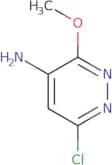
CAS:<p>Versatile small molecule scaffold</p>Formula:C7H11NOPurity:Min. 95%Molecular weight:125.17 g/mol6-Chloro-3-methoxypyridazin-4-amine
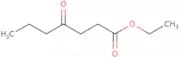
CAS:<p>6-Chloro-3-methoxypyridazin-4-amine is an acidic compound with a pKa of 4.6. It is hydrolyzed in water and alkaline solutions, with the reaction being faster in alkaline solutions. 6-Chloro-3-methoxypyridazin-4-amine interacts with thiourea and hydrazine, forming a yellow compound. This compound reacts with ethanol to form an orange precipitate, which is soluble in potassium acetate.</p>Formula:C5H6ClN3OPurity:Min. 95%Molecular weight:159.57 g/molEthyl 4-oxoheptanoate
CAS:<p>Ethyl 4-oxoheptanoate (E4OH) is an inhibitor of tyrosine hydroxylase, which converts the amino acid tyrosine to the neurotransmitter L-DOPA. It is a trisubstituted, high stereoselective, and hydroxylase inhibitor. E4OH inhibits the enzyme tyrosine hydroxylase and prevents the synthesis of L-DOPA in a stereospecific manner. This compound also has been shown to inhibit diastereoisomeric synthses of L-DOPA.</p>Formula:C9H16O3Purity:Min. 95%Molecular weight:172.22 g/mol2-Isothiocyanatobicyclo[2.2.1]heptane
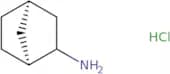
CAS:<p>Versatile small molecule scaffold</p>Formula:C8H11NSPurity:Min. 95%Molecular weight:153.24 g/molExo-norbornylamine hydrochloride
CAS:<p>Exo-norbornylamine hydrochloride is a metabolite of amantadine and is produced by acetylation of the aromatic ring. It has been shown to be a substrate for epoxide hydrolase, which catalyzes the conversion of this compound to an epoxide. It has been shown to inhibit influenza virus replication in vitro and in vivo, possibly by regulating ion channels or inhibiting viral RNA synthesis. Exo-norbornylamine hydrochloride also inhibits lung epithelial cell proliferation, which may be due to its ability to inhibit the production of inflammatory mediators such as prostaglandins and leukotrienes.</p>Formula:C7H13N·HClPurity:Min. 95%Molecular weight:147.65 g/mol2-Isocyanatobicyclo[2.2.1]heptane
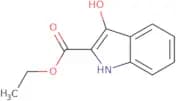
CAS:<p>2-Isocyanatobicyclo[2.2.1]heptane is a natural product that has been shown to be a potent inhibitor of the soluble epoxide hydrolase and an epoxide hydrolase enzyme, which are responsible for the degradation of epoxides. This compound is structurally similar to aniline and amine compounds, which have been shown to inhibit the virus that causes SARS or severe acute respiratory syndrome (SARS-CoV). 2-Isocyanatobicyclo[2.2.1]heptane has also been shown to inhibit coronavirus, which is one of the most common causes of upper respiratory infections in humans.</p>Formula:C8H11NOPurity:Min. 95%Molecular weight:137.18 g/molEthyl 3-hydroxy-1H-indole-2-carboxylate
CAS:<p>Ethyl 3-hydroxy-1H-indole-2-carboxylate is a dimer that is produced by the condensation of two molecules of diazomalonate. This product can be used in the synthesis of esters, such as acid esters or cyclization reactions. It has been shown to yield high yields at high temperatures and is an Australian product. This compound can also be used as a precursor for carbene catalysts.</p>Formula:C11H11NO3Purity:Min. 95%Molecular weight:205.21 g/mol4-(4-Methylpentyl)cyclohexan-1-one
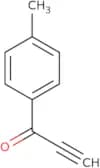
CAS:<p>Versatile small molecule scaffold</p>Formula:C12H22OPurity:Min. 95%Molecular weight:182.3 g/mol1-(4-Methylphenyl)prop-2-yn-1-one
CAS:<p>Versatile small molecule scaffold</p>Formula:C10H8OPurity:Min. 95%Molecular weight:144.17 g/mol2-(4-Butylphenyl)acetic acid
CAS:<p>Versatile small molecule scaffold</p>Formula:C12H16O2Purity:Min. 95%Molecular weight:192.25 g/mol6,7,8,9-Tetrahydro-5H-benzo[7]annulene-5-carboxylic acid
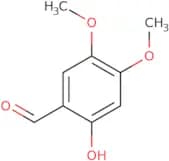
CAS:<p>Versatile small molecule scaffold</p>Formula:C12H14O2Purity:Min. 95%Molecular weight:190.24 g/mol2-Hydroxy-4,5-dimethoxybenzaldehyde
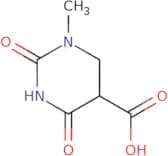
CAS:<p>2-Hydroxy-4,5-dimethoxybenzaldehyde (2HMB) is a natural product that belongs to the group of methides. It has been isolated from plants belonging to the genus Neorautanenia. This compound has been shown to inhibit target enzymes such as neorautanenia amboensis, methides, eupatorium, spathulenol, chalcone, benzofuran derivatives and conjugates. 2HMB also inhibits bacterial growth by binding to ribosomes and preventing protein synthesis. 2HMB can be synthesized from corydine or skeletons by borohydride reduction. The skeleton structure of 2HMB is the same as that of the synthetic drug neorautanenia amboensis and is used for treatment of sepsis in humans.</p>Formula:C9H10O4Purity:Min. 95%Molecular weight:182.17 g/mol5-Pyrimidinecarboxylic acid, 1,2,3,4-tetrahydro-1-methyl-2,4-dioxo-
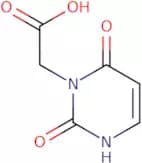
CAS:<p>Versatile small molecule scaffold</p>Formula:C6H6N2O4Purity:Min. 95%Molecular weight:170.12 g/mol2-(2,6-Dioxo-1,2,3,6-tetrahydropyrimidin-1-yl)acetic acid
CAS:<p>Versatile small molecule scaffold</p>Formula:C6H6N2O4Purity:Min. 95%Molecular weight:170.12 g/mol4H,5H-[1,2,4]Triazolo[1,5-a]pyrimidin-5-one
CAS:<p>4H,5H-[1,2,4]Triazolo[1,5-a]pyrimidin-5-one is a heterocyclic compound that is structurally related to the purines. It has been shown to bind to phenanthroline and bipyridine as ligands. The X-ray structure reveals that the molecule consists of two bridging pyridine rings with an azopyrimidine ring in the center. 4H,5H-[1,2,4]Triazolo[1,5-a]pyrimidin-5-one binds anionic ligands such as trimethylammonium ions and formates through its nitrogen atoms.</p>Formula:C5H4N4OPurity:Min. 95%Molecular weight:136.11 g/mol2-(4-Methyl-1,3-thiazol-2-yl)pyridine
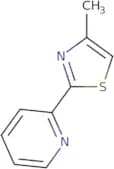
CAS:<p>Versatile small molecule scaffold</p>Formula:C9H8N2SPurity:Min. 95%Molecular weight:176.2 g/mol2-(1H-tetrazol-5-yl)pyridine
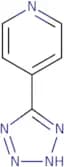
CAS:<p>2-(1H-Tetrazol-5-yl)pyridine (TPZ) is a hydrogen bonding molecule that has been extensively used as a probe to study the coordination geometry of metal ions. The TPZ molecule has a trigonal planar structure with three nitrogen atoms and one chloride ligand. The TPZ molecule is a strong base with a pKb value of 8.6, which makes it a good candidate for protonating other molecules. The TPZ molecule can be synthesized in various forms, including the hydrochloride salt form.</p>Formula:C6H5N5Purity:Min. 95%Molecular weight:147.14 g/mol2-(2,2-Dimethyloxan-4-yl)acetic acid
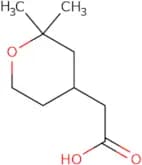
CAS:<p>Versatile small molecule scaffold</p>Formula:C9H16O3Purity:Min. 95%Molecular weight:172.22 g/mol


![2-Isothiocyanatobicyclo[2.2.1]heptane](/_next/image/?url=https%3A%2Fstatic.cymitquimica.com%2Fproducts%2F3D%2Fthumb-webp%2FPAA37023.webp&w=3840&q=75)
![2-Isocyanatobicyclo[2.2.1]heptane](/_next/image/?url=https%3A%2Fstatic.cymitquimica.com%2Fproducts%2F3D%2Fthumb-webp%2FPAA37047.webp&w=3840&q=75)

![6,7,8,9-Tetrahydro-5H-benzo[7]annulene-5-carboxylic acid](/_next/image/?url=https%3A%2Fstatic.cymitquimica.com%2Fproducts%2F3D%2Fthumb-webp%2FPAA37856.webp&w=3840&q=75)
![4H,5H-[1,2,4]Triazolo[1,5-a]pyrimidin-5-one](/_next/image/?url=https%3A%2Fstatic.cymitquimica.com%2Fproducts%2F3D%2Fthumb-webp%2FPAA38466.webp&w=3840&q=75)