


Building Blocks
This section contains fundamental products for the synthesis of organic and biological compounds. Building blocks are the essential starting materials used to construct complex molecules through various chemical reactions. They play a critical role in drug discovery, material science, and chemical research. At CymitQuimica, we offer a diverse range of high-quality building blocks to support your innovative research and industrial projects, ensuring you have the essential components for successful synthesis.
Subcategories of "Building Blocks"
- Boronic Acids & Boronic Acid Derivatives(5,756 products)
- Chiral Building Blocks(1,242 products)
- Hydrocarbon Building Blocks(6,095 products)
- Organic Building Blocks(61,038 products)
Found 196817 products of "Building Blocks"
Sort by
Purity (%)
0
100
|
0
|
50
|
90
|
95
|
100
3-Bromo-1-methylpiperidine hydrobromide
CAS:<p>Versatile small molecule scaffold</p>Formula:C6H12BrN·HBrPurity:Min. 95%Molecular weight:258.98 g/mol4,5,6,7-Tetrahydro-1H-indole
CAS:<p>4,5,6,7-Tetrahydro-1H-indole is a chemical compound that is an intermediate in the synthesis of other compounds. It reacts with halides to produce methyl sulfones and metal hydroxides. Tetrahydro-1H-indole can also react with acyl halides to form thiocyanates. The reaction mechanism has been studied using nmr spectra and chemical study. 4,5,6,7-Tetrahydro-1H-indole is an active substance that has been used in synthetic chemistry.</p>Formula:C8H11NPurity:Min. 95%Molecular weight:121.18 g/molBenzyloxyacetonitrile
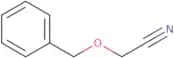
CAS:<p>Benzyloxyacetonitrile is a synthetic chemical that reacts with hydrochloric acid to form an acid complex. It has been used in the preparation of ethylene diamine and other amines. In addition, benzyloxyacetonitrile has been shown to react with phosphorus pentoxide to form a reactive chloride, alkylthio group, hydrogen chloride, hydroxy group, nucleophilic, acid complex.</p>Formula:C9H9NOPurity:Min. 95%Molecular weight:147.18 g/mol1-(2,4-Dimethyl-5-nitrophenyl)ethan-1-one
CAS:<p>Versatile small molecule scaffold</p>Formula:C10H11NO3Purity:Min. 95%Molecular weight:193.2 g/mol5,7-Dimethyl-1-tetralone
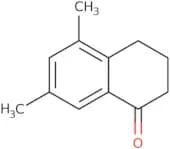
CAS:<p>5,7-Dimethyl-1-tetralone is a coumarin derivative that is a single-crystal x-ray analysis preparative. It has been found to undergo cross-coupling reaction with a variety of organometallic reagents. 5,7-Dimethyl-1-tetralone can be used as a research chemical in the synthesis of other chemicals and pharmaceuticals. Cross coupling reactions with lithium diisopropylamide have been shown to produce 6-methoxy-1-tetralone which can be saponified to form an intermediate for the synthesis of drugs. The tautomerization process is also mediated by the solvent and the reaction time.</p>Formula:C12H14OPurity:Min. 95%Molecular weight:174.24 g/mol2-(4-Chlorophenyl)-4,5-dihydro-1H-imidazole
CAS:<p>Versatile small molecule scaffold</p>Formula:C9H9ClN2Purity:Min. 95%Molecular weight:180.63 g/mol2-(4-Methylphenyl)-4,5-dihydro-1H-imidazole
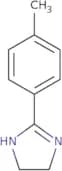
CAS:<p>2-(4-Methylphenyl)-4,5-dihydro-1H-imidazole is a crystalline compound that forms hydrogen bonds with water. It has been shown to form chains and stacks in the crystal structure. The compound has a centroid of 2.8 Å and its dihedral angles are around 120°. Five molecules in the molecule stack on top of each other, stabilized by hydrogen bonds.</p>Formula:C10H12N2Purity:Min. 95%Molecular weight:160.22 g/mol1,3,8-Triaza-spiro[4.5]decane-2,4-dione
CAS:<p>1,3,8-Triaza-spiro[4.5]decane-2,4-dione is a potential anti-cancer drug that inhibits the production of lactate and ammonium ions in lymphocytes. This leads to an increase in the oxidation of glucose and lactic acid to CO2 and H2O. The inhibition of lactate production reduces the accumulation of ammonium ions, which inhibits the activity of hydroxylases. 1,3,8-Triaza-spiro[4.5]decane-2,4-dione also targets hypoxia inducible factor (HIF) and cyclophosphamide resistance protein (CPR), leading to a decrease in the proliferation rate of lymphocytes. Ammonium carbonate is used as a stabilizing agent for this compound during crystallization.</p>Formula:C7H11N3O2Purity:Min. 95%Molecular weight:169.18 g/mol1,3,8-Triaza-spiro[4.5]decane-2,4-dionehydrochloride
CAS:<p>Versatile small molecule scaffold</p>Formula:C7H12ClN3O2Purity:Min. 95%Molecular weight:205.65 g/mol3-Methyl-1,3,8-triazaspiro[4.5]decane-2,4-dione hydrochloride
CAS:<p>Versatile small molecule scaffold</p>Formula:C8H14ClN3O2Purity:Min. 95%Molecular weight:219.67 g/mol4-Methyl-4H-1,2,4-triazole-3,5-dithiol
CAS:<p>Versatile small molecule scaffold</p>Formula:C3H5N3S2Purity:Min. 95%Molecular weight:147.2 g/mol3-methoxy-isoxazole-5-carboxylic acid
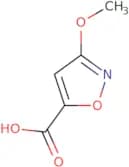
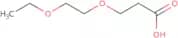
CAS:<p>3-Methoxy-isoxazole-5-carboxylic acid (3MICA) is an amide analog of diborane. 3MICA has been synthesized in the past and is also present in amanita muscaria, a mushroom that contains psychoactive compounds. 3MICA is a potent agonist of the cannabinoid receptor type 1 (CB1), with three times the potency of Δ9-tetrahydrocannabinol. It has also been shown to inhibit acetoacetate decarboxylase, which may be responsible for some side effects associated with CB1 activation.</p>Formula:C5H5NO4Purity:Min. 95%Molecular weight:143.1 g/mol3-(2-Ethoxyethoxy)propanoic acid
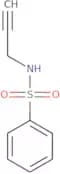
CAS:<p>Versatile small molecule scaffold</p>Formula:C7H14O4Purity:Min. 95%Molecular weight:162.18 g/molN-(Prop-2-yn-1-yl)benzenesulfonamide
CAS:<p>Versatile small molecule scaffold</p>Formula:C9H9NO2SPurity:Min. 95%Molecular weight:195.24 g/mol1,3-Diethyl 2-[2-(2-nitrophenyl)hydrazin-1-ylidene]propanedioate
CAS:<p>Versatile small molecule scaffold</p>Formula:C13H15N3O6Purity:Min. 95%Molecular weight:309.27 g/mol1,3-Diethyl 2-[2-(3-nitrophenyl)hydrazin-1-ylidene]propanedioate
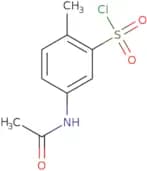
CAS:<p>1,3-Diethyl 2-[2-(3-nitrophenyl)hydrazin-1-ylidene]propanedioate is a halogen that has been used in the production of silver and silver halide. In the presence of light, this compound undergoes a series of reactions to form silver. It can be used as a reducing agent for silver ions or as a precursor for the formation of other silver compounds. This compound also functions as an agent that converts chloride ions to bromide ions by reaction with hydrogen peroxide.</p>Formula:C13H15N3O6Purity:Min. 95%Molecular weight:309.27 g/mol5-Acetylamino-2-methyl-benzenesulfonyl chloride
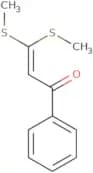
CAS:<p>Versatile small molecule scaffold</p>Formula:C9H10ClNO3SPurity:Min. 95%Molecular weight:247.7 g/mol3,3-Bis(methylsulfanyl)-1-phenylprop-2-en-1-one
CAS:<p>Versatile small molecule scaffold</p>Formula:C11H12OS2Purity:Min. 95%Molecular weight:224.35 g/mol6-Methoxy-1-phenyl-1H,2H,3H,4H,9H-pyrido[3,4-b]indole hydrochloride
CAS:<p>Versatile small molecule scaffold</p>Formula:C18H19ClN2OPurity:Min. 95%Molecular weight:314.8 g/mol2-[(Pyridin-2-yl)methyl]cyclopentan-1-one
CAS:<p>Versatile small molecule scaffold</p>Formula:C11H13NOPurity:Min. 95%Molecular weight:175.23 g/mol




![1,3,8-Triaza-spiro[4.5]decane-2,4-dione](/_next/image/?url=https%3A%2Fstatic.cymitquimica.com%2Fproducts%2F3D%2Fthumb-webp%2FNAA62539.webp&w=3840&q=75)
![1,3,8-Triaza-spiro[4.5]decane-2,4-dionehydrochloride](/_next/image/?url=https%3A%2Fstatic.cymitquimica.com%2Fproducts%2F3D%2Fthumb-webp%2FNAA62548.webp&w=3840&q=75)
![3-Methyl-1,3,8-triazaspiro[4.5]decane-2,4-dione hydrochloride](/_next/image/?url=https%3A%2Fstatic.cymitquimica.com%2Fproducts%2F3D%2Fthumb-webp%2FNAA62549.webp&w=3840&q=75)

![1,3-Diethyl 2-[2-(2-nitrophenyl)hydrazin-1-ylidene]propanedioate](/_next/image/?url=https%3A%2Fstatic.cymitquimica.com%2Fproducts%2F3D%2Fthumb-webp%2FNAA63192.webp&w=3840&q=75)
![1,3-Diethyl 2-[2-(3-nitrophenyl)hydrazin-1-ylidene]propanedioate](/_next/image/?url=https%3A%2Fstatic.cymitquimica.com%2Fproducts%2F3D%2Fthumb-webp%2FNAA63194.webp&w=3840&q=75)
![6-Methoxy-1-phenyl-1H,2H,3H,4H,9H-pyrido[3,4-b]indole hydrochloride](/_next/image/?url=https%3A%2Fstatic.cymitquimica.com%2Fproducts%2F3D%2Fthumb-webp%2FNAA63747.webp&w=3840&q=75)
![2-[(Pyridin-2-yl)methyl]cyclopentan-1-one](/_next/image/?url=https%3A%2Fstatic.cymitquimica.com%2Fproducts%2F3D%2Fthumb-webp%2FNAA64055.webp&w=3840&q=75)