


Building Blocks
This section contains fundamental products for the synthesis of organic and biological compounds. Building blocks are the essential starting materials used to construct complex molecules through various chemical reactions. They play a critical role in drug discovery, material science, and chemical research. At CymitQuimica, we offer a diverse range of high-quality building blocks to support your innovative research and industrial projects, ensuring you have the essential components for successful synthesis.
Subcategories of "Building Blocks"
- Boronic Acids & Boronic Acid Derivatives(5,756 products)
- Chiral Building Blocks(1,242 products)
- Hydrocarbon Building Blocks(6,093 products)
- Organic Building Blocks(60,522 products)
Found 195533 products of "Building Blocks"
Sort by
Purity (%)
0
100
|
0
|
50
|
90
|
95
|
100
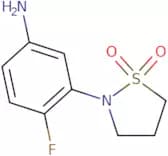
3-(1,1-Dioxido-2-isothiazolidinyl)-4-fluoro-benzenamine
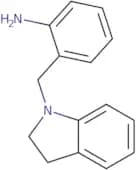
CAS:<p>Versatile small molecule scaffold</p>Formula:C9H11FN2O2SPurity:Min. 95%Molecular weight:230.26 g/mol2-(2,3-Dihydro-1H-indol-1-ylmethyl)aniline
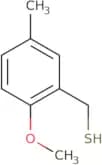
CAS:<p>2-(2,3-Dihydro-1H-indol-1-ylmethyl)aniline is a potent and selective inhibitor of the P2X receptor. It has been shown to bind to the ATP binding site of the P2X receptor in a competitive manner. 2-(2,3-Dihydro-1H-indol-1-ylmethyl)aniline binds to the extracellular domain of the P2X receptor and prevents ligand binding. This results in a decrease in intracellular calcium, which inhibits neurotransmitter release from presynaptic neurons. 2-(2,3-Dihydro-1H-indol-1-ylmethyl)aniline is also an antagonist of EP4 receptors and has been shown to inhibit LPS induced TNFα production in macrophages.</p>Formula:C15H16N2Purity:Min. 95%Molecular weight:224.3 g/mol(2-Methoxy-5-methylphenyl)methanethiol
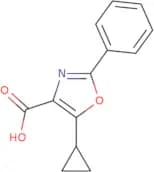
CAS:<p>Versatile small molecule scaffold</p>Formula:C9H12OSPurity:Min. 95%Molecular weight:168.26 g/mol5-Cyclopropyl-2-phenyl-1,3-oxazole-4-carboxylic acid
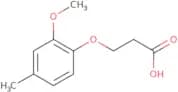
CAS:<p>Versatile small molecule scaffold</p>Formula:C13H11NO3Purity:Min. 95%Molecular weight:229.23 g/mol3-(2-Methoxy-4-methylphenoxy)propanoic acid
CAS:<p>Versatile small molecule scaffold</p>Formula:C11H14O4Purity:Min. 95%Molecular weight:210.23 g/mol3-{[2-(Aminomethyl)phenyl]methyl}-1,3-diazaspiro[4.5]decane-2,4-dione
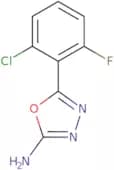
CAS:<p>Versatile small molecule scaffold</p>Formula:C16H21N3O2Purity:Min. 95%Molecular weight:287.36 g/mol5-(2-Chloro-6-fluorophenyl)-1,3,4-oxadiazol-2-amine
CAS:<p>Versatile small molecule scaffold</p>Formula:C8H5ClFN3OPurity:Min. 95%Molecular weight:213.59 g/mol3-[2-(2-Methylphenyl)acetamido]-3-phenylpropanoic acid
CAS:<p>Versatile small molecule scaffold</p>Formula:C18H19NO3Purity:Min. 95%Molecular weight:297.3 g/mol4-{[4-(Pyridin-2-yl)piperazin-1-yl]methyl}aniline
CAS:<p>4-{[4-(Pyridin-2-yl)piperazin-1-yl]methyl}aniline is an electron paramagnetic resonance (EPR) active compound. It inhibits the corrosion of metals, such as iron, by a process that involves the release of electrons. This compound has been shown to be effective at inhibiting the activity of various enzymes in vitro, including those involved in DNA replication and transcription. 4-{[4-(Pyridin-2-yl)piperazin-1-yl]methyl}aniline is also fluorescent and can be used to monitor the progress of cellular processes using fluorescence microscopy.</p>Formula:C16H20N4Purity:Min. 95%Molecular weight:268.36 g/mol4-(1,3-Thiazol-2-yl)piperazine-1-carbothioamide
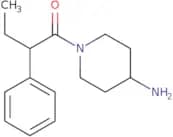
CAS:<p>Versatile small molecule scaffold</p>Formula:C8H12N4S2Purity:Min. 95%Molecular weight:228.3 g/mol1-(4-Aminopiperidin-1-yl)-2-phenylbutan-1-one
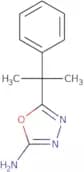
CAS:<p>1-(4-Aminopiperidin-1-yl)-2-phenylbutan-1-one is a peptide that belongs to the group of activators. It has been shown to have an inhibitory effect on ion channels, such as potassium channels and calcium channels. The pharmacological properties of 1-(4-aminopiperidin-1-yl)-2-phenylbutan-1-one are not yet known.</p>Formula:C15H22N2OPurity:Min. 95%Molecular weight:246.35 g/mol5-(2-Phenylpropan-2-yl)-1,3,4-oxadiazol-2-amine
CAS:<p>Versatile small molecule scaffold</p>Formula:C11H13N3OPurity:Min. 95%Molecular weight:203.24 g/mol1-[(3-Aminophenyl)methyl]piperidine-4-carboxamide
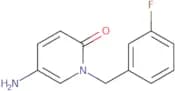
CAS:<p>Versatile small molecule scaffold</p>Formula:C13H19N3OPurity:Min. 95%Molecular weight:233.31 g/mol5-Amino-1-(3-fluorobenzyl)pyridin-2(1H)-one
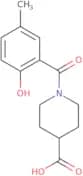
CAS:<p>Versatile small molecule scaffold</p>Formula:C12H11FN2OPurity:Min. 95%Molecular weight:218.23 g/mol1-(2-Hydroxy-5-methylbenzoyl)piperidine-4-carboxylic acid
CAS:<p>Versatile small molecule scaffold</p>Formula:C14H17NO4Purity:Min. 95%Molecular weight:263.29 g/mol2-{4-[(6-Chloropyridin-3-yl)methoxy]phenyl}acetonitrile
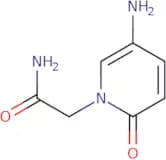
CAS:<p>Versatile small molecule scaffold</p>Formula:C14H11ClN2OPurity:Min. 95%Molecular weight:258.7 g/mol2-(5-Amino-2-oxo-1,2-dihydropyridin-1-yl)acetamide
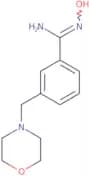
CAS:<p>Versatile small molecule scaffold</p>Formula:C7H9N3O2Purity:Min. 95%Molecular weight:167.17 g/molN'-Hydroxy-3-(morpholin-4-ylmethyl)benzene-1-carboximidamide
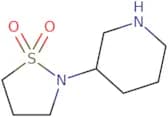
CAS:Controlled Product<p>N'-Hydroxy-3-(morpholin-4-ylmethyl)benzene-1-carboximidamide is a potent and selective inhibitor of the human EP4 prostaglandin receptor. The compound inhibits G protein activation, cAMP accumulation and calcium mobilization in cells expressing the EP4 receptor. N'-Hydroxy-3-(morpholin-4-ylmethyl)benzene-1-carboximidamide is used as a research tool to study the function of prostaglandin receptors and their role in various biological processes such as inflammation, immune response, signal transduction, and cell proliferation.<br>N'-Hydroxy-3-(morpholin-4-ylmethyl)benzene-1-carboximidamide has been shown to be a potent inhibitor of the human EP4 prostaglandin receptor. This inhibitor blocks G protein activation, cAMP accumulation and calcium mobilization in cells expressing this receptor. N'-Hydoxy 3-(morph</p>Formula:C12H17N3O2Purity:Min. 95%Molecular weight:235.28 g/mol3-(1,1-Dioxido-2-isothiazolidinyl)-piperidine
CAS:<p>Versatile small molecule scaffold</p>Formula:C8H16N2O2SPurity:Min. 95%Molecular weight:204.29 g/mol2-[(5-Bromopyridin-2-yl)sulfanyl]benzoic acid
CAS:<p>2-[(5-Bromopyridin-2-yl)sulfanyl]benzoic acid is a synthetic sulfonamide analog with high affinity for the potassium channel. The compound binds to the Kv1.3 channel and blocks ion flow, which may lead to inhibition of neuronal transmission in the central nervous system.</p>Formula:C12H8BrNO2SPurity:Min. 95%Molecular weight:310.17 g/mol

![3-{[2-(Aminomethyl)phenyl]methyl}-1,3-diazaspiro[4.5]decane-2,4-dione](/_next/image/?url=https%3A%2Fstatic.cymitquimica.com%2Fproducts%2F3D%2Fthumb-webp%2FRQB76330.webp&w=3840&q=75)
![3-[2-(2-Methylphenyl)acetamido]-3-phenylpropanoic acid](/_next/image/?url=https%3A%2Fstatic.cymitquimica.com%2Fproducts%2F3D%2Fthumb-webp%2FRQB76358.webp&w=3840&q=75)
![4-{[4-(Pyridin-2-yl)piperazin-1-yl]methyl}aniline](/_next/image/?url=https%3A%2Fstatic.cymitquimica.com%2Fproducts%2F3D%2Fthumb-webp%2FRQB76396.webp&w=3840&q=75)

![1-[(3-Aminophenyl)methyl]piperidine-4-carboxamide](/_next/image/?url=https%3A%2Fstatic.cymitquimica.com%2Fproducts%2F3D%2Fthumb-webp%2FRQB76497.webp&w=3840&q=75)
![2-{4-[(6-Chloropyridin-3-yl)methoxy]phenyl}acetonitrile](/_next/image/?url=https%3A%2Fstatic.cymitquimica.com%2Fproducts%2F3D%2Fthumb-webp%2FRQB76565.webp&w=3840&q=75)
![2-[(5-Bromopyridin-2-yl)sulfanyl]benzoic acid](/_next/image/?url=https%3A%2Fstatic.cymitquimica.com%2Fproducts%2F3D%2Fthumb-webp%2FRQB76793.webp&w=3840&q=75)