Building Blocks
This section contains fundamental products for the synthesis of organic and biological compounds. Building blocks are the essential starting materials used to construct complex molecules through various chemical reactions. They play a critical role in drug discovery, material science, and chemical research. At CymitQuimica, we offer a diverse range of high-quality building blocks to support your innovative research and industrial projects, ensuring you have the essential components for successful synthesis.
Subcategories of "Building Blocks"
- Boronic Acids & Boronic Acid Derivatives(5,756 products)
- Chiral Building Blocks(1,242 products)
- Hydrocarbon Building Blocks(6,095 products)
- Organic Building Blocks(61,055 products)
Found 199650 products of "Building Blocks"
Sort by
Purity (%)
0
100
|
0
|
50
|
90
|
95
|
100
1-Methylcycloheptane-1-carbaldehyde
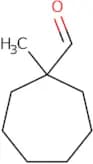
CAS:<p>Versatile small molecule scaffold</p>Formula:C9H16OPurity:Min. 95%Molecular weight:140.22 g/molTetramethyl-1,4-dioxane-2,6-dione
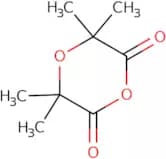
CAS:<p>Versatile small molecule scaffold</p>Formula:C8H12O4Purity:Min. 95%Molecular weight:172.18 g/mol4-(Imidazo[1,2-a]pyrimidin-2-yl)aniline
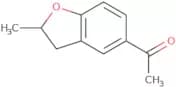
CAS:<p>Versatile small molecule scaffold</p>Formula:C12H10N4Purity:Min. 95%Molecular weight:210.24 g/mol1-(2-Methyl-2,3-dihydro-1-benzofuran-5-yl)ethan-1-one
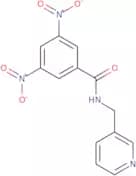
CAS:<p>Versatile small molecule scaffold</p>Formula:C11H12O2Purity:Min. 95%Molecular weight:176.21 g/mol3,5-Dinitro-N-(pyridin-3-ylmethyl)benzamide
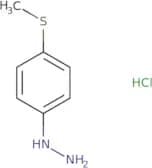
CAS:<p>Versatile small molecule scaffold</p>Formula:C13H10N4O5Purity:Min. 95%Molecular weight:302.24 g/mol(4-Methylsulfanylphenyl)hydrazine hydrochloride
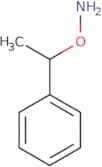
CAS:Versatile small molecule scaffoldFormula:C7H11ClN2SPurity:Min. 95%Molecular weight:190.69 g/molo-(1-Phenylethyl)hydroxylamine
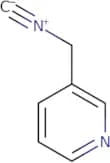
CAS:<p>Versatile small molecule scaffold</p>Formula:C8H11NOPurity:Min. 95%Molecular weight:137.18 g/mol3-(Isocyanomethyl)pyridine
CAS:<p>3-(Isocyanomethyl)pyridine is a nucleophilic amine that is used in organic chemistry as a reagent. It can be used either as a primary amine or as an isocyanide, depending on the desired functionality. 3-(Isocyanomethyl)pyridine reacts with electrophiles such as phenols, alcohols, and carboxylic acids to form reactive intermediates. These intermediates are often useful for generating new molecules. 3-(Isocyanomethyl)pyridine is also capable of reacting with primary and secondary amines to yield multigram quantities of products.<br>3-(Isocyanomethyl)pyridine has been shown to be an innovative chemical that can be used in many different applications.</p>Formula:C7H6N2Purity:Min. 95%Molecular weight:118.14 g/mol3-Methyl-4H,5H-[1,2]thiazolo[5,4-d]pyrimidin-4-one
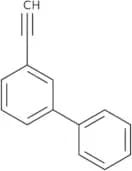
CAS:<p>Versatile small molecule scaffold</p>Formula:C6H5N3OSPurity:Min. 95%Molecular weight:167.19 g/mol1-ethynyl-3-phenylbenzene
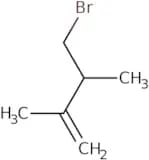
CAS:<p>Versatile small molecule scaffold</p>Formula:C14H10Purity:Min. 95%Molecular weight:178.22 g/mol4-Bromo-2,3-dimethylbut-1-ene
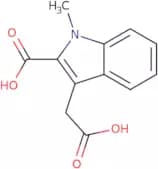
CAS:<p>Versatile small molecule scaffold</p>Formula:C6H11BrPurity:Min. 95%Molecular weight:163.06 g/mol3-(carboxymethyl)-1-methyl-1H-indole-2-carboxylic acid
CAS:<p>Versatile small molecule scaffold</p>Formula:C12H11NO4Purity:Min. 95%Molecular weight:233.22 g/mol2-(1-Methyl-2,3-dihydro-1H-indol-3-yl)acetic acid hydrochloride
CAS:<p>Versatile small molecule scaffold</p>Formula:C11H14ClNO2Purity:Min. 95%Molecular weight:227.7 g/molIsopropyl-pyridin-2-ylmethyl-amine
CAS:<p>Isopropyl-pyridin-2-ylmethyl-amine is a carboxylate group that is structurally mediated by an interaction with oxygen. It has a magnetic property, which is due to the presence of ferromagnetic isotopes in the molecule. Isopropyl-pyridin-2-ylmethyl-amine can be coordinated as ligands with metal ions such as Cu(II), Co(II), and Fe(III). This compound also has tetranuclear ligands, which are ligands that bind to one central atom via four atoms or groups.</p>Formula:C9H14N2Purity:Min. 95%Molecular weight:150.23 g/mol4-Methylfurazan-3-carboxylic acid
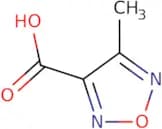
CAS:<p>4-Methylfurazan-3-carboxylic acid is a cyanogen compound that has been shown to cause vasodilatation of the sinusoid and hepatic steatosis. It is also reactive with lesion sites and can be used as a histological reagent. 4-Methylfurazan-3-carboxylic acid reacts with hydrazide to produce an acid hydrazide, which is also reactive. This compound has been shown to have therapeutic effects on hepatic steatosis in rats, but it does not exhibit any inhibitory effects on intestinal steatosis.</p>Formula:C4H4N2O3Purity:Min. 95%Molecular weight:128.09 g/mol4-Bromo-1,7-naphthyridine
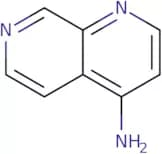
CAS:<p>Versatile small molecule scaffold</p>Formula:C8H5BrN2Purity:Min. 95%Molecular weight:209.04 g/mol1,7-Naphthyridin-4-amine
CAS:<p>Versatile small molecule scaffold</p>Formula:C8H7N3Purity:Min. 95%Molecular weight:145.16 g/mol2-(Dimethylamino)-2-phenylacetic acid hydrochloride
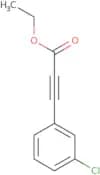
CAS:<p>Versatile small molecule scaffold</p>Formula:C10H14ClNO2Purity:Min. 95%Molecular weight:215.67 g/molEthyl 3-(3-chlorophenyl)prop-2-ynoate
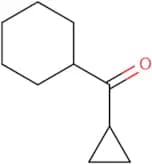
CAS:<p>Versatile small molecule scaffold</p>Formula:C11H9ClO2Purity:Min. 95%Molecular weight:208.64 g/molCyclohexyl(cyclopropyl)methanone
CAS:<p>Versatile small molecule scaffold</p>Formula:C10H16OPurity:Min. 95%Molecular weight:152.23 g/mol

![4-(Imidazo[1,2-a]pyrimidin-2-yl)aniline](/_next/image/?url=https%3A%2Fstatic.cymitquimica.com%2Fproducts%2F3D%2Fthumb-webp%2FICA60993.webp&w=3840&q=75)
![3-Methyl-4H,5H-[1,2]thiazolo[5,4-d]pyrimidin-4-one](/_next/image/?url=https%3A%2Fstatic.cymitquimica.com%2Fproducts%2F3D%2Fthumb-webp%2FICA64895.webp&w=3840&q=75)