


Building Blocks
This section contains fundamental products for the synthesis of organic and biological compounds. Building blocks are the essential starting materials used to construct complex molecules through various chemical reactions. They play a critical role in drug discovery, material science, and chemical research. At CymitQuimica, we offer a diverse range of high-quality building blocks to support your innovative research and industrial projects, ensuring you have the essential components for successful synthesis.
Subcategories of "Building Blocks"
- Boronic Acids & Boronic Acid Derivatives(5,778 products)
- Chiral Building Blocks(1,242 products)
- Hydrocarbon Building Blocks(6,098 products)
- Organic Building Blocks(61,034 products)
Found 199601 products of "Building Blocks"
Sort by
Purity (%)
0
100
|
0
|
50
|
90
|
95
|
100
2-Amino-5-methoxy-N-methylbenzamide
CAS:<p>Versatile small molecule scaffold</p>Formula:C9H12N2O2Purity:Min. 95%Molecular weight:180.2 g/mol2-[3-(Trifluoromethyl)phenoxy]ethan-1-amine hydrochloride
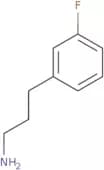
CAS:<p>Versatile small molecule scaffold</p>Formula:C9H11ClF3NOPurity:Min. 95%Molecular weight:241.64 g/mol3-(3-Fluorophenyl)propan-1-amine
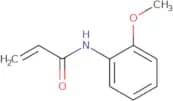
CAS:<p>Versatile small molecule scaffold</p>Formula:C9H12FNPurity:Min. 95%Molecular weight:153.2 g/molN-(2-Methoxyphenyl)prop-2-enamide
CAS:<p>Versatile small molecule scaffold</p>Formula:C10H11NO2Purity:Min. 95%Molecular weight:177.2 g/mol2-{[(4-Methyl-2-pyridinyl)amino]methyl}phenol
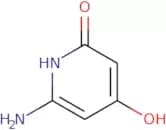
CAS:<p>Versatile small molecule scaffold</p>Formula:C13H14N2OPurity:Min. 95%Molecular weight:214.26 g/mol6-Aminopyridine-2,4-diol
CAS:<p>Versatile small molecule scaffold</p>Formula:C5H6N2O2Purity:Min. 95%Molecular weight:126.11 g/mol1-Methyl-octahydro-1H-cyclopenta[b]pyridin-4-one
CAS:<p>Versatile small molecule scaffold</p>Formula:C9H15NOPurity:Min. 95%Molecular weight:153.22 g/mol1-(4-Methoxy-3-nitrobenzenesulfonyl)piperidine
CAS:<p>Versatile small molecule scaffold</p>Formula:C12H16N2O5SPurity:Min. 95%Molecular weight:300.3 g/mol2-[(Oxiran-2-yl)methyl]oxane
CAS:<p>Versatile small molecule scaffold</p>Formula:C8H14O2Purity:Min. 95%Molecular weight:142.2 g/mol2-(Cyclopentylmethyl)oxirane
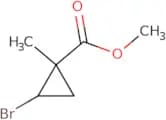
CAS:<p>Versatile small molecule scaffold</p>Formula:C8H14OPurity:Min. 95%Molecular weight:126.2 g/molMethyl 2-bromo-1-methylcyclopropane-1-carboxylate
CAS:<p>Versatile small molecule scaffold</p>Formula:C6H9BrO2Purity:Min. 95%Molecular weight:193.04 g/mol3-Ethyl-4-methylaniline
CAS:<p>3-Ethyl-4-methylaniline is a potent antibacterial agent that is used to treat infections caused by staphylococcus. 3-Ethyl-4-methylaniline inhibits the growth of bacteria by binding to the enzyme polymerase, which is needed for DNA replication. This binding prevents the polymerase from reading the genetic code and synthesizing new proteins. The alkylation reaction also inhibits s. aureus, an organism that causes tooth decay and other diseases in humans. 3-Ethyl-4-methylaniline has been shown to be a byproduct of demethylation reactions and can inhibit organisms such as subtilis and Klebsiella pneumoniae.</p>Formula:C9H13NPurity:Min. 95%Molecular weight:135.21 g/mol4-Chloro-2-cyano-6-methylpyrimidine
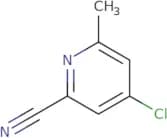
CAS:<p>Versatile small molecule scaffold</p>Formula:C6H4ClN3Purity:Min. 95%Molecular weight:153.57 g/mol4-Bromo-1-methylisoquinoline
CAS:<p>4-Bromo-1-methylisoquinoline is an ethylene derivative that can be used as a precursor in the production of sulfonation and acetylation. It is also used to catalyze the reduction of nitro compounds. 4-Bromo-1-methylisoquinoline has been shown to inhibit cell growth in long-term experiments with L1210 leukemia cells and has antineoplastic effects when combined with thiosemicarbazide. The compound is also capable of inducing morpholine formation.</p>Formula:C10H8BrNPurity:Min. 95%Molecular weight:222.08 g/mol6-Iodo-[1,2,4]triazolo[1,5-a]pyrimidin-7-ol
CAS:<p>Versatile small molecule scaffold</p>Formula:C5H3IN4OPurity:Min. 95%Molecular weight:262 g/mol6-Bromo-5-methyl-3H-imidazo[4,5-b]pyridine-2-thiol
CAS:<p>6-Bromo-5-methyl-3H-imidazo[4,5-b]pyridine-2-thiol is a kinase inhibitor that inhibits the protein kinases that phosphorylate and activate the cell cycle checkpoint proteins. 6BMIT is a potent inhibitor of human protein kinase C (PKC) and is used in pharmaceutical formulations to inhibit PKC activity. It binds to two residues on the ATP binding site of PKC, blocking ATP binding and inhibiting the enzyme's activity. 6BMIT also has been shown to inhibit various types of protein kinases involved in cell cycle regulation, including cyclinD1/CDK4 and CDK2/cyclinE.</p>Formula:C7H6BrN3SPurity:Min. 95%Molecular weight:244.11 g/mol(R)-1-(4-Bromo-2-chlorophenyl)ethan-1-amine hydrochloride
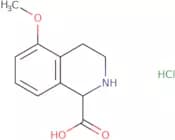
CAS:<p>Versatile small molecule scaffold</p>Formula:C8H10BrCl2NPurity:Min. 95%Molecular weight:270.98 g/mol(1S)-5-Methoxy-1,2,3,4-tetrahydroisoquinoline-1-carboxylic acid hydrochloride
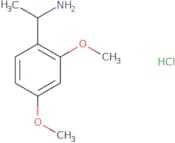
CAS:<p>Versatile small molecule scaffold</p>Formula:C11H14ClNO3Purity:Min. 95%Molecular weight:243.68 g/mol(1S)-1-(2,4-Dimethoxyphenyl)ethan-1-amine hydrochloride
CAS:<p>Versatile small molecule scaffold</p>Formula:C10H16ClNO2Purity:Min. 95%Molecular weight:217.69 g/mol4-[(2,2-Dimethylpropyl)carbamoyl]benzoic acid
CAS:<p>Versatile small molecule scaffold</p>Formula:C13H17NO3Purity:Min. 95%Molecular weight:235.28 g/mol


![2-[3-(Trifluoromethyl)phenoxy]ethan-1-amine hydrochloride](/_next/image/?url=https%3A%2Fstatic.cymitquimica.com%2Fproducts%2F3D%2Fthumb-webp%2FEEA77496.webp&w=3840&q=75)
![2-{[(4-Methyl-2-pyridinyl)amino]methyl}phenol](/_next/image/?url=https%3A%2Fstatic.cymitquimica.com%2Fproducts%2F3D%2Fthumb-webp%2FEEA76835.webp&w=3840&q=75)
![1-Methyl-octahydro-1H-cyclopenta[b]pyridin-4-one](/_next/image/?url=https%3A%2Fstatic.cymitquimica.com%2Fproducts%2F3D%2Fthumb-webp%2FEEA75286.webp&w=3840&q=75)

![2-[(Oxiran-2-yl)methyl]oxane](/_next/image/?url=https%3A%2Fstatic.cymitquimica.com%2Fproducts%2F3D%2Fthumb-webp%2FEEA72783.webp&w=3840&q=75)



![6-Iodo-[1,2,4]triazolo[1,5-a]pyrimidin-7-ol](/_next/image/?url=https%3A%2Fstatic.cymitquimica.com%2Fproducts%2F3D%2Fthumb-webp%2FEEA69048.webp&w=3840&q=75)
![6-Bromo-5-methyl-3H-imidazo[4,5-b]pyridine-2-thiol](/_next/image/?url=https%3A%2Fstatic.cymitquimica.com%2Fproducts%2F3D%2Fthumb-webp%2FEEA68580.webp&w=3840&q=75)
![4-[(2,2-Dimethylpropyl)carbamoyl]benzoic acid](/_next/image/?url=https%3A%2Fstatic.cymitquimica.com%2Fproducts%2F3D%2Fthumb-webp%2FECC94312.webp&w=3840&q=75)