Building Blocks
This section contains fundamental products for the synthesis of organic and biological compounds. Building blocks are the essential starting materials used to construct complex molecules through various chemical reactions. They play a critical role in drug discovery, material science, and chemical research. At CymitQuimica, we offer a diverse range of high-quality building blocks to support your innovative research and industrial projects, ensuring you have the essential components for successful synthesis.
Subcategories of "Building Blocks"
- Boronic Acids & Boronic Acid Derivatives(5,756 products)
- Chiral Building Blocks(1,242 products)
- Hydrocarbon Building Blocks(6,093 products)
- Organic Building Blocks(60,525 products)
Found 195533 products of "Building Blocks"
Sort by
Purity (%)
0
100
|
0
|
50
|
90
|
95
|
100
3-Methyl-5H,6H,7H,8H-imidazo[1,5-a]pyridine-7-carboxylic acid hydrochloride
CAS:<p>Versatile small molecule scaffold</p>Formula:C9H13ClN2O2Purity:Min. 95%Molecular weight:216.66 g/mol5,5-Difluoro-2-methylpiperidine hydrochloride
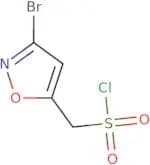
CAS:<p>Versatile small molecule scaffold</p>Formula:C6H12ClF2NPurity:Min. 95%Molecular weight:171.61 g/mol(3-Bromo-1,2-oxazol-5-yl)methanesulfonyl chloride
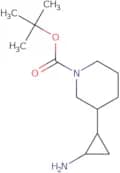
CAS:<p>Versatile small molecule scaffold</p>Formula:C4H3BrClNO3SPurity:Min. 95%Molecular weight:260.49 g/moltert-Butyl 3-(2-aminocyclopropyl)piperidine-1-carboxylate
CAS:<p>Versatile small molecule scaffold</p>Formula:C13H24N2O2Purity:Min. 95%Molecular weight:240.34 g/mol8,8-Difluoro-2-aza-spiro[4.5]decane hydrochloride
CAS:<p>Versatile small molecule scaffold</p>Formula:C9H16ClF2NPurity:Min. 95%Molecular weight:211.7 g/mol3-Methoxy-3-thietanecarboxylic acid 1,1-dioxide
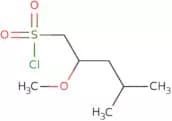
CAS:<p>Versatile small molecule scaffold</p>Formula:C5H8O5SPurity:Min. 95%Molecular weight:180.18 g/mol2-Methoxy-4-methylpentane-1-sulfonyl chloride
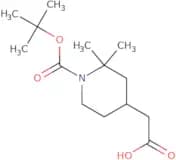
CAS:<p>Versatile small molecule scaffold</p>Formula:C7H15ClO3SPurity:Min. 95%Molecular weight:214.71 g/mol2-(1-(tert-Butoxycarbonyl)-2,2-dimethylpiperidin-4-yl)acetic acid
CAS:<p>Versatile small molecule scaffold</p>Formula:C14H25NO4Purity:Min. 95%Molecular weight:271.35 g/mol2-(1-Methyl-1H-imidazol-4-yl)-2-(pyrrolidin-1-yl)ethan-1-amine
CAS:<p>Versatile small molecule scaffold</p>Formula:C10H18N4Purity:Min. 95%Molecular weight:194.3 g/mol(1-Cyclopropyl-1H-pyrazol-4-yl)methanol
CAS:<p>Versatile small molecule scaffold</p>Formula:C7H10N2OPurity:Min. 95%Molecular weight:138.17 g/mol3-({[(tert-Butoxy)carbonyl]amino}methyl)-4-fluorobenzoic acid
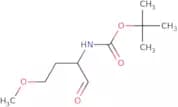
CAS:<p>Versatile small molecule scaffold</p>Formula:C13H16FNO4Purity:Min. 95%Molecular weight:269.27 g/moltert-Butyl N-(4-methoxy-1-oxobutan-2-yl)carbamate
CAS:<p>Versatile small molecule scaffold</p>Formula:C10H19NO4Purity:Min. 95%Molecular weight:217.26 g/mol2-(4-aminophenoxy)ethanol
CAS:<p>2-(4-Aminophenoxy)ethanol is a drug that has been studied for the treatment of cancer. It has been shown to inhibit the growth of cancer cells in animals by inhibiting their ability to synthesize DNA, RNA, and proteins. 2-(4-Aminophenoxy)ethanol also inhibits the production of a number of inflammatory mediators, such as TNF-α and IL-1β, which are involved in carcinogenesis. This drug is an acyltransferase inhibitor that prevents the formation of N-acetylated prodrugs from acetaminophen and other drugs. 2-(4-Aminophenoxy)ethanol also inhibits sulfation, which is required for the synthesis of glucuronide conjugates with amines and catechols. This inhibition may be responsible for its antiinflammatory effects.</p>Formula:C8H11NO2Purity:Min. 95%Molecular weight:153.17 g/mol4-[(4-Chlorophenyl)methyl]morpholine
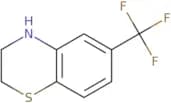
CAS:<p>Versatile small molecule scaffold</p>Formula:C11H14ClNOPurity:Min. 95%Molecular weight:211.69 g/mol6-(Trifluoromethyl)-3,4-dihydro-2H-1,4-benzothiazine
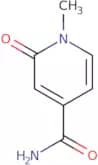
CAS:<p>Versatile small molecule scaffold</p>Formula:C9H8F3NSPurity:Min. 95%Molecular weight:219.23 g/mol1-Methyl-2-oxo-1,2-dihydropyridine-4-carboxamide
CAS:<p>Versatile small molecule scaffold</p>Formula:C7H8N2O2Purity:Min. 95%Molecular weight:152.15 g/mol4,5,6,7-Tetrahydro-benzo[c]thiophene-1-carboxylic acid
CAS:<p>Versatile small molecule scaffold</p>Formula:C9H10O2SPurity:Min. 95%Molecular weight:182.24 g/mol4-chlorobutan-1-amine hcl
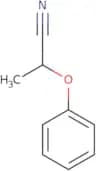
CAS:<p>Versatile small molecule scaffold</p>Formula:C4H11Cl2NPurity:Min. 95%Molecular weight:144.04 g/mol2-Phenoxypropanenitrile
CAS:<p>2-Phenoxypropanenitrile is a hydrogen chloride derivate of an amide. It reacts with ethylene diamine to form 2-aminoethanol. This compound can be further reacted with sulfide to form the sulfide derivative, cysteamine. The reaction time for this process is between 10 and 20 hours at room temperature. 2-Phenoxypropanenitrile has been shown to inhibit tyrosine kinase and other enzymes that are important for cancer cell growth. This substance also has anti-inflammatory properties, which may be due to its ability to scavenge hydroxyl radicals and react with ROS (reactive oxygen species) such as hydrogen peroxide and superoxide anion radicals.</p>Formula:C9H9NOPurity:Min. 95%Molecular weight:147.17 g/mol1-(o-Methoxyphenoxy)-2-propanone
CAS:<p>1-(o-Methoxyphenoxy)-2-propanone is a guaifenesin precursor that is used as a supercritical solvent. It has been shown to liquefy benzyl groups, which are difficult to dissolve in other solvents. The 1-(o-methoxyphenoxy)-2-propanone molecule contains methoxy groups and benzyl groups, which are both susceptible to irradiation. The optimum irradiation time for the 1-(o-methoxyphenoxy)-2-propanone molecule was found to be about 15 hours at room temperature. This compound has high affinity values for gas chromatography/mass spectrometry parameters and can be reused up to ten times without significant change in its properties.</p>Formula:C10H12O3Purity:Min. 95%Molecular weight:180.2 g/mol
![3-Methyl-5H,6H,7H,8H-imidazo[1,5-a]pyridine-7-carboxylic acid hydrochloride](/_next/image/?url=https%3A%2Fstatic.cymitquimica.com%2Fproducts%2F3D%2Fthumb-webp%2FFWC94010.webp&w=3840&q=75)


![8,8-Difluoro-2-aza-spiro[4.5]decane hydrochloride](/_next/image/?url=https%3A%2Fstatic.cymitquimica.com%2Fproducts%2F3D%2Fthumb-webp%2FFWC96459.webp&w=3840&q=75)



![3-({[(tert-Butoxy)carbonyl]amino}methyl)-4-fluorobenzoic acid](/_next/image/?url=https%3A%2Fstatic.cymitquimica.com%2Fproducts%2F3D%2Fthumb-webp%2FFWC99455.webp&w=3840&q=75)

![4-[(4-Chlorophenyl)methyl]morpholine](/_next/image/?url=https%3A%2Fstatic.cymitquimica.com%2Fproducts%2F3D%2Fthumb-webp%2FGAA42543.webp&w=3840&q=75)
![4,5,6,7-Tetrahydro-benzo[c]thiophene-1-carboxylic acid](/_next/image/?url=https%3A%2Fstatic.cymitquimica.com%2Fproducts%2F3D%2Fthumb-webp%2FGAA43575.webp&w=3840&q=75)