Building Blocks
This section contains fundamental products for the synthesis of organic and biological compounds. Building blocks are the essential starting materials used to construct complex molecules through various chemical reactions. They play a critical role in drug discovery, material science, and chemical research. At CymitQuimica, we offer a diverse range of high-quality building blocks to support your innovative research and industrial projects, ensuring you have the essential components for successful synthesis.
Subcategories of "Building Blocks"
- Boronic Acids & Boronic Acid Derivatives(5,756 products)
- Chiral Building Blocks(1,242 products)
- Hydrocarbon Building Blocks(6,095 products)
- Organic Building Blocks(61,038 products)
Found 196817 products of "Building Blocks"
Sort by
Purity (%)
0
100
|
0
|
50
|
90
|
95
|
100
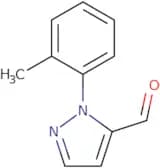
1-(2-Methylphenyl)-1H-pyrazole-5-carbaldehyde
CAS:<p>Versatile small molecule scaffold</p>Formula:C11H10N2OPurity:Min. 95%Molecular weight:186.21 g/mol8-Fluoroimidazo[1,5-a]pyridine-3-carboxylic acid
CAS:<p>Versatile small molecule scaffold</p>Formula:C8H5FN2O2Purity:Min. 95%Molecular weight:180.14 g/mol7-Chloroimidazo[1,5-a]pyridine-3-carboxylic acid
CAS:<p>Versatile small molecule scaffold</p>Formula:C8H5ClN2O2Purity:Min. 95%Molecular weight:196.59 g/mol8-Bromoimidazo[1,2-a]pyridine-3-carboxylic acid
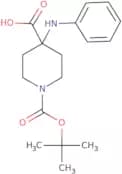
CAS:<p>Versatile small molecule scaffold</p>Formula:C8H5BrN2O2Purity:Min. 95%Molecular weight:241.04 g/mol1-(tert-butoxycarbonyl)-4-(phenylamino)piperidine-4-carboxylic acid
CAS:<p>Versatile small molecule scaffold</p>Formula:C17H24N2O4Purity:Min. 95%Molecular weight:320.38 g/mol1-[(tert-butoxy)carbonyl]-4-(1H-pyrazol-1-yl)piperidine-4-carboxylic acid
CAS:<p>Versatile small molecule scaffold</p>Formula:C14H21N3O4Purity:Min. 95%Molecular weight:295.3 g/mol1-(Benzo[D]oxazol-2-yl)cyclopropanamine
CAS:<p>Versatile small molecule scaffold</p>Formula:C10H10N2OPurity:Min. 95%Molecular weight:174.2 g/mol2-(Methoxymethyl)-5H,6H,7H,8H-pyrido[4,3-d]pyrimidine
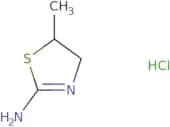
CAS:<p>Versatile small molecule scaffold</p>Formula:C9H13N3OPurity:Min. 95%Molecular weight:179.22 g/mol5-Methyl-4,5-dihydro-1,3-thiazol-2-amine hydrochloride
CAS:<p>Versatile small molecule scaffold</p>Formula:C4H9ClN2SPurity:Min. 95%Molecular weight:152.65 g/mol2-[(2-Aminoethanesulfinyl)sulfanyl]ethan-1-amine dihydrochloride
CAS:<p>Versatile small molecule scaffold</p>Formula:C4H14Cl2N2OS2Purity:Min. 95%Molecular weight:241.2 g/mol2-[2-(Methylsulfanyl)phenyl]acetic acid
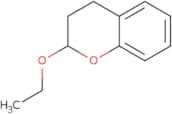
CAS:<p>Versatile small molecule scaffold</p>Formula:C9H10O2SPurity:Min. 95%Molecular weight:182.24 g/mol2-Ethoxy-3,4-dihydro-2H-1-benzopyran
CAS:<p>2-Ethoxy-3,4-dihydro-2H-1-benzopyran is a reagent that can be used for the preparation of various compounds. It is often used as a source of hydride transfer in enzymatic assays. 2-Ethoxy-3,4-dihydro-2H-1-benzopyran reacts with alkyl halides and acetonitrile to form quaternary ammonium salts and vinyl ethers respectively. The reaction proceeds by hydration, amine addition, or irradiation. This compound can also be used to prepare reactive naphthalenes and amines through an alkylation reaction. The reaction can be carried out at temperatures ranging from -78°C to 100°C.</p>Formula:C11H14O2Purity:Min. 95%Molecular weight:178.23 g/molDimethyl Acetylsuccinate
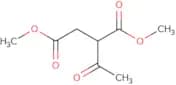
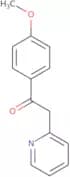
CAS:<p>Dimethyl Acetylsuccinate is a chemical compound that is used as an antiretroviral agent. It has been shown to be effective in the treatment of HIV-infected individuals with significant cytotoxicity and long-term efficacy. Dimethyl Acetylsuccinate is also used for the treatment of bowel diseases, such as ulcerative colitis and Crohn's disease, by reducing inflammation in the gut. This drug was found to be effective at removing reactive oxygen species from wastewater during its use as a coagulant in water treatment plants. Dimethyl Acetylsuccinate is not active against infectious diseases such as tuberculosis or malaria, but it does have some activity against influenza virus.</p>Formula:C8H12O5Purity:Min. 95%Molecular weight:188.18 g/mol1-(4-Methoxyphenyl)-2-(pyridin-2-yl)ethan-1-one
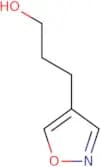
CAS:<p>Versatile small molecule scaffold</p>Formula:C14H13NO2Purity:Min. 95%Molecular weight:227.26 g/mol3-Isoxazol-4-ylpropan-1-ol
CAS:<p>Versatile small molecule scaffold</p>Formula:C6H9NO2Purity:Min. 95%Molecular weight:127.14 g/molN,N'-Diethyl-6-hydrazino-[1,3,5]triazine-2,4-diamine
CAS:<p>Versatile small molecule scaffold</p>Formula:C7H15N7Purity:Min. 95%Molecular weight:197.24 g/mol3-Oxaspiro[5.5]undecane-9-carboxylic acid
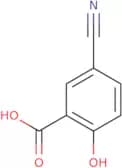
CAS:<p>Versatile small molecule scaffold</p>Formula:C11H18O3Purity:Min. 95%Molecular weight:198.26 g/mol5-Cyano-2-hydroxybenzoic acid
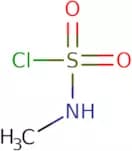
CAS:<p>Versatile small molecule scaffold</p>Formula:C8H5NO3Purity:Min. 95%Molecular weight:163.13 g/molMesulfamoyl chloride
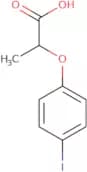
CAS:<p>Mesulfamoyl chloride is a sulphamic acid derivative that acts as an inhibitor of the enzyme sulphotransferase, which is involved in the conversion of sulphamates to sulphones. It has been used in clinical studies for the treatment of cancer and infectious diseases such as hepatitis. Mesulfamoyl chloride has been shown to be effective against oestrone sulphatase and serine proteases, which are enzymes that can lead to cell proliferation.</p>Formula:CH4ClNO2SPurity:Min. 95%Color and Shape:Clear LiquidMolecular weight:129.57 g/mol(2S)-2-(4-Iodophenoxy)propanoic acid
CAS:<p>Versatile small molecule scaffold</p>Formula:C9H9IO3Purity:Min. 95%Molecular weight:292.07 g/mol

![8-Fluoroimidazo[1,5-a]pyridine-3-carboxylic acid](/_next/image/?url=https%3A%2Fstatic.cymitquimica.com%2Fproducts%2F3D%2Fthumb-webp%2FJWB83084.webp&w=3840&q=75)
![7-Chloroimidazo[1,5-a]pyridine-3-carboxylic acid](/_next/image/?url=https%3A%2Fstatic.cymitquimica.com%2Fproducts%2F3D%2Fthumb-webp%2FJWB83091.webp&w=3840&q=75)
![8-Bromoimidazo[1,2-a]pyridine-3-carboxylic acid](/_next/image/?url=https%3A%2Fstatic.cymitquimica.com%2Fproducts%2F3D%2Fthumb-webp%2FJWB83104.webp&w=3840&q=75)
![1-[(tert-butoxy)carbonyl]-4-(1H-pyrazol-1-yl)piperidine-4-carboxylic acid](/_next/image/?url=https%3A%2Fstatic.cymitquimica.com%2Fproducts%2F3D%2Fthumb-webp%2FJWB83539.webp&w=3840&q=75)
![1-(Benzo[D]oxazol-2-yl)cyclopropanamine](/_next/image/?url=https%3A%2Fstatic.cymitquimica.com%2Fproducts%2F3D%2Fthumb-webp%2FJWB87836.webp&w=3840&q=75)
![2-(Methoxymethyl)-5H,6H,7H,8H-pyrido[4,3-d]pyrimidine](/_next/image/?url=https%3A%2Fstatic.cymitquimica.com%2Fproducts%2F3D%2Fthumb-webp%2FJWB88254.webp&w=3840&q=75)
![2-[(2-Aminoethanesulfinyl)sulfanyl]ethan-1-amine dihydrochloride](/_next/image/?url=https%3A%2Fstatic.cymitquimica.com%2Fproducts%2F3D%2Fthumb-webp%2FKAA41685.webp&w=3840&q=75)
![2-[2-(Methylsulfanyl)phenyl]acetic acid](/_next/image/?url=https%3A%2Fstatic.cymitquimica.com%2Fproducts%2F3D%2Fthumb-webp%2FKAA41934.webp&w=3840&q=75)
![N,N'-Diethyl-6-hydrazino-[1,3,5]triazine-2,4-diamine](/_next/image/?url=https%3A%2Fstatic.cymitquimica.com%2Fproducts%2F3D%2Fthumb-webp%2FKAA42198.webp&w=3840&q=75)
![3-Oxaspiro[5.5]undecane-9-carboxylic acid](/_next/image/?url=https%3A%2Fstatic.cymitquimica.com%2Fproducts%2F3D%2Fthumb-webp%2FKAA42885.webp&w=3840&q=75)