Building Blocks
This section contains fundamental products for the synthesis of organic and biological compounds. Building blocks are the essential starting materials used to construct complex molecules through various chemical reactions. They play a critical role in drug discovery, material science, and chemical research. At CymitQuimica, we offer a diverse range of high-quality building blocks to support your innovative research and industrial projects, ensuring you have the essential components for successful synthesis.
Subcategories of "Building Blocks"
- Boronic Acids & Boronic Acid Derivatives(5,778 products)
- Chiral Building Blocks(1,242 products)
- Hydrocarbon Building Blocks(6,098 products)
- Organic Building Blocks(61,098 products)
Found 199594 products of "Building Blocks"
Sort by
Purity (%)
0
100
|
0
|
50
|
90
|
95
|
100
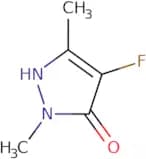
4-Fluoro-1,3-dimethyl-1H-pyrazol-5-ol
CAS:<p>Versatile small molecule scaffold</p>Formula:C5H7FN2OPurity:Min. 95%Molecular weight:130.12 g/mol3-(Ethoxymethyl)aniline
CAS:Versatile small molecule scaffoldFormula:C9H13NOPurity:Min. 95%Molecular weight:151.21 g/mol3-[(Hexyloxy)methyl]aniline
CAS:<p>Versatile small molecule scaffold</p>Formula:C13H21NOPurity:Min. 95%Molecular weight:207.31 g/mol2-[[(1,1-Dimethylethyl)dimethylsilyl]oxy]phenol
CAS:<p>Versatile small molecule scaffold</p>Formula:C12H20O2SiPurity:Min. 95%Molecular weight:224.37 g/mol2-{[(Pyridin-2-yl)methyl]sulfanyl}ethan-1-ol
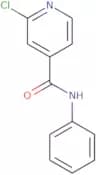
CAS:<p>Versatile small molecule scaffold</p>Formula:C8H11NOSPurity:Min. 95%Molecular weight:169.25 g/mol2-Chloro-N-phenylisonicotinamide
CAS:<p>Versatile small molecule scaffold</p>Formula:C12H9ClN2OPurity:Min. 95%Molecular weight:232.67 g/mol3,6-Dimethyl-2-sulfanyl-3,4-dihydroquinazolin-4-one
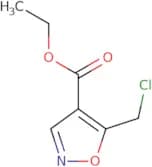
CAS:<p>Versatile small molecule scaffold</p>Formula:C10H10N2OSPurity:Min. 95%Molecular weight:206.3 g/molEthyl 5-(chloromethyl)-1,2-oxazole-4-carboxylate
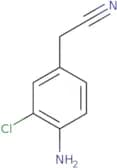
CAS:<p>Versatile small molecule scaffold</p>Formula:C7H8ClNO3Purity:Min. 95%Molecular weight:189.59 g/mol2-(4-Amino-3-chlorophenyl)acetonitrile
CAS:<p>Versatile small molecule scaffold</p>Formula:C8H7ClN2Purity:Min. 95%Molecular weight:166.61 g/mol(4-Chloro-1H-pyrazol-1-yl)methanol
CAS:<p>Versatile small molecule scaffold</p>Formula:C4H5ClN2OPurity:Min. 95%Molecular weight:132.55 g/mol4-[(1H-Pyrazol-1-yl)methyl]phenol
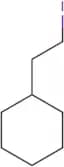
CAS:<p>4-[(1H-Pyrazol-1-yl)methyl]phenol (4PMP) is an inhibitor of dopamine beta-hydroxylase that has been studied in assays with dopamine and noradrenaline. It has been shown to activate both noradrenaline and dopamine receptors, and can be used as a tool for the study of blood pressure regulation. 4PMP also increases reactive oxygen species production, which may be due to its ability to react with cyanide ions. The binding of 4PMP to the enzyme is reversible and competitive. The pH profile of 4PMP has also been studied, with a range from 2 to 5.4. Kinetic studies have shown that the reaction rate for 4PMP is best described by a Michaelis-Menten kinetic model, with a Km value of 0.03 mM and Vmax value of 9.3 μM/min for dopamine β-hydroxylase inhibition. There are</p>Formula:C10H10N2OPurity:Min. 95%Molecular weight:174.2 g/mol(2-Iodoethyl)cyclohexane
CAS:<p>Versatile small molecule scaffold</p>Formula:C8H15IPurity:Min. 95%Molecular weight:238.11 g/mol3-(Cyclopentylsulfonyl)aniline
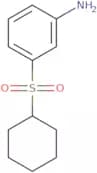
CAS:<p>Versatile small molecule scaffold</p>Formula:C11H15NO2SPurity:Min. 95%Molecular weight:225.31 g/mol3-(Cyclohexanesulfonyl)aniline
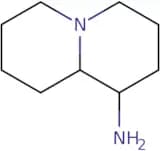
CAS:<p>Versatile small molecule scaffold</p>Formula:C12H17NO2SPurity:Min. 95%Molecular weight:239.34 g/molOctahydro-1H-quinolizin-1-amine
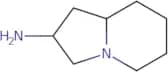
CAS:<p>Versatile small molecule scaffold</p>Formula:C9H18N2Purity:Min. 95%Molecular weight:154.25 g/molOctahydroindolizin-2-amine
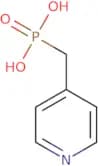
CAS:<p>Versatile small molecule scaffold</p>Formula:C8H16N2Purity:Min. 95%Molecular weight:140.23 g/mol4-Pyridylmethylphosphonic acid
CAS:<p>4-Pyridylmethylphosphonic acid is an inorganic compound that is a ligand for the metal Ruthenium. It is used in organic synthesis as a photosensitizer and a potentiometric titrant. The ligand binds to the metal through one or more of its oxygen atoms, forming a coordination complex. The bond cleavage reaction occurs when the molecule absorbs light of sufficient energy, causing it to break into two parts. 4-Pyridylmethylphosphonic acid is not very soluble in water and is therefore used as an electrolyte in potentiometric titrations. The pH of the solution will change depending on the concentration of the acid. 4-Pyridylmethylphosphonic acid can also be used as a catalyst for certain organic reactions such as esterification and transesterification reactions.</p>Formula:C6H8NO3PPurity:Min. 95%Molecular weight:173.11 g/mol4-Cyano-1H-pyrrole-2-carboxylic acid
CAS:<p>4-Cyano-1H-pyrrole-2-carboxylic acid is a small molecule that has been shown to have potent anti-cancer activity in animal models. It can induce the proliferation of human epidermal progenitor cells and the growth of tumor cells in culture. Animal studies have demonstrated that 4-cyano-1H-pyrrole-2-carboxylic acid enhances the infiltration of microglia and csf-1 receptor expression in brain tumors, leading to an increase in microglial activation. This agent also interacts with cancer cell factor receptor, enhancing its function and leading to increased infiltration of tumor cells by microglia.</p>Formula:C6H4N2O2Purity:Min. 95%Molecular weight:136.11 g/molEthyl 2-cycloheptylacetate
CAS:<p>Ethyl 2-cycloheptylacetate is an organic compound with the formula CH3CH2C6H11CH2CO2Et. It is a colorless liquid which is soluble in water and ether, but not in most common organic solvents. It has been shown to be effective in inhibiting the development of atherosclerosis in mice by interfering with cholesterol synthesis. In addition, it has been shown to inhibit the proliferation of vascular smooth muscle cells and to alter their gene expression profile. The compound also inhibits angiotensin II-induced hypertension, as well as norepinephrine-induced vasoconstriction and platelet aggregation.</p>Formula:C11H20O2Purity:Min. 95%Molecular weight:184.28 g/molEthyl 3-ethylpentanoate
CAS:<p>Versatile small molecule scaffold</p>Formula:C9H18O2Purity:Min. 95%Molecular weight:158.24 g/mol


![3-[(Hexyloxy)methyl]aniline](/_next/image/?url=https%3A%2Fstatic.cymitquimica.com%2Fproducts%2F3D%2Fthumb-webp%2FFDA17200.webp&w=3840&q=75)
![2-[[(1,1-Dimethylethyl)dimethylsilyl]oxy]phenol](/_next/image/?url=https%3A%2Fstatic.cymitquimica.com%2Fproducts%2F3D%2Fthumb-webp%2FFDA18046.webp&w=3840&q=75)
![2-{[(Pyridin-2-yl)methyl]sulfanyl}ethan-1-ol](/_next/image/?url=https%3A%2Fstatic.cymitquimica.com%2Fproducts%2F3D%2Fthumb-webp%2FFDA19191.webp&w=3840&q=75)

![4-[(1H-Pyrazol-1-yl)methyl]phenol](/_next/image/?url=https%3A%2Fstatic.cymitquimica.com%2Fproducts%2F3D%2Fthumb-webp%2FFDA20009.webp&w=3840&q=75)