


Building Blocks
This section contains fundamental products for the synthesis of organic and biological compounds. Building blocks are the essential starting materials used to construct complex molecules through various chemical reactions. They play a critical role in drug discovery, material science, and chemical research. At CymitQuimica, we offer a diverse range of high-quality building blocks to support your innovative research and industrial projects, ensuring you have the essential components for successful synthesis.
Subcategories of "Building Blocks"
- Boronic Acids & Boronic Acid Derivatives(5,756 products)
- Chiral Building Blocks(1,242 products)
- Hydrocarbon Building Blocks(6,095 products)
- Organic Building Blocks(61,038 products)
Found 196817 products of "Building Blocks"
Sort by
Purity (%)
0
100
|
0
|
50
|
90
|
95
|
100
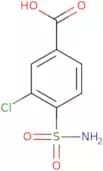
3-Chloro-4-sulfamoylbenzoic acid
CAS:<p>Versatile small molecule scaffold</p>Formula:C7H6ClNO4SPurity:Min. 95%Molecular weight:235.65 g/mol3-Ethoxy-1,2-benzothiazole
CAS:<p>Versatile small molecule scaffold</p>Formula:C9H9NOSPurity:Min. 95%Molecular weight:179.24 g/mol1-[4-(2-Propynyloxy)phenyl]-1-ethanone
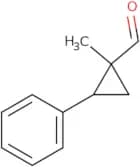
CAS:<p>1-[4-(2-Propynyloxy)phenyl]-1-ethanone is a quinine derivative with a bathochromic shift. It has been shown to undergo cycloadditions, photophysical, and supramolecular reactions in the presence of other molecules. 1-[4-(2-Propynyloxy)phenyl]-1-ethanone shows luminescent properties under optical microscopy and shifts from red to blue when it is irradiated. The compound can also be used as an optical probe for studying the mechanism of drug release in vitro.</p>Formula:C11H10O2Purity:Min. 95%Molecular weight:174.2 g/molrac-(1R,2S)-1-Methyl-2-phenylcyclopropane-1-carbaldehyde
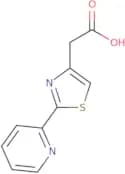
CAS:<p>Versatile small molecule scaffold</p>Formula:C11H12OPurity:Min. 95%Molecular weight:160.21 g/mol(2-Pyridin-2-yl-thiazol-4-yl)-acetic acid
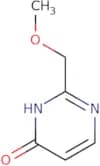
CAS:<p>Versatile small molecule scaffold</p>Formula:C10H8N2O2SPurity:Min. 95%Molecular weight:220.25 g/mol2-(Methoxymethyl)-1,4-dihydropyrimidin-4-one
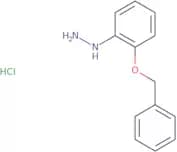
CAS:<p>Versatile small molecule scaffold</p>Formula:C6H8N2O2Purity:Min. 95%Molecular weight:140.14 g/mol(2-Benzyloxy-phenyl)-hydrazine Hydrochloride
CAS:<p>Versatile small molecule scaffold</p>Formula:C13H15ClN2OPurity:Min. 95%Molecular weight:250.72 g/molN-[2-(Benzyloxy)phenyl]acetamide
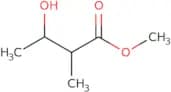
CAS:<p>Versatile small molecule scaffold</p>Formula:C15H15NO2Purity:Min. 95%Molecular weight:241.28 g/molMethyl 3-hydroxy-2-methylbutanoate
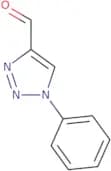
CAS:<p>Methyl 3-hydroxy-2-methylbutanoate is a chiral compound that can be found in wine. The enantiomers of this compound can be distinguished using a variety of analytical methods. These include chromatographic methods, such as the use of postharvest and solid phase microextraction to separate isomers, as well as spectrometric and mass spectrometric analysis. Methyl 3-hydroxy-2-methylbutanoate has been detected in wines by these methods and is believed to contribute to wine flavor.</p>Formula:C6H12O3Purity:Min. 95%Color and Shape:Clear LiquidMolecular weight:132.16 g/mol1-Phenyl-1H-1,2,3-triazole-4-carbaldehyde
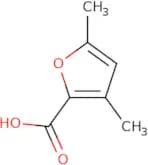
CAS:<p>1-Phenyl-1H-1,2,3-triazole-4-carbaldehyde (phenyltriazole) is a heterocyclic compound that has been synthesized as a potential drug for the treatment of malaria. The equilibrium between the two isomers is controlled by the rate of thermal isomerization. The dimethyl sulfoxide and nitrile functional groups are responsible for this process. Phenyltriazole has been shown to have antiplasmodial activity in vitro against parasites resistant to chloroquine and pyrimethamine, as well as in vivo against chloroquine resistant strains. This molecule also inhibits growth of Mycobacterium tuberculosis in cell culture and has been shown to be effective against other bacterial strains that are resistant to standard antibiotics. Phenyltriazole binds to DNA gyrase, an enzyme involved in DNA replication and repair, which results in inhibition of RNA synthesis and protein synthesis, leading</p>Formula:C9H7N3OPurity:Min. 95%Molecular weight:173.17 g/mol3,5-Dimethylfuran-2-carboxylic acid
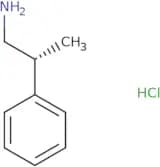
CAS:<p>Versatile small molecule scaffold</p>Formula:C7H8O3Purity:Min. 95%Molecular weight:140.14 g/mol(R)-(+)-β-Methylphenethylamine hydrochloride
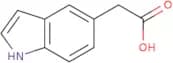
CAS:Controlled Product<p>Versatile small molecule scaffold</p>Formula:C9H13N•HClPurity:Min. 95%Molecular weight:171.67 g/mol2-(1H-Indol-5-yl)acetic acid
CAS:<p>2-(1H-Indol-5-yl)acetic acid is a lipogenic agent that is used in the treatment of cancer. It binds to nuclear hormone receptors, which regulate lipid biosynthesis. 2-(1H-Indol-5-yl)acetic acid has been shown to inhibit the growth of human bladder cancer cells and increase the uptake of fatty acids by these cells. This agent also has anti-inflammatory properties and causes an increase in reactive oxygen species in microglia, which are immune system cells found in the brain. 2-(1H-Indol-5-yl)acetic acid has been shown to have cytotoxic effects on mammalian cells, but not on bacteria or yeast. 2-(1H-Indol-5-yl)acetic acid may be administered intravenously or intraperitoneally.</p>Formula:C10H9NO2Purity:Min. 95%Molecular weight:175.18 g/mol5-Oxaspiro[2.4]heptane-4,6-dione
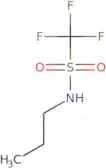
CAS:<p>5-Oxaspiro[2.4]heptane-4,6-dione is an organic compound that has been synthesized by irradiating styrene with light. It has a molecular formula of C7H12O3 and a molar mass of 150.17 g/mol. The compound exists in two isomers, the cis and trans isomers, which have different optical properties that can be observed when it is irradiated with light. 5-Oxaspiro[2.4]heptane-4,6-dione has been shown to be reactive in many different ways; for example, it can modulate the activity of other compounds or transfer hydrogen atoms from one molecule to another. The compound also participates in stereospecific reactions, where the orientation of bonds affects the reactivity of the molecule. 5-Oxaspiro[2.4]heptane-4,6-dione has a five membered ring that resembles the</p>Formula:C6H6O3Purity:Min. 95%Molecular weight:126.11 g/mol1,1,1-Trifluoro-N-propylmethanesulfonamide
CAS:<p>Versatile small molecule scaffold</p>Formula:C4H8F3NO2SPurity:Min. 95%Molecular weight:191.17 g/molN-Benzyl-N-methylpropanamide
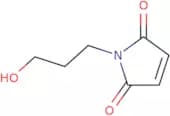
CAS:<p>Versatile small molecule scaffold</p>Formula:C11H15NOPurity:Min. 95%Molecular weight:177.24 g/mol1-(3-Hydroxypropyl)-2,5-dihydro-1H-pyrrole-2,5-dione
CAS:<p>1-(3-Hydroxypropyl)-2,5-dihydro-1H-pyrrole-2,5-dione is a monomer that has been used for the fabrication of polymers. It is a colorless liquid with a boiling point of 109.7°C and a melting point of -37.6°C. It can be reversibly polymerized with formaldehyde to give poly(1-(3-hydroxypropyl)-2,5-dihydro-1H-pyrrole-2,5-dione). The compound can be purified by gel permeation chromatography or recrystallization. 1-(3-Hydroxypropyl)-2,5-dihydro-1H-pyrrole-2,5-dione can also be used as an intermediate in the synthesis of other compounds such as phenoxyacetic acid and methyl 2-(3'-hydroxyphenoxy)</p>Formula:C7H9NO3Purity:Min. 95%Molecular weight:155.15 g/molMal-PEG2-OH
CAS:<p>Mal-PEG2-OH is a PEG polymer categorised as monofunctional (OH-PEG-X). Used as a linker, mal-PEG2-OH is used to attached PEG to proteins, peptides, oligonucleotides, nanoparticles and small molecules via pegylation, a bioconjugation technique.</p>Formula:C8H11NO4Purity:Min. 95%Molecular weight:185.18 g/molN-(2-Methoxyethyl)ethylamine
CAS:<p>N-(2-Methoxyethyl)ethylamine is a chlorinated organic compound that is used as an adsorbent for the removal of chloride ions from wastewater. It can be prepared by reacting ethylamine with chloroform in the presence of a catalytic amount of acetone. The resulting product has a high affinity for chloride ions and has been shown to be effective in removing chloride from water contaminated with chlorinated solvents such as benzene, methyl alcohol, n-hexane, tetrachloride, carbon tetrachloride, and chloroform. N-(2-Methoxyethyl)ethylamine is insoluble in water or organic solvents. It also exhibits good thermal stability at temperatures up to 200°C.</p>Formula:C5H13NOPurity:Min. 95%Molecular weight:103.16 g/mol(4-Chlorophenyl)[4-(trifluoromethyl)phenyl]methanone
CAS:<p>4-Chlorophenyl-[4-(trifluoromethyl)phenyl]methanone (TFMPP) is a psychostimulant drug that binds to the serotonin 5-HT2A receptor. TFMPP has been shown to produce effects in wild-type mice similar to those of amphetamine, but not in mice with the 5-HT2A receptor gene knocked out. The effective dose for TFMPP was determined by measuring the effect on extracellular dopamine levels in rat striatal tissue. TFMPP also inhibits the activity of an enzyme called adenosine deaminase, which breaks down endogenous adenosine. This inhibition leads to increased concentrations of adenosine and allosteric modulator binding at the 5-HT2A receptor site. TFMPP has also been shown to bind to a site on the G protein called Gαi3 and stabilize it, which may explain its ability to inhibit adenosine de</p>Formula:C14H8ClF3OPurity:Min. 95%Molecular weight:284.66 g/mol


![1-[4-(2-Propynyloxy)phenyl]-1-ethanone](/_next/image/?url=https%3A%2Fstatic.cymitquimica.com%2Fproducts%2F3D%2Fthumb-webp%2FJBA26414.webp&w=3840&q=75)
![N-[2-(Benzyloxy)phenyl]acetamide](/_next/image/?url=https%3A%2Fstatic.cymitquimica.com%2Fproducts%2F3D%2Fthumb-webp%2FJBA28819.webp&w=3840&q=75)
![5-Oxaspiro[2.4]heptane-4,6-dione](/_next/image/?url=https%3A%2Fstatic.cymitquimica.com%2Fproducts%2F3D%2Fthumb-webp%2FJBA29944.webp&w=3840&q=75)



![(4-Chlorophenyl)[4-(trifluoromethyl)phenyl]methanone](/_next/image/?url=https%3A%2Fstatic.cymitquimica.com%2Fproducts%2F3D%2Fthumb-webp%2FJBA32831.webp&w=3840&q=75)