Building Blocks
This section contains fundamental products for the synthesis of organic and biological compounds. Building blocks are the essential starting materials used to construct complex molecules through various chemical reactions. They play a critical role in drug discovery, material science, and chemical research. At CymitQuimica, we offer a diverse range of high-quality building blocks to support your innovative research and industrial projects, ensuring you have the essential components for successful synthesis.
Subcategories of "Building Blocks"
- Boronic Acids & Boronic Acid Derivatives(5,756 products)
- Chiral Building Blocks(1,242 products)
- Hydrocarbon Building Blocks(6,095 products)
- Organic Building Blocks(61,055 products)
Found 199650 products of "Building Blocks"
Sort by
Purity (%)
0
100
|
0
|
50
|
90
|
95
|
100
(4-Bromophenyl)(2-fluorophenyl)methanone
CAS:<p>Versatile small molecule scaffold</p>Formula:C13H8BrFOPurity:Min. 95%Molecular weight:279.1 g/mol(4-Chlorophenyl)(2-fluorophenyl)methanone
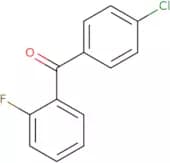
CAS:<p>Versatile small molecule scaffold</p>Formula:C13H8ClFOPurity:Min. 95%Molecular weight:234.65 g/mol1-(Thiophen-2-yl)cyclopentane-1-carbonitrile
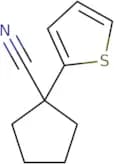
CAS:<p>Versatile small molecule scaffold</p>Formula:C10H11NSPurity:Min. 95%Molecular weight:177.3 g/mol(2-Phenyl-oxazol-4-yl)-methanol
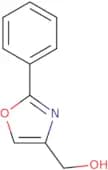
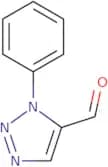
CAS:<p>Versatile small molecule scaffold</p>Formula:C10H9NO2Purity:Min. 95%Molecular weight:175.19 g/mol1-Phenyl-1H-1,2,3-triazole-5-carbaldehyde
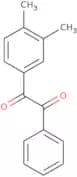
CAS:<p>Versatile small molecule scaffold</p>Formula:C9H7N3OPurity:Min. 95%Molecular weight:173.17 g/mol1-(3,4-Dimethylphenyl)-2-phenylethane-1,2-dione
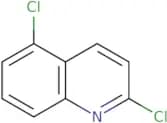
CAS:<p>Versatile small molecule scaffold</p>Formula:C16H14O2Purity:Min. 95%Molecular weight:238.28 g/mol2,5-Dichloroquinoline
CAS:<p>2,5-Dichloroquinoline is an efficient and versatile organic compound that can be used in the synthesis of a variety of different compounds. It is also used as an intermediate in the synthesis of eupolauramine. 2,5-Dichloroquinoline has been synthesized from 2,5-dichloroaniline and ammonia. This chemical has been manufactured in Australia since 1891.</p>Formula:C9H5Cl2NPurity:Min. 95%Molecular weight:198.05 g/molMethyl 2-(dimethylamino)pent-4-enoate
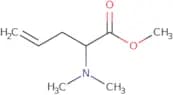
CAS:<p>Methyl 2-(dimethylamino)pent-4-enoate is a chemical compound that is used in organic chemistry as a reagent to convert esters into alcohols. It can also be used to synthesize ammonium salts from amines. Methyl 2-(dimethylamino)pent-4-enoate is typically synthesized by the reaction of benzene and methoxide or phenoxide. The yields are low, with transesterification being the most effective method for converting esters into alcohols. In addition, methyl 2-(dimethylamino)pent-4-enoate reacts with sodium methoxide or phenoxide to produce ammonium salts from amines.<br>Methyl 2-(dimethylamino)pent-4-enoate has no known analogues.</p>Formula:C8H15NO2Purity:Min. 95%Molecular weight:157.21 g/molMethyl thiazole-4-carboxylate
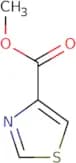
CAS:<p>Methyl thiazole-4-carboxylate is an organic compound that is a derivative of thiabendazole. It is used as a fungicide and insecticide. Methyl thiazole-4-carboxylate binds to the benzene ring of the aromatic hydrocarbon, acetaldehyde, and inhibits its ability to interact with the acetyl group of acetylation. This results in the accumulation of acetaldehyde within cells, which can lead to cancerous growth. Methyl thiazole-4-carboxylate also has anti-inflammatory properties that may be due to its ability to inhibit prostaglandin synthesis.</p>Formula:C5H5NO2SPurity:Min. 95%Molecular weight:143.17 g/mol2-(4-Aminophenyl)propanoic acid
CAS:<p>2-(4-Aminophenyl)propanoic acid (APPA) is an organic compound that is used in the synthesis of other chemicals. It can be synthesized by nitrating 4-aminophenol, which has a phenyl ring and a nucleophilic acetonitrile group. This reaction produces 2-nitrophenol, which can then be reduced to APPA. The nitro groups on APPA are cleaved by dithiothreitol and the reagents are deactivated by endogenous thiolates. Monitoring of these reactions is carried out using kinetic analysis.</p>Formula:C9H11NO2Purity:Min. 95%Molecular weight:165.19 g/mol2-(3-Bromophenyl)propionaldehyde
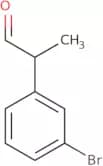
CAS:<p>2-(3-Bromophenyl)propionaldehyde (BPPA) is a nonsteroidal anti-inflammatory drug that has been shown to be effective in animal studies. It is an oxime, which is a class of drugs that are used to reduce inflammation by inhibiting the release of prostaglandins. BPPA also inhibits the formation of amines, such as ethylene and benzonitrile, which are involved in inflammatory reactions. The mechanism of BPPA's anti-inflammatory activity may involve its ability to inhibit the production of hydrochloric acid and other pro-inflammatory agents by reducing oxidative stress.</p>Formula:C9H9BrOPurity:Min. 95%Molecular weight:213.1 g/molSpiro[imidazolidine-4,8'-tricyclo[5.2.1.0,2,6]decane]-2,5-dione
CAS:<p>Versatile small molecule scaffold</p>Formula:C12H16N2O2Purity:Min. 95%Molecular weight:220.27 g/mol4-Chloro-2-(thiophen-2-yl)quinazoline
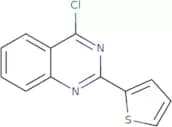
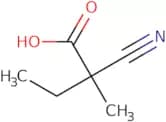
CAS:<p>Versatile small molecule scaffold</p>Formula:C12H7ClN2SPurity:Min. 95%Molecular weight:246.72 g/mol2-Cyano-2-methylbutanoic acid
CAS:Versatile small molecule scaffoldFormula:C6H9NO2Purity:Min. 95%Molecular weight:127.14 g/mol6-Amino-N-phenylhexanamide hydrochloride
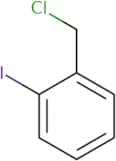
CAS:<p>Versatile small molecule scaffold</p>Formula:C12H19ClN2OPurity:Min. 95%Molecular weight:242.7 g/mol2-Iodobenzyl chloride
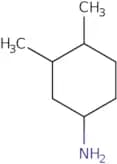
CAS:<p>2-Iodobenzyl chloride is a reactive compound that is used in the synthesis of organic molecules. It reacts with amines to form 2-iodobenzamide, which is an antihistaminic drug. 2-Iodobenzyl chloride can be used to synthesize a variety of compounds, including benzamides, phenols, and other aromatic compounds. The addition of 2-iodobenzyl chloride to dibutyltin oxide creates an organotin halide, which then reacts with chlorides and produces cross-coupling products. This reaction is stereoselective because the two iodines are not exchanged in the same reaction.</p>Formula:IC6H4CH2ClPurity:Min. 95%Molecular weight:252.48 g/mol3,4-Dimethylcyclohexan-1-amine
CAS:<p>Versatile small molecule scaffold</p>Formula:C8H17NPurity:Min. 95%Molecular weight:127.23 g/mol1-(4-tert-Butylphenyl)-2-chloropropan-1-one
CAS:<p>Versatile small molecule scaffold</p>Formula:C13H17ClOPurity:Min. 95%Molecular weight:224.72 g/mol4-[(Propan-2-yl)carbamoyl]butanoic acid
CAS:<p>Versatile small molecule scaffold</p>Formula:C8H15NO3Purity:Min. 95%Molecular weight:173.21 g/mol7-Chloro-2(1H)-quinoxalinone
CAS:<p>Versatile small molecule scaffold</p>Formula:C8H5ClN2OPurity:Min. 95%Molecular weight:180.59 g/mol


![Spiro[imidazolidine-4,8'-tricyclo[5.2.1.0,2,6]decane]-2,5-dione](/_next/image/?url=https%3A%2Fstatic.cymitquimica.com%2Fproducts%2F3D%2Fthumb-webp%2FJCA45506.webp&w=3840&q=75)

![4-[(Propan-2-yl)carbamoyl]butanoic acid](/_next/image/?url=https%3A%2Fstatic.cymitquimica.com%2Fproducts%2F3D%2Fthumb-webp%2FJCA48143.webp&w=3840&q=75)