Building Blocks
This section contains fundamental products for the synthesis of organic and biological compounds. Building blocks are the essential starting materials used to construct complex molecules through various chemical reactions. They play a critical role in drug discovery, material science, and chemical research. At CymitQuimica, we offer a diverse range of high-quality building blocks to support your innovative research and industrial projects, ensuring you have the essential components for successful synthesis.
Subcategories of "Building Blocks"
- Boronic Acids & Boronic Acid Derivatives(5,756 products)
- Chiral Building Blocks(1,242 products)
- Hydrocarbon Building Blocks(6,095 products)
- Organic Building Blocks(61,038 products)
Found 196817 products of "Building Blocks"
Sort by
Purity (%)
0
100
|
0
|
50
|
90
|
95
|
100
2,3-Dimethyl 6-methylpyrazolo[1,5-a]pyridine-2,3-dicarboxylate
CAS:<p>Versatile small molecule scaffold</p>Formula:C12H12N2O4Purity:Min. 95%Molecular weight:248.23 g/mol4-Methyl-1,2,3,4-tetrahydroquinolin-2-one
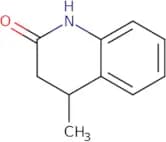
CAS:<p>Versatile small molecule scaffold</p>Formula:C10H11NOPurity:Min. 95%Molecular weight:161.2 g/molMethyl 2-cyano-2-phenylacetate
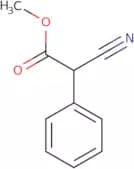
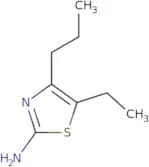
CAS:<p>Methyl 2-cyano-2-phenylacetate is a phthalazinone derivative that is used to treat cardiovascular and neurological disorders. It has been shown to be neuroprotective in animal models of Parkinson's disease. Methyl 2-cyano-2-phenylacetate also has antihypotensive, antianemic, nitro, and antibacterial properties. This drug is soluble in both water and organic solvents and can be administered by injection or orally. Methyl 2-cyano-2-phenylacetate inhibits the synthesis of guanylate cyclase, which produces cyclic guanosine monophosphate (cGMP) from guanosine triphosphate (GTP). cGMP can act as a second messenger for various tissues. The inhibition of cGMP production leads to hypotension and vasodilation.</p>Formula:C10H9NO2Purity:Min. 95%Molecular weight:175.18 g/mol5-Ethyl-4-propyl-1,3-thiazol-2-amine
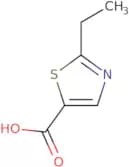
CAS:<p>Versatile small molecule scaffold</p>Formula:C8H14N2SPurity:Min. 95%Molecular weight:170.28 g/mol2-Ethyl-1,3-thiazole-5-carboxylic acid
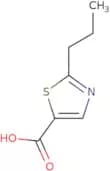
CAS:<p>Versatile small molecule scaffold</p>Formula:C6H7NO2SPurity:Min. 95%Molecular weight:157.19 g/mol2-Propylthiazole-5-carboxylic acid
CAS:<p>2-Propylthiazole-5-carboxylic acid (2PTZ) is a fluorescent probe that is used in diagnostic and research applications. This compound is a substrate for the dehydrogenase enzyme, which catalyzes its oxidation to 2-propylthiazolidine-4,5-dione. 2PTZ is used for the measurement of plasma proteins and tissues after myocardial infarction. It can be used as a marker of oxidative damage caused by ischaemic injury in rat ligation experiments. The fluorescence intensity of 2PTZ increases with the degree of oxidative damage.</p>Formula:C7H9NO2SPurity:Min. 95%Molecular weight:171.22 g/mol2-Butyl-1,3-thiazole-5-carboxylic acid
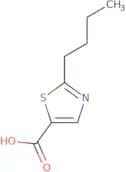
CAS:<p>Versatile small molecule scaffold</p>Formula:C8H11NO2SPurity:Min. 95%Molecular weight:185.25 g/mol9-Methyl-9H-purine-2,6-diamine
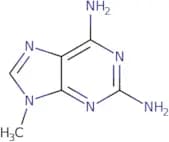
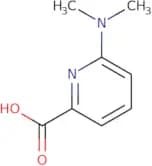
CAS:<p>Versatile small molecule scaffold</p>Formula:C6H8N6Purity:Min. 95%Molecular weight:164.17 g/mol6-(Dimethylamino)-2-pyridinecarboxylic acid
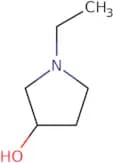
CAS:<p>Versatile small molecule scaffold</p>Formula:C8H10N2O2Purity:Min. 95%Molecular weight:166.18 g/mol1-Ethyl-3-pyrrolidinol
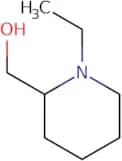
CAS:<p>1-Ethyl-3-pyrrolidinol is an organic compound belonging to the class of zwitterionic compounds. It has a molecular weight of 210.24 g/mol and two chiral centers. It is soluble in water, methanol, ethanol, acetone and benzene but insoluble in ether and hexane. 1-Ethyl-3-pyrrolidinol can be synthesized by reacting 4-hydroxybenzaldehyde with ammonia and ethyl bromide in the presence of sodium ethoxide. The compound is used as a reagent for organic synthesis, specifically for converting ketones into esters or amides. It reacts with aldehydes to form esters or with acid chlorides to form amides.</p>Formula:C6H13NOPurity:Min. 95%Molecular weight:115.17 g/mol(1-Ethyl-2-piperidinyl)methanol
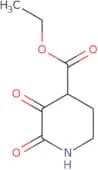
CAS:<p>Versatile small molecule scaffold</p>Formula:C8H17NOPurity:Min. 95%Molecular weight:143.23 g/molEthyl 2,3-dioxopiperidine-4-carboxylate
CAS:<p>Versatile small molecule scaffold</p>Formula:C8H11NO4Purity:Min. 95%Molecular weight:185.18 g/mol4-Oxo-4-[4-(pentyloxy)phenyl]butanoic acid
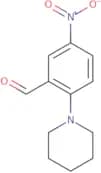
CAS:<p>Versatile small molecule scaffold</p>Formula:C15H20O4Purity:Min. 95%Molecular weight:264.32 g/mol5-Nitro-2-piperidinobenzenecarbaldehyde
CAS:<p>5-Nitro-2-piperidinobenzenecarbaldehyde (NPCA) is a synthetic, piperidine substituted aldehyde that can be used as an intermediate in the synthesis of semicarbazide, hydrazine and polyphosphoric acid. NPCA is also an excellent reagent for the production of substituted carbonyls. The substitution pattern on NPCA is dependent on the reaction conditions and substituent groups. NPCA has a conformation that is related to the aromatic ring system. This product has been shown to react with ketones to form substituted piperidines.</p>Formula:C12H14N2O3Purity:Min. 95%Molecular weight:234.25 g/mol1-(2,4,5-Trifluorophenyl)propan-2-one
CAS:<p>Versatile small molecule scaffold</p>Formula:C9H7F3OPurity:Min. 95%Molecular weight:188.15 g/mol1-(4-Chloro-2-fluorophenyl)propan-2-one
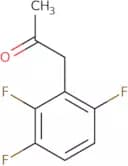
CAS:Versatile small molecule scaffoldFormula:C9H8ClFOPurity:Min. 95%Molecular weight:186.61 g/mol1-(2,3,6-Trifluorophenyl)propan-2-one
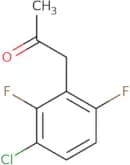
CAS:Versatile small molecule scaffoldFormula:C9H7F3OPurity:Min. 95%Molecular weight:188.15 g/mol1-(3-Chloro-2,6-difluorophenyl)propan-2-one
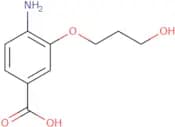
CAS:<p>Versatile small molecule scaffold</p>Formula:C9H7ClF2OPurity:Min. 95%Molecular weight:204.6 g/mol4-Amino-3-(3-hydroxypropoxy)benzoic acid
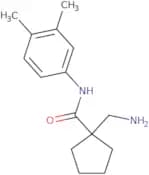
CAS:<p>Versatile small molecule scaffold</p>Formula:C10H13NO4Purity:Min. 95%Molecular weight:211.21 g/mol1-(Aminomethyl)-N-(3,4-dimethylphenyl)cyclopentane-1-carboxamide
CAS:<p>Versatile small molecule scaffold</p>Formula:C15H22N2OPurity:Min. 95%Molecular weight:246.35 g/mol
![2,3-Dimethyl 6-methylpyrazolo[1,5-a]pyridine-2,3-dicarboxylate](/_next/image/?url=https%3A%2Fstatic.cymitquimica.com%2Fproducts%2F3D%2Fthumb-webp%2FFBA68996.webp&w=3840&q=75)

![4-Oxo-4-[4-(pentyloxy)phenyl]butanoic acid](/_next/image/?url=https%3A%2Fstatic.cymitquimica.com%2Fproducts%2F3D%2Fthumb-webp%2FFBA74205.webp&w=3840&q=75)