Building Blocks
This section contains fundamental products for the synthesis of organic and biological compounds. Building blocks are the essential starting materials used to construct complex molecules through various chemical reactions. They play a critical role in drug discovery, material science, and chemical research. At CymitQuimica, we offer a diverse range of high-quality building blocks to support your innovative research and industrial projects, ensuring you have the essential components for successful synthesis.
Subcategories of "Building Blocks"
- Boronic Acids & Boronic Acid Derivatives(5,778 products)
- Chiral Building Blocks(1,242 products)
- Hydrocarbon Building Blocks(6,098 products)
- Organic Building Blocks(61,034 products)
Found 199601 products of "Building Blocks"
Sort by
Purity (%)
0
100
|
0
|
50
|
90
|
95
|
100
7-chloroimidazo[1,2-c]pyrimidin-5(6h)-one
CAS:<p>Versatile small molecule scaffold</p>Formula:C6H4ClN3OPurity:Min. 95%Molecular weight:169.57 g/mol7-Chloro-1-hydroxynaphthalene
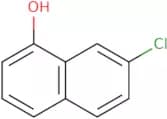
CAS:7-Chloro-1-hydroxynaphthalene is a polycyclic aromatic hydrocarbon. It has been used to synthesize triazenes and solid phase polymers. 7-Chloro-1-hydroxynaphthalene is insoluble in the solvents used for most chemical reactions, but can be dissolved with tosyl chloride or arynes. It has been shown that substituents on the benzene ring have an effect on reactivity and lifetime. The substitution pattern of 7-chloro-1-hydroxynaphthalene affects its reactivity as well as other properties such as solubility, melting point, boiling point, density, and viscosity.Formula:C10H7ClOPurity:Min. 95%Molecular weight:178.62 g/mol2,3,4-Triiodo-1H-pyrrole
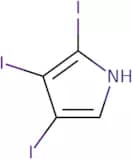
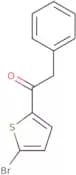
CAS:<p>2,3,4-Triiodo-1H-pyrrole is a model compound that is used to study the reactivity of the functional groups on the molecule. The functional groups include an olefinic group (double bond) and a carbonyl group (single bond). The reactivity of these functional groups depends on their position in the molecule. If they are on adjacent carbon atoms, they will have similar reactivity. This model compound is classified as a reductant because it can be reduced by glutathione and other reductants. It has been shown that 2,3,4-Triiodo-1H-pyrrole can be synthesized from salicylic acid and lead iodide in a reaction with catalytic amounts of sodium borohydride.</p>Formula:C4H2I3NPurity:Min. 95%Molecular weight:444.78 g/mol1-(5-Bromothiophen-2-yl)-2-phenylethan-1-one
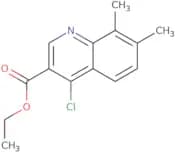
CAS:Versatile small molecule scaffoldFormula:C12H9BrOSPurity:Min. 95%Molecular weight:281.17 g/molEthyl 4-Chloro-7,8-dimethylquinoline-3-carboxylate
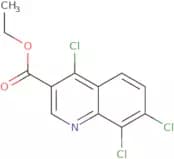
CAS:<p>Versatile small molecule scaffold</p>Formula:C14H14NO2ClPurity:Min. 95%Molecular weight:263.71 g/molEthyl 4,7,8-trichloroquinoline-3-carboxylate
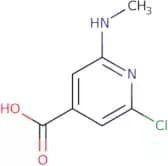
CAS:<p>Versatile small molecule scaffold</p>Formula:C12H8Cl3NO2Purity:Min. 95%Molecular weight:304.6 g/mol2-Chloro-6-(methylamino)pyridine-4-carboxylic acid
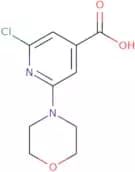
CAS:<p>Versatile small molecule scaffold</p>Formula:C7H7ClN2O2Purity:Min. 95%Molecular weight:186.59 g/mol2-Chloro-6-(morpholin-4-yl)pyridine-4-carboxylic acid
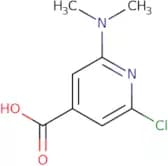
CAS:<p>Versatile small molecule scaffold</p>Formula:C10H11ClN2O3Purity:Min. 95%Molecular weight:242.66 g/mol2-Chloro-6-(dimethylamino)pyridine-4-carboxylic acid
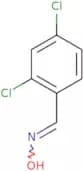
CAS:<p>Versatile small molecule scaffold</p>Formula:C8H9ClN2O2Purity:Min. 95%Molecular weight:200.62 g/mol2,4-Dichlorobenzaldoxime
CAS:<p>2,4-Dichlorobenzaldoxime is a molecule that contains two oxime groups, one of which has been stabilized by the formation of a hydrogen bond. The 2,4-dichlorobenzaldoxime isomer is centrosymmetric and can be stabilized in the solid state by dimerization.</p>Formula:C7H5Cl2NOPurity:Min. 95%Molecular weight:190.02 g/mol4-Chloro-2-ethylthieno[2,3-d]pyrimidine
CAS:<p>Versatile small molecule scaffold</p>Formula:C8H7ClN2SPurity:Min. 95%Molecular weight:198.67 g/mol4-Chloro-6-nitrothieno[2,3-d]pyrimidine
CAS:<p>Versatile small molecule scaffold</p>Formula:C6H2ClN3O2SPurity:Min. 95%Molecular weight:215.62 g/mol2-Ethyl-3H,4H-thieno[2,3-d]pyrimidin-4-one
CAS:<p>Versatile small molecule scaffold</p>Formula:C8H8N2OSPurity:Min. 95%Molecular weight:180.23 g/mol6-Bromothieno[2,3-d]pyrimidin-4(3h)-one
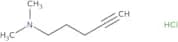
CAS:<p>Versatile small molecule scaffold</p>Formula:C6H3BrN2OSPurity:Min. 95%Molecular weight:231.07 g/molDimethyl(pent-4-yn-1-yl)amine hydrochloride
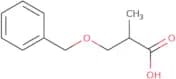
CAS:<p>Versatile small molecule scaffold</p>Formula:C7H14ClNPurity:Min. 95%Molecular weight:147.64 g/mol3-(Benzyloxy)-2-methylpropanoic acid
CAS:<p>3-(Benzyloxy)-2-methylpropanoic acid is a benzyloxymethyl derivative that reacts with formic acid to produce a hydroxypropionitrile. It is used in the industrial production of formic acid and as an intermediate in the synthesis of other organic compounds. 3-(Benzyloxy)-2-methylpropanoic acid can be reduced by sodium borohydride to give cyclopropane carboxylic acid, which can then be oxidized to cyclohexanone. The reduction reaction also results in debenzylation of the molecule, with subsequent preparation methods involving esterification or hydrolysis.</p>Formula:C11H14O3Purity:Min. 95%Molecular weight:194.23 g/molMethyl 4-(2-bromoethoxy)benzenecarboxylate
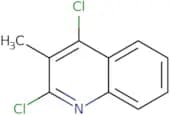
CAS:<p>Methyl 4-(2-bromoethoxy)benzenecarboxylate is a histamine receptor antagonist that has been shown to be active at the histamine H3 receptor. Methyl 4-(2-bromoethoxy)benzenecarboxylate can be used to treat depression and other disorders related to histamine, such as allergic reactions. This drug has also been shown to inhibit serotonin reuptake by acting on the serotonin transporter, thereby increasing serotonin levels in the brain. Methyl 4-(2-bromoethoxy)benzenecarboxylate is an effective drug for the treatment of depression with few side effects.</p>Formula:C10H11BrO3Purity:Min. 95%Molecular weight:259.1 g/mol2,4-dichloro-3-methylquinoline
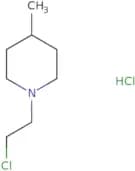
CAS:<p>Versatile small molecule scaffold</p>Formula:C10H7Cl2NPurity:Min. 95%Molecular weight:212.08 g/mol1-(2-Chloroethyl)-4-methylpiperidine hydrochloride
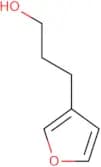
CAS:<p>Versatile small molecule scaffold</p>Formula:C8H17Cl2NPurity:Min. 95%Molecular weight:198.13 g/mol3-(Furan-3-yl)propan-1-ol
CAS:<p>Versatile small molecule scaffold</p>Formula:C7H10O2Purity:Min. 95%Molecular weight:126.15 g/mol
![7-chloroimidazo[1,2-c]pyrimidin-5(6h)-one](/_next/image/?url=https%3A%2Fstatic.cymitquimica.com%2Fproducts%2F3D%2Fthumb-webp%2FGCA81709.webp&w=3840&q=75)

![4-Chloro-2-ethylthieno[2,3-d]pyrimidine](/_next/image/?url=https%3A%2Fstatic.cymitquimica.com%2Fproducts%2F3D%2Fthumb-webp%2FGCA84411.webp&w=3840&q=75)
![4-Chloro-6-nitrothieno[2,3-d]pyrimidine](/_next/image/?url=https%3A%2Fstatic.cymitquimica.com%2Fproducts%2F3D%2Fthumb-webp%2FGCA84413.webp&w=3840&q=75)
![2-Ethyl-3H,4H-thieno[2,3-d]pyrimidin-4-one](/_next/image/?url=https%3A%2Fstatic.cymitquimica.com%2Fproducts%2F3D%2Fthumb-webp%2FGCA84439.webp&w=3840&q=75)
![6-Bromothieno[2,3-d]pyrimidin-4(3h)-one](/_next/image/?url=https%3A%2Fstatic.cymitquimica.com%2Fproducts%2F3D%2Fthumb-webp%2FGCA84440.webp&w=3840&q=75)