Building Blocks
This section contains fundamental products for the synthesis of organic and biological compounds. Building blocks are the essential starting materials used to construct complex molecules through various chemical reactions. They play a critical role in drug discovery, material science, and chemical research. At CymitQuimica, we offer a diverse range of high-quality building blocks to support your innovative research and industrial projects, ensuring you have the essential components for successful synthesis.
Subcategories of "Building Blocks"
- Boronic Acids & Boronic Acid Derivatives(5,756 products)
- Chiral Building Blocks(1,242 products)
- Hydrocarbon Building Blocks(6,095 products)
- Organic Building Blocks(61,051 products)
Found 199813 products of "Building Blocks"
Sort by
Purity (%)
0
100
|
0
|
50
|
90
|
95
|
100
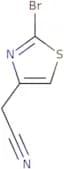
2-(2-Bromo-1,3-thiazol-4-yl)acetonitrile
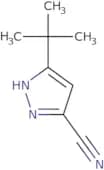
CAS:<p>Versatile small molecule scaffold</p>Formula:C5H3BrN2SPurity:Min. 95%Molecular weight:203.06 g/mol5-(tert-Butyl)-1H-pyrazole-3-carbonitrile
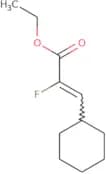
CAS:<p>Versatile small molecule scaffold</p>Formula:C8H11N3Purity:Min. 95%Molecular weight:149.19 g/molEthyl 3-cyclohexyl-2-fluoroprop-2-enoate
CAS:<p>Versatile small molecule scaffold</p>Formula:C11H17FO2Purity:Min. 95%Molecular weight:200.25 g/molEthyl 5-chloro-7-methyl-2-oxo-2H-pyrano[3,2-c]pyridine-3-carboxylate
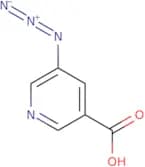
CAS:<p>Versatile small molecule scaffold</p>Formula:C12H10ClNO4Purity:Min. 95%Molecular weight:267.66 g/mol5-Azidopyridine-3-carboxylic acid
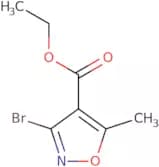
CAS:<p>Versatile small molecule scaffold</p>Formula:C6H4N4O2Purity:Min. 95%Molecular weight:164.12 g/molEthyl 3-bromo-5-methyl-1,2-oxazole-4-carboxylate
CAS:<p>Versatile small molecule scaffold</p>Formula:C7H8BrNO3Purity:Min. 95%Molecular weight:234.05 g/mol4-Phenyl-4-(trifluoromethyl)piperidine
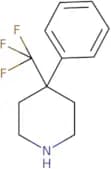
CAS:<p>4-Phenyl-4-(trifluoromethyl)piperidine is a potential anticancer drug. It has been shown to inhibit the growth of colorectal carcinoma cells and inhibit fatty acid synthesis in liver cells. 4-Phenyl-4-(trifluoromethyl)piperidine has also been shown to reduce the uptake of glucose, fatty acids, and cholesterol by hepatocytes (liver cells), which may be due to its ability to inhibit lipid biosynthesis. This drug also inhibits the activity of mitochondrial enzymes involved in energy metabolism and causes hepatic steatosis. 4-Phenyl-4-(trifluoromethyl)piperidine is metabolized via the endoplasmic reticulum, leading to an accumulation of intermediates in this organelle. The profile of 4-Phenyl-4-(trifluoromethyl)piperidine has been determined using molecular modeling</p>Formula:C12H14F3NPurity:Min. 95%Molecular weight:229.24 g/mol1-{[(9H-Fluoren-9-yl)methoxy]carbonyl}-4-methoxypiperidine-4-carboxylic acid
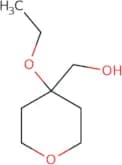
CAS:<p>Versatile small molecule scaffold</p>Formula:C22H23NO5Purity:Min. 95%Molecular weight:381.4 g/mol(4-Ethoxyoxan-4-yl)methanol
CAS:<p>Versatile small molecule scaffold</p>Formula:C8H16O3Purity:Min. 95%Molecular weight:160.21 g/molBenzyl 1,2-oxazinane-2-carboxylate
CAS:<p>Versatile small molecule scaffold</p>Formula:C12H15NO3Purity:Min. 95%Molecular weight:221.3 g/mol1-(Azonan-1-yl)ethan-1-one
CAS:<p>Versatile small molecule scaffold</p>Formula:C10H19NOPurity:Min. 95%Molecular weight:169.3 g/mol1-(4-Methylcyclohexyl)-1H-1,3-benzodiazole
CAS:<p>Versatile small molecule scaffold</p>Formula:C14H18N2Purity:Min. 95%Molecular weight:214.3 g/mol2-(But-3-yn-1-ylsulfanyl)-2-methylpropan-1-ol
CAS:<p>Versatile small molecule scaffold</p>Formula:C8H14OSPurity:Min. 95%Molecular weight:158.3 g/mol5-Bromobenzo[d]isothiazol-3(2H)-one 1,1-dioxide
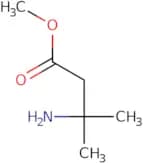
CAS:<p>Versatile small molecule scaffold</p>Formula:C7H4BrNO3SPurity:Min. 95%Molecular weight:262.08 g/molMethyl 3-amino-3-methylbutanoate
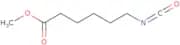
CAS:Versatile small molecule scaffoldFormula:C6H13NO2Purity:Min. 95%Molecular weight:131.17 g/molMethyl 6-isocyanatohexanoate
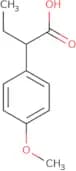
CAS:<p>Versatile small molecule scaffold</p>Formula:C8H13NO3Purity:Min. 95%Molecular weight:171.19 g/mol2-(4-Methoxyphenyl)butanoic acid
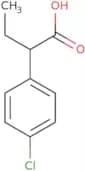
CAS:<p>2-(4-Methoxyphenyl)butanoic acid is a protonated form of 2-phenoxyacetic acid. It has been shown to act as a potent cardiac muscle activator and inotropic agent, with the ability to increase contractility and optimize cardiac function. The mechanism of action of 2-(4-methoxyphenyl)butanoic acid is not fully understood, but it may be due to its ability to decarboxylate into phenoxyacetic acid, which has been shown to increase calcium uptake by the sarcoplasmic reticulum.</p>Formula:C11H14O3Purity:Min. 95%Molecular weight:194.23 g/mol2-(4-chlorophenyl)butanoic acid
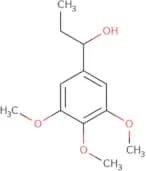
CAS:<p>2-(4-Chlorophenyl)butanoic acid is a metabolite of the drug baclofen. It is produced by Streptomyces, and has been found in cultures, experiments, and soil samples. This compound has been shown to metabolize through microbial metabolism with a chiral center (2R), which can be used as an indicator of microbial activity. 2-(4-Chlorophenyl)butanoic acid also has anti-inflammatory properties that may be due to its ability to inhibit prostaglandin synthesis.</p>Formula:C10H11ClO2Purity:Min. 95%Molecular weight:198.65 g/mol-1(3,4,5-Trimethoxyphenyl)Propan-1-Ol
CAS:<p>-1(3,4,5-Trimethoxyphenyl)Propan-1-Ol is a Grignard reagent that is used as a starting material for the synthesis of other compounds. This reagent is an alkylating agent that can be used to prepare various functional groups such as carbinols and dialkyls. This compound has been shown to react with methyl iodide in the presence of sodium carbonate to form a Grignard reagent.</p>Formula:C12H18O4Purity:Min. 95%Molecular weight:226.27 g/mol2,2-Dimethyloctanoic acid
CAS:<p>2,2-Dimethyloctanoic acid is a fatty acid that has been shown to increase the uptake of radioactive butyric acid in the rat. It is also known to be an intermediate in the metabolism of dodecyl and hexadecanoic acids. 2,2-Dimethyloctanoic acid has been shown to have anti-depressant effects in animals. The mechanism for this effect may be due to its ability to increase fatty acid metabolism in mitochondria.</p>Formula:C10H20O2Purity:Min. 95%Molecular weight:172.26 g/mol

![Ethyl 5-chloro-7-methyl-2-oxo-2H-pyrano[3,2-c]pyridine-3-carboxylate](/_next/image/?url=https%3A%2Fstatic.cymitquimica.com%2Fproducts%2F3D%2Fthumb-webp%2FEAC83070.webp&w=3840&q=75)
![1-{[(9H-Fluoren-9-yl)methoxy]carbonyl}-4-methoxypiperidine-4-carboxylic acid](/_next/image/?url=https%3A%2Fstatic.cymitquimica.com%2Fproducts%2F3D%2Fthumb-webp%2FEAD01083.webp&w=3840&q=75)
![5-Bromobenzo[d]isothiazol-3(2H)-one 1,1-dioxide](/_next/image/?url=https%3A%2Fstatic.cymitquimica.com%2Fproducts%2F3D%2Fthumb-webp%2FEBA63282.webp&w=3840&q=75)