Building Blocks
This section contains fundamental products for the synthesis of organic and biological compounds. Building blocks are the essential starting materials used to construct complex molecules through various chemical reactions. They play a critical role in drug discovery, material science, and chemical research. At CymitQuimica, we offer a diverse range of high-quality building blocks to support your innovative research and industrial projects, ensuring you have the essential components for successful synthesis.
Subcategories of "Building Blocks"
- Boronic Acids & Boronic Acid Derivatives(5,756 products)
- Chiral Building Blocks(1,242 products)
- Hydrocarbon Building Blocks(6,095 products)
- Organic Building Blocks(61,037 products)
Found 196200 products of "Building Blocks"
Sort by
Purity (%)
0
100
|
0
|
50
|
90
|
95
|
100
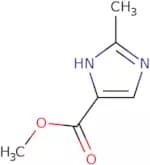
Methyl 2-methyl-1H-imidazole-4-carboxylate
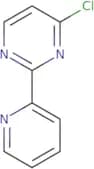
CAS:<p>Versatile small molecule scaffold</p>Formula:C6H8N2O2Purity:Min. 95%Molecular weight:140.14 g/mol4-Chloro-2-(pyridin-2-yl)pyrimidine
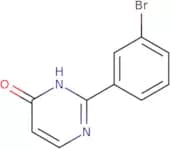
CAS:<p>Versatile small molecule scaffold</p>Formula:C9H6ClN3Purity:Min. 95%Molecular weight:191.62 g/mol2-(3-Bromophenyl)-3,4-dihydropyrimidin-4-one
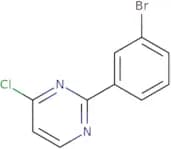
CAS:<p>Versatile small molecule scaffold</p>Formula:C10H7BrN2OPurity:Min. 95%Molecular weight:251.08 g/mol2-(3-Bromophenyl)-4-chloropyrimidine
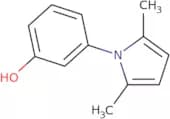
CAS:<p>Versatile small molecule scaffold</p>Formula:C10H6BrClN2Purity:Min. 95%Molecular weight:269.52 g/mol3-(2,5-Dimethyl-1-pyrrolyl)phenol
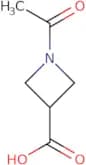
CAS:<p>3-(2,5-Dimethyl-1-pyrrolyl)phenol is a novel catalyst that can be used in the synthesis of aliphatic amines. In this process, the pyrrole derivatives are first reacted with n-substituted aliphatic amines to produce an intermediate 3-(2,5-dimethyl-1-pyrrolyl)phenol derivative. The 3-(2,5-dimethyl-1-pyrrolyl)phenol derivative is then heated with an aliphatic amine to yield the desired product. This process is efficient and has been shown to produce high yields of products. The FTIR and NMR spectra of 3-(2,5-dimethyl-1-pyrrolyl)phenol show it is a pure compound.</p>Formula:C12H13NOPurity:Min. 95%Molecular weight:187.24 g/mol1-Acetyl-3-azetidinecarboxylic acid
CAS:<p>Versatile small molecule scaffold</p>Formula:C6H9NO3Purity:Min. 95%Molecular weight:143.14 g/mol1-[4-Chloro-3-(trifluoromethyl)benzenesulfonyl]piperazine
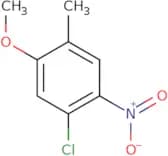
CAS:<p>Versatile small molecule scaffold</p>Formula:C11H12ClF3N2O2SPurity:Min. 95%Molecular weight:328.74 g/mol1-Chloro-5-methoxy-4-methyl-2-nitrobenzene
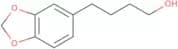
CAS:<p>Versatile small molecule scaffold</p>Formula:C8H8ClNO3Purity:Min. 95%Molecular weight:201.61 g/mol4-(1,3-Dioxaindan-5-yl)butan-1-ol
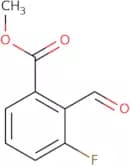
CAS:Controlled Product<p>Versatile small molecule scaffold</p>Formula:C11H14O3Purity:Min. 95%Molecular weight:194.23 g/molMethyl 3-fluoro-2-formylbenzoate
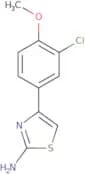
CAS:<p>Versatile small molecule scaffold</p>Formula:C9H7FO3Purity:Min. 95%Molecular weight:182.15 g/mol4-(3-Chloro-4-methoxyphenyl)-1,3-thiazol-2-amine
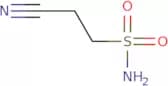
CAS:<p>Versatile small molecule scaffold</p>Formula:C10H9ClN2OSPurity:Min. 95%Molecular weight:240.71 g/mol2-Cyanoethane-1-sulfonamide
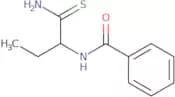
CAS:<p>Versatile small molecule scaffold</p>Formula:C3H6N2O2SPurity:Min. 95%Molecular weight:134.16 g/molN-(1-Carbamothioylpropyl)benzamide
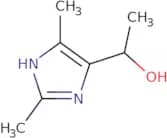
CAS:<p>Versatile small molecule scaffold</p>Formula:C11H14N2OSPurity:Min. 95%Molecular weight:222.31 g/mol1-(2,4-Dimethyl-1H-imidazol-5-yl)ethan-1-ol
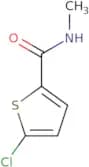
CAS:<p>Versatile small molecule scaffold</p>Formula:C7H12N2OPurity:Min. 95%Molecular weight:140.18 g/mol5-Chloro-N-methylthiophene-2-carboxamide
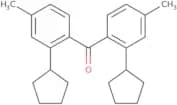
CAS:<p>Versatile small molecule scaffold</p>Formula:C6H6ClNOSPurity:Min. 95%Molecular weight:175.64 g/molCyclopentyl 4-methylphenyl ketone
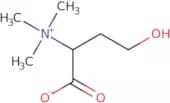
CAS:<p>Versatile small molecule scaffold</p>Formula:C13H16OPurity:Min. 95%Molecular weight:188.27 g/mol(2S)-4-Hydroxy-2-(trimethylazaniumyl)butanoate
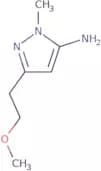
CAS:<p>Versatile small molecule scaffold</p>Formula:C7H15NO3Purity:Min. 95%Molecular weight:161.2 g/mol3-(2-Methoxyethyl)-1-methyl-1H-pyrazol-5-amine
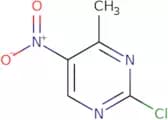
CAS:<p>Versatile small molecule scaffold</p>Formula:C7H13N3OPurity:Min. 95%Molecular weight:155.2 g/mol2-Chloro-4-methyl-5-nitropyrimidine
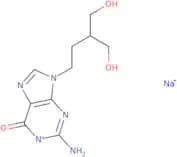
CAS:<p>2-Chloro-4-methyl-5-nitropyrimidine is a heterocyclic compound that is produced naturally in the body. It has been shown to be a substrate for the enzyme 2-aminobenzyl alcohol dehydrogenase and may be used as a biomarker of exposure to benzene. Spectrometry has shown that this compound reacts with amines to form an addition product, which can be used as a spectroscopic tool for amine detection. 2-Chloro-4-methyl-5-nitropyrimidine is also an intermediate in the synthesis of pyrimidines, which are important building blocks for DNA and RNA.</p>Formula:C5H4ClN3O2Purity:Min. 95%Molecular weight:173.56 g/molSodium 4-(2-amino-6-oxo-6,9-dihydro-1H-purin-9-yl)-2-(hydroxymethyl)butan-1-olate
CAS:<p>Sodium 4-(2-amino-6-oxo-6,9-dihydro-1H-purin-9-yl)-2-(hydroxymethyl)butan-1-olate is a prodrug that is converted to the active form, 6-[(2R,3S)-3-[(2S)-2-(hydroxymethyl)pyrrolidin-1-yl]propoxy]-9-[(4S)-4-(carboxy)butoxy]-1H-[1,2,4]triazolo[4,3,-b][1,5]benzodiazepine. This drug inhibits the inflammatory response in humans by binding to receptors on cells and inhibiting the production of prostaglandins. It has been shown to be an effective analgesic against herpes simplex virus in humans and animals. The drug is also used as a diagnostic agent for detecting inflammation and as a treatment for bacterial infections</p>Formula:C10H14N5NaO3Purity:Min. 95%Molecular weight:275.24 g/mol

![1-[4-Chloro-3-(trifluoromethyl)benzenesulfonyl]piperazine](/_next/image/?url=https%3A%2Fstatic.cymitquimica.com%2Fproducts%2F3D%2Fthumb-webp%2FXDA63013.webp&w=3840&q=75)