Building Blocks
This section contains fundamental products for the synthesis of organic and biological compounds. Building blocks are the essential starting materials used to construct complex molecules through various chemical reactions. They play a critical role in drug discovery, material science, and chemical research. At CymitQuimica, we offer a diverse range of high-quality building blocks to support your innovative research and industrial projects, ensuring you have the essential components for successful synthesis.
Subcategories of "Building Blocks"
- Boronic Acids & Boronic Acid Derivatives(5,756 products)
- Chiral Building Blocks(1,242 products)
- Hydrocarbon Building Blocks(6,095 products)
- Organic Building Blocks(61,038 products)
Found 196817 products of "Building Blocks"
Sort by
Purity (%)
0
100
|
0
|
50
|
90
|
95
|
100
4-[4-(Aminomethyl)phenyl]phenol
CAS:<p>Versatile small molecule scaffold</p>Formula:C13H13NOPurity:Min. 95%Molecular weight:199.25 g/mol2-Ethyl-2-hydroxycyclohexan-1-one
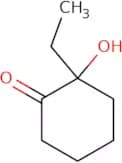
CAS:<p>Versatile small molecule scaffold</p>Formula:C8H14O2Purity:Min. 95%Molecular weight:142.2 g/mol1-(Pyridin-4-yl)propan-1-amine
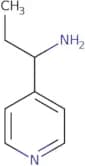
CAS:<p>Versatile small molecule scaffold</p>Formula:C8H12N2Purity:Min. 95%Molecular weight:136.2 g/mol1-Benzyl-7-chloro-1H-pyrrolo[2,3-c]pyridine
CAS:<p>Versatile small molecule scaffold</p>Formula:C14H11ClN2Purity:Min. 95%Molecular weight:242.7 g/mol1-Benzyl-1H,6H,7H-pyrrolo[2,3-c]pyridin-7-one
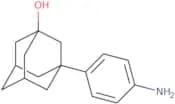
CAS:<p>Versatile small molecule scaffold</p>Formula:C14H12N2OPurity:Min. 95%Molecular weight:224.26 g/mol3-(4-Aminophenyl)adamantan-1-ol
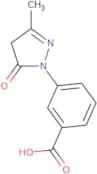
CAS:<p>Versatile small molecule scaffold</p>Formula:C16H21NOPurity:Min. 95%Molecular weight:243.34 g/mol3-(3-Methyl-5-oxo-4,5-dihydro-1H-pyrazol-1-yl)benzoic acid
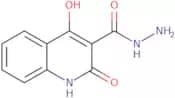
CAS:<p>Versatile small molecule scaffold</p>Formula:C11H10N2O3Purity:Min. 95%Molecular weight:218.21 g/mol4-Hydroxy-2-oxo-1,2-dihydroquinoline-3-carbohydrazide
CAS:<p>4-Hydroxy-2-oxo-1,2-dihydroquinoline-3-carbohydrazide is a cholinesterase inhibitor. It reduces the activity of acetylcholinesterase, which breaks down the neurotransmitter acetylcholine. This leads to an increase in the amount of acetylcholine in the synaptic cleft, which stimulates muscle contraction and may also have an effect on other cells in the body. 4-Hydroxy-2-oxo-1,2-dihydroquinoline-3-carbohydrazide has been shown to selectively bind to and inhibit cholinesterases from bovine chromaffin cells and laboratory preparations. The molecular modeling studies show that this drug binds to the active site of cholinesterases with high affinity and selectivity.</p>Formula:C10H9N3O3Purity:Min. 95%Molecular weight:219.2 g/mol2-(1-Methyl-5-oxopyrrolidin-2-yl)acetic acid
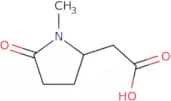
CAS:<p>2-(1-Methyl-5-oxopyrrolidin-2-yl)acetic acid is a naturally occurring, uncharged, neutral, and hydroxy acid. It is a hydrophilic compound that can be used in cosmetics as a film forming agent or polymer. 2-(1-Methyl-5-oxopyrrolidin-2-yl)acetic acid has been shown to form multilayered films on the surface of water. This chemical also exhibits hydrogen bonding and hydroxy bonding with other compounds.</p>Formula:C7H11NO3Purity:Min. 95%Molecular weight:157.17 g/mol3,5-Dimethylhexanoic acid
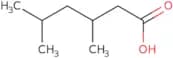
CAS:<p>3,5-Dimethylhexanoic acid is a polycarboxylic acid that is formed by the oxidation of fatty acids in an alkaline environment. It has a viscosity of about 1.6 mPa·s at 20 °C and a pH of about 11. 3,5-Dimethylhexanoic acid is chemically stable in neutral solution and can be used as a model system for fatty acids. For example, it can be used to study the reactions between carboxylic acids and hydroxyl groups (e.g., hydrolysis). This compound has been shown to react with sodium carbonate and sodium hydroxide solution to form caproic acid, which is then hydrolyzed into acetic acid.</p>Formula:C8H16O2Purity:Min. 95%Molecular weight:144.21 g/mol3-Ethyl-4-methylpentanoic acid
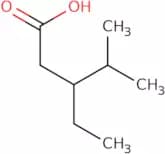
CAS:<p>Versatile small molecule scaffold</p>Formula:C8H16O2Purity:Min. 95%Molecular weight:144.21 g/mol3-Phenyl-1-benzofuran-2-carboxylic acid
CAS:<p>3-Phenyl-1-benzofuran-2-carboxylic acid is an organic molecule that blocks the angiotensin II receptor, which is a type of protein found in the kidney. This receptor regulates the production of various hormones and proteins that are involved in blood pressure regulation. 3-Phenyl-1-benzofuran-2-carboxylic acid has shown to be an experimental drug for the treatment of hypertension, but its affinity for other receptors may affect its therapeutic potential. 3Phenylbenzofuran derivatives have been shown to have an effect on water absorption and blood pressure in rats, although this has not yet been studied in humans.</p>Formula:C15H10O3Purity:Min. 95%Molecular weight:238.24 g/mol2-Methyl-5-(propan-2-yl)cyclohexan-1-ol
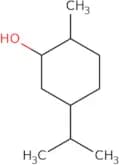
CAS:<p>2-Methyl-5-(propan-2-yl)cyclohexan-1-ol is a reaction product of 2,5-dimethylcyclohexanol and cyclohexene. It is an ultraviolet light absorber with good chemical stability. It can be used as a synthetic antioxidant in pharmaceutical preparations and other products. The commercial product is a mixture of cis and trans geometric isomers.</p>Formula:C10H20OPurity:Min. 95%Color and Shape:Clear LiquidMolecular weight:156.26 g/molMethylbis(2-methylprop-2-en-1-yl)amine hydrochloride
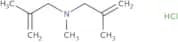
CAS:<p>Versatile small molecule scaffold</p>Formula:C9H18ClNPurity:Min. 95%Molecular weight:175.7 g/mol1-Phenylhex-5-en-3-ol
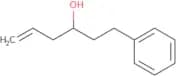
CAS:<p>1-Phenylhex-5-en-3-ol is a synthetic compound that has been used in the allylation of halides and as a chiral, enantiomerically pure building block for organic synthesis. The addition of 1-phenylhex-5-en-3 to an aldehyde followed by hydrolysis produces the corresponding ester. This reagent can also be used catalytically as an asymmetric hydrogenation catalyst, with selectivity depending on the solvent. It is an organic chemical that can be converted into other useful products such as solvents and pharmaceuticals.</p>Formula:C12H16OPurity:Min. 95%Molecular weight:176.25 g/mol2-[(1-Phenylpropan-2-yl)amino]acetic acid hydrochloride
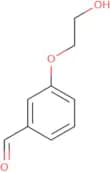
CAS:<p>Versatile small molecule scaffold</p>Formula:C11H16ClNO2Purity:Min. 95%Molecular weight:229.7 g/mol3-(2-Hydroxyethoxy)benzaldehyde
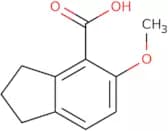
CAS:<p>3-(2-Hydroxyethoxy)benzaldehyde (3-HBA) is a reactive liquid phase, hydrogenated, and solid phase synthesis product. It is used for the synthesis of peptidomimetics by reacting with hydrosilylation. 3-HBA has been shown to react chemoselectively with alkene groups on the surface of silica gel and can be immobilized onto it through covalent bonding. 3-HBA has a melting point of 118°C and a density of 1.07 g/mL at 25°C. The reaction products are not soluble in water or organic solvents.</p>Formula:C9H10O3Purity:Min. 95%Molecular weight:166.17 g/mol5-Methoxy-2,3-dihydro-1H-indene-4-carboxylic acid
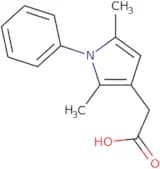
CAS:<p>Versatile small molecule scaffold</p>Formula:C11H12O3Purity:Min. 95%Molecular weight:192.2 g/mol2-(2,5-Dimethyl-1-phenyl-1H-pyrrol-3-yl)acetic acid
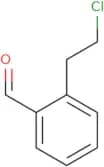
CAS:<p>Versatile small molecule scaffold</p>Formula:C14H15NO2Purity:Min. 95%Molecular weight:229.27 g/mol2-(2-Chloroethyl)benzaldehyde
CAS:<p>Versatile small molecule scaffold</p>Formula:C9H9ClOPurity:95%NmrMolecular weight:168.62 g/mol
![4-[4-(Aminomethyl)phenyl]phenol](/_next/image/?url=https%3A%2Fstatic.cymitquimica.com%2Fproducts%2F3D%2Fthumb-webp%2FKCA27740.webp&w=3840&q=75)

![1-Benzyl-7-chloro-1H-pyrrolo[2,3-c]pyridine](/_next/image/?url=https%3A%2Fstatic.cymitquimica.com%2Fproducts%2F3D%2Fthumb-webp%2FKCA29006.webp&w=3840&q=75)
![1-Benzyl-1H,6H,7H-pyrrolo[2,3-c]pyridin-7-one](/_next/image/?url=https%3A%2Fstatic.cymitquimica.com%2Fproducts%2F3D%2Fthumb-webp%2FKCA29020.webp&w=3840&q=75)

![2-[(1-Phenylpropan-2-yl)amino]acetic acid hydrochloride](/_next/image/?url=https%3A%2Fstatic.cymitquimica.com%2Fproducts%2F3D%2Fthumb-webp%2FKCA34293.webp&w=3840&q=75)