Building Blocks
This section contains fundamental products for the synthesis of organic and biological compounds. Building blocks are the essential starting materials used to construct complex molecules through various chemical reactions. They play a critical role in drug discovery, material science, and chemical research. At CymitQuimica, we offer a diverse range of high-quality building blocks to support your innovative research and industrial projects, ensuring you have the essential components for successful synthesis.
Subcategories of "Building Blocks"
- Boronic Acids & Boronic Acid Derivatives(5,756 products)
- Chiral Building Blocks(1,242 products)
- Hydrocarbon Building Blocks(6,095 products)
- Organic Building Blocks(61,038 products)
Found 196817 products of "Building Blocks"
Sort by
Purity (%)
0
100
|
0
|
50
|
90
|
95
|
100
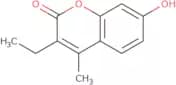
3-Ethyl-7-hydroxy-4-methyl-2H-chromen-2-one
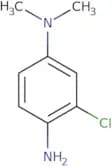
CAS:<p>Versatile small molecule scaffold</p>Formula:C12H12O3Purity:Min. 95%Molecular weight:204.23 g/mol3-Chloro-N1,N1-dimethylbenzene-1,4-diamine
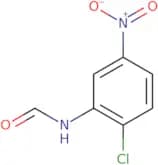
CAS:<p>Versatile small molecule scaffold</p>Formula:C8H11ClN2Purity:Min. 95%Molecular weight:170.64 g/molN-(2-Chloro-5-nitrophenyl)formamide
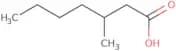
CAS:<p>Versatile small molecule scaffold</p>Formula:C7H5ClN2O3Purity:Min. 95%Molecular weight:200.58 g/mol3-Methylheptanoic acid
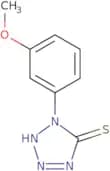
CAS:<p>3-Methylheptanoic acid is an achiral, volatile fatty acid that is found in the urine and feces of mammals. It has been shown to be a potent skatole inducer, and is capable of producing abdominal pain. 3-Methylheptanoic acid has also been shown to bind competitively to the receptor site for dimer (2,3-dimethoxy-5-methylphenol) in the antennae of cockroaches and other insects. This binding inhibits electroantennographic responses, which are used as a measure of insect activity. 3-Methylheptanoic acid can be used as an indicator for orthophosphoric acid in chemical analysis. The optical rotation of this compound is determined by its configuration at the asymmetric carbon atom. This functional group allows 3-methylheptanoic acid to act as an antiseptic and germicide when it reacts with water or dilute acids to form orthophosph</p>Formula:C8H16O2Purity:Min. 95%Molecular weight:144.21 g/mol1-(3-Methoxyphenyl)-1H-1,2,3,4-tetrazole-5-thiol
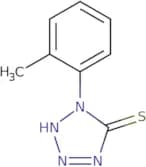
CAS:<p>Versatile small molecule scaffold</p>Formula:C8H8N4OSPurity:Min. 95%Molecular weight:208.24 g/mol1-(2-Methylphenyl)-1H-1,2,3,4-tetrazole-5-thiol
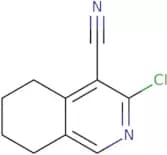
CAS:<p>Versatile small molecule scaffold</p>Formula:C8H8N4SPurity:Min. 95%Molecular weight:192.24 g/mol3-chloro-5,6,7,8-tetrahydroisoquinoline-4-carbonitrile
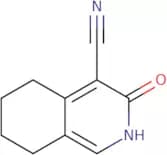
CAS:<p>Versatile small molecule scaffold</p>Formula:C10H9ClN2Purity:Min. 95%Molecular weight:192.65 g/mol3-Oxo-2,3,5,6,7,8-hexahydroisoquinoline-4-carbonitrile
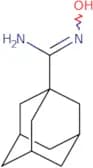
CAS:<p>Versatile small molecule scaffold</p>Formula:C10H10N2OPurity:Min. 95%Molecular weight:174.2 g/molN'-Hydroxyadamantane-1-carboximidamide
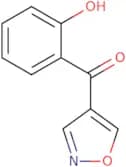
CAS:<p>Versatile small molecule scaffold</p>Formula:C11H18N2OPurity:Min. 95%Molecular weight:194.27 g/mol2-(1,2-Oxazole-4-carbonyl)phenol
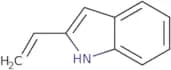
CAS:<p>Versatile small molecule scaffold</p>Formula:C10H7NO3Purity:Min. 95%Molecular weight:189.17 g/mol2-Ethenyl-1H-indole
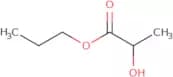
CAS:<p>2-Ethenyl-1H-indole is an organic compound that can be synthesized from a Friedel-Crafts reaction of a fatty acid and an alkyl halide. The cycloaddition process of 2-ethenyl-1H-indole to form the bicyclic system was found to proceed through a [4+2] cycloaddition mechanism with the formation of a strained six membered ring between the two carbon atoms at the junction. This product is then converted into biofuels, such as particle or fatty acids, by analytical chemistry. Preparative high performance liquid chromatography (HPLC) has been used to separate glycogen synthase kinase 3 (GSK3) oligosaccharides, which have been shown to be involved in various biological processes.</p>Formula:C10H9NPurity:Min. 95%Molecular weight:143.18 g/molPropyl (2S)-2-hydroxypropanoate
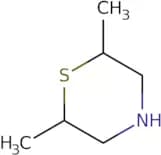
CAS:<p>Propyl (2S)-2-hydroxypropanoate is a neurotoxic chemical that can cause hydrolysis or long-term exposure to lead to neurotoxicity. Exposure to this chemical can lead to neurobehavioral changes and encephalopathy, which may be due to its effects on the central nervous system. It has been shown that propyl (2S)-2-hydroxypropanoate can also interfere with lactic acid metabolism, leading to an accumulation of lactic acid in the body. This accumulation may contribute to a variety of neurological symptoms seen in patients who have ingested this chemical, including psychoactive effects and organic solvent syndrome.</p>Formula:C6H12O3Purity:Min. 95%Molecular weight:132.16 g/mol2,6-Dimethylthiomorpholine
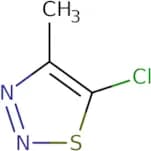
CAS:<p>Versatile small molecule scaffold</p>Formula:C6H13NSPurity:Min. 95%Molecular weight:131.24 g/mol5-Chloro-4-methyl-1,2,3-thiadiazole
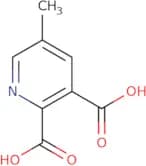
CAS:<p>5-Chloro-4-methyl-1,2,3-thiadiazole is a long chain derivative of thiadiazole. It has been found to have anticancer activity in vitro against prostate cancer cells. 5-Chloro-4-methyl-1,2,3-thiadiazole inhibits the growth of cancer cells by blocking fatty acid metabolism and inhibiting the production of carnitine. This agent also induces carboxyamide reductase and alcohol dehydrogenase activities in vitro. The anticancer effect is not restricted to prostate cancer cells; it has also been shown to inhibit human glioma cell proliferation in vitro.</p>Formula:C3H3ClN2SPurity:Min. 95%Molecular weight:134.58 g/mol5-Methylpyridine-2,3-dicarboxylic acid
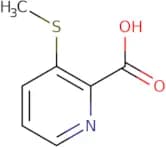
CAS:<p>5-Methylpyridine-2,3-dicarboxylic acid is an organic compound with the formula CH3C6H4(CH2)4O2. It is a white crystalline solid that is soluble in water and ethanol. 5-Methylpyridine-2,3-dicarboxylic acid is a ligand for alkali metal ions. It has been used to synthesize a number of compounds with different properties, such as methoxymethyl, fluorescence properties and ammonium nitrate. The structures of the isomers can be determined by x-ray diffraction techniques and by gravimetric analysis.</p>Formula:C8H7NO4Purity:Min. 95%Molecular weight:181.15 g/mol3-(Methylsulfanyl)pyridine-2-carboxylic acid
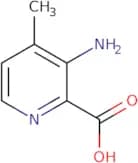
CAS:<p>Versatile small molecule scaffold</p>Formula:C7H7NO2SPurity:Min. 95%Molecular weight:169.2 g/mol3-Amino-4-methylpyridine-2-carboxylic acid
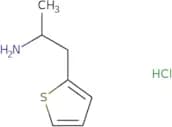
CAS:<p>Versatile small molecule scaffold</p>Formula:C7H8N2O2Purity:Min. 95%Molecular weight:152.15 g/mol1-(Thiophen-2-yl)propan-2-amine hydrochloride
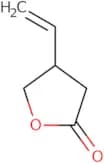
CAS:Controlled Product<p>Versatile small molecule scaffold</p>Formula:C7H12ClNSPurity:Min. 95%Molecular weight:177.7 g/mol4-Vinyl-dihydrofuran-2(3H)-one
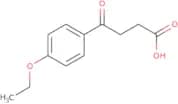
CAS:<p>4-Vinyl-dihydrofuran-2(3H)-one is a cyclopropanecarboxylic acid that can be synthesized using the refluxing of an alkali metal hydroxide, such as potassium hydroxide, with an alcohol. The reaction produces a cyclopropanecarboxylic acid and water. 4-Vinyl-dihydrofuran-2(3H)-one is used as an insecticide as well as in the synthesis of other chemicals. It has been shown to have anticholinesterase activity.</p>Formula:C6H8O2Purity:Min. 95%Molecular weight:112.13 g/mol4-(4-Ethoxyphenyl)-4-oxobutanoic acid
CAS:<p>4-(4-Ethoxyphenyl)-4-oxobutanoic acid is a ketone that has been found to be biologically active. It is a heterocyclic compound that contains a benzene ring and a heterocyclic aromatic ketone. The crystal structure of 4-(4-Ethoxyphenyl)-4-oxobutanoic acid has shown the presence of hydrogen bonds.</p>Formula:C12H14O4Purity:Min. 95%Molecular weight:222.24 g/mol